

Are traditional linear forms broken? (And why we built a canvas instead)
Hey Hunters 👋
We’ve probably all built or filled out forms where the logic slowly becomes impossible to follow.
At first, forms are simple.
But once you introduce conditional questions, branching paths, and multiple user scenarios, the logic often ends up buried inside dropdown menus and hidden settings.

At some point, questions like these start appearing:
Where does this branch actually go?
Why is this question showing up?
What path did this user take?
As builders, we often found ourselves drawing diagrams just to understand the form logic we had already created.
That experience made us wonder if the issue isn’t just complexity — but the linear model of forms itself.
So we started experimenting with a different approach:
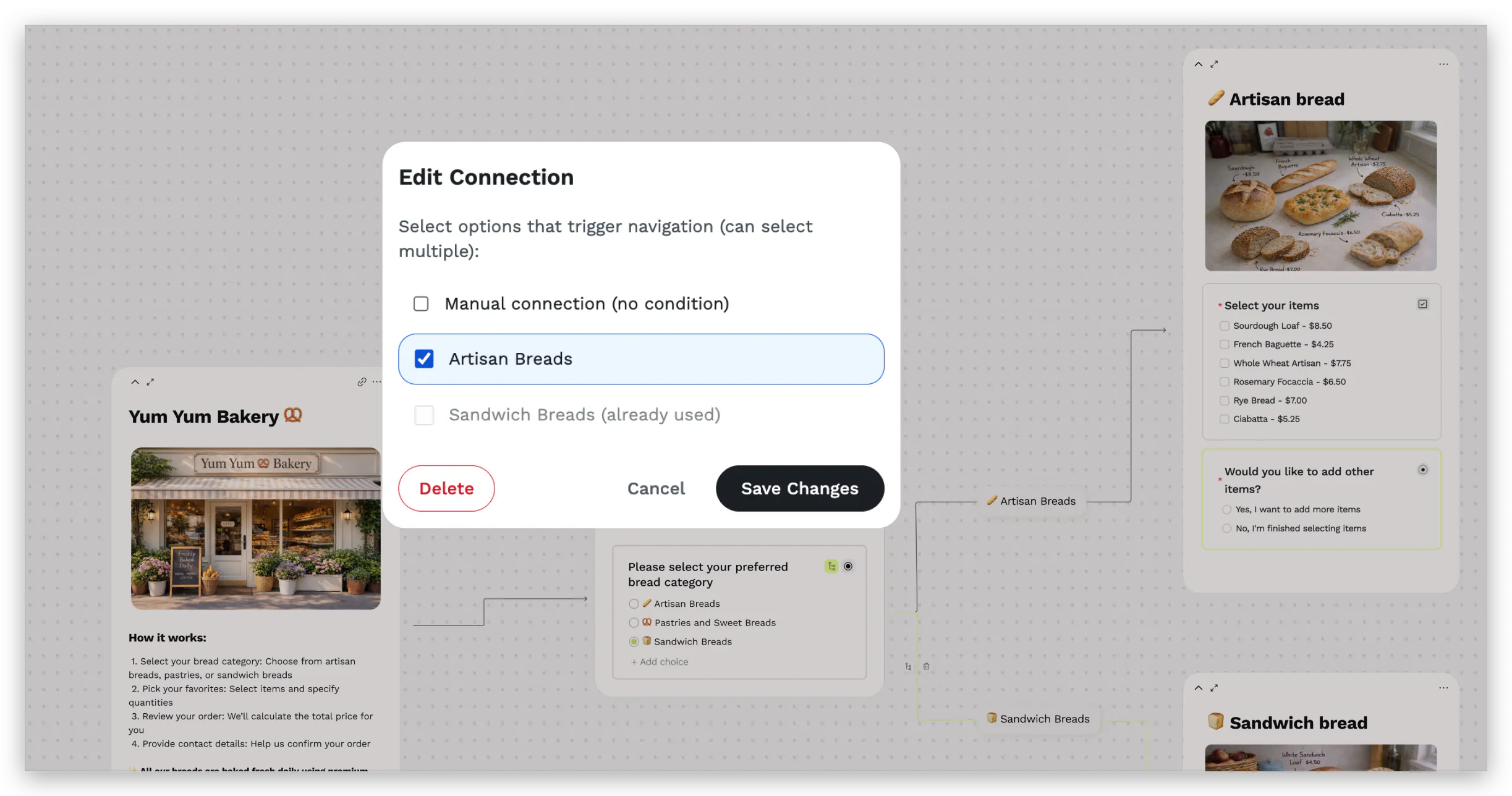
What if every step was a card on a canvas, and the connections between them visually showed how decisions flow?
Instead of configuring logic through settings panels, the structure becomes something you can actually see.
This led us to build CardTie, where forms are designed as connected cards on a visual canvas. Users still fill them out as a normal form, but the logic behind it becomes much easier to understand and explore.
We’re still early in exploring this idea, so I’m really curious how others here think about it:
At what point do forms become hard to manage?
How do you usually visualize complex form logic?
Do traditional form builders scale well when workflows get complicated?
Would love to hear how other makers approach this problem. 🙌🏻
Replies