


How much are you willing to pay for influencer promotion of your product?

At a time when everyone allows themselves to build any solution using AI, it is difficult to differentiate themselves, and makers are betting on more aggressive distribution.
Some differentiate themselves with good tech support, some build their personal brand as a founder, and some pay influencers.
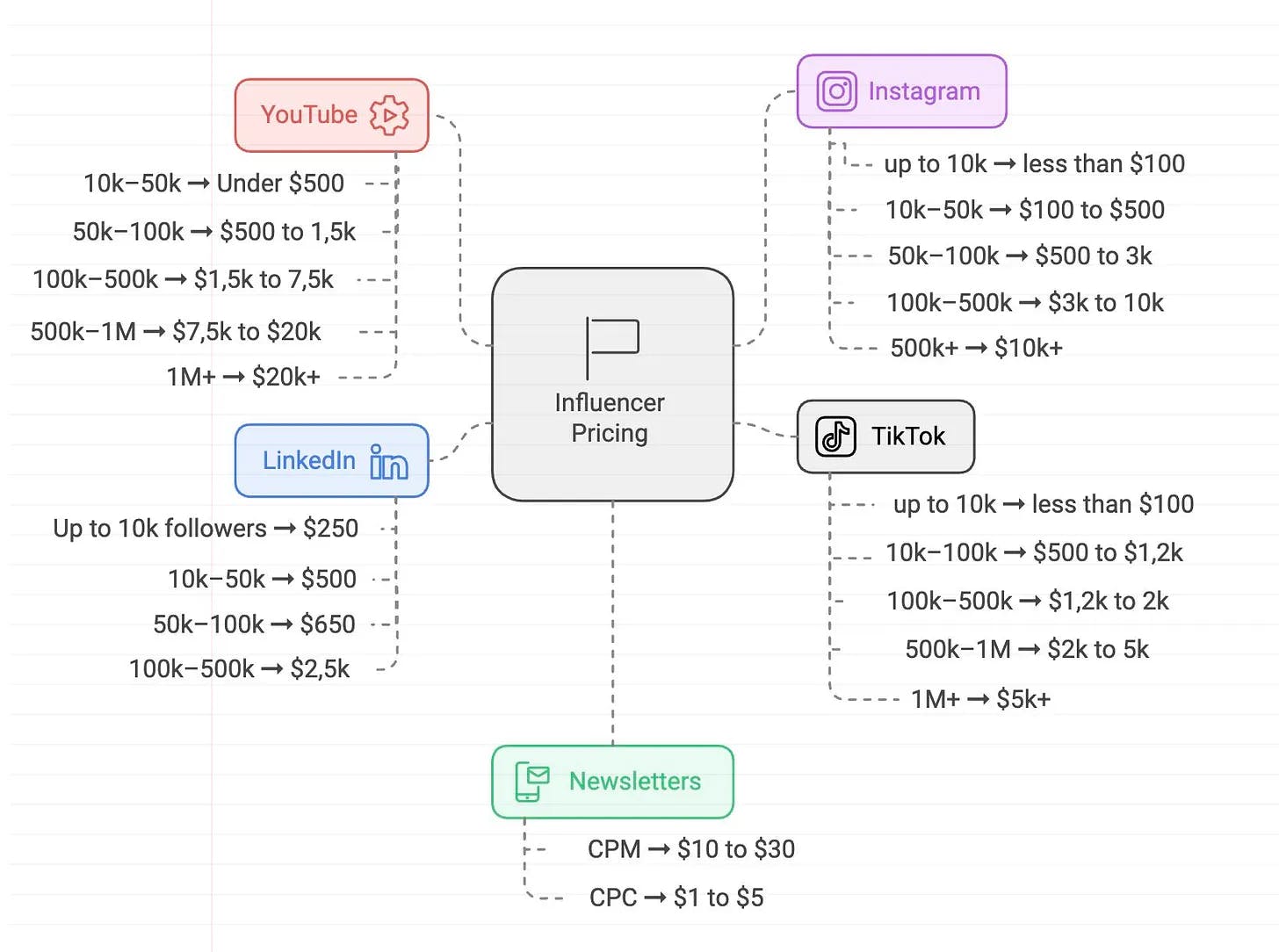
I recently came across a graphic showing how much influencers should earn based on their followers (see pic).
How much are you willing to pay for paid collaboration as a product owner?
What does such a form of collaboration look like?
(one-time/long-term; only sponsored post/post + commission rate from an affiliate/just commission rate; social networks where you used influencers + post format)The last – MOST IMPORTANT QUESTION: What results did it bring you, and what were the influencers like? (Theri follower count)
Replies
I have been trying to promote ImageSlim through my own social media accounts, but the cost of advertising is too high.
minimalist phone: creating folders
@fangjunyu What is your follower count on socials + engagement?
@busmark_w_nika I don't have many followers yet. I've been trying to promote AI-generated videos. Reddit is currently the best platform for promotion. I've had two posts get 15,000 views before, but unfortunately, my account got banned because I promoted so many posts. Other platforms are quite unpopular.
minimalist phone: creating folders
@fangjunyu How many posts did you promote? :D
Follower numbers are easily manipulated and do not reflect influence even when not fake. It's a vanity metric. Only engagement shows how influential an influencer really is.
minimalist phone: creating folders
@onreact What if engagement is also fake?
@busmark_w_nika Engagement is harder to fake, especially comments etc.
minimalist phone: creating folders
@onreact but on X, I could see many bot comments. AI is better than we think.
@busmark_w_nika How do we know you're not a bot, Nika? ;)
I have less confidence in paid influencer marketing these days. Followers matter less than they did a few years ago thanks to the attention algorithms in place across platforms now - someone with 5 followers can have a video go crazy viral (had it happen a couple times myself).
Paid influencer marketing can be supportive, but I think a good formula to use as a foundation is high-volume organic content to test message (boosting with paid/influencer marketing for performing content) and AI UGC as another high-volume route.
minimalist phone: creating folders
@matthew_glossop IMO. Big influencers are good for brand awareness, but I wouldn't expect purchases in the first place.
Really thoughtful question. I’ve experimented a bit with influencer partnerships for SaaS tools, and here’s what stood out:
Payment structure: Flat-fee posts almost never justified the spend for me. What worked better was a hybrid model: smaller upfront + affiliate commission. That way the influencer is motivated beyond the one post.
Channels: LinkedIn micro-influencers (5–20k followers) outperformed bigger Instagram/TikTok creators because the audience was sharper and more aligned with B2B. For consumer-facing products, TikTok was wild — a single short clip could 10x traffic overnight, but conversion was hit-or-miss.
Results: Best ROI came from long-term collaborations where the influencer naturally integrated the product into multiple posts. One-off “sponsored” tags felt too shallow.
Follower count didn’t matter as much as engagement + niche fit. A 7k-follower productivity YouTuber brought in more high-quality signups than a 200k generic tech TikToker.
What about you — are you thinking of influencer promotion more for brand awareness or direct conversions? That changes the math a lot.
Great question — influencer collabs feel like the Wild West right now. From my experience, flat-fee posts rarely paid off unless the influencer’s niche was very aligned with our product. What’s worked better is a hybrid: small upfront + affiliate commission, so the creator has skin in the game.
We’ve mostly tested micro-influencers (5k–30k followers) on LinkedIn + YouTube — way better ROI than big accounts because the audience is engaged and trusts their recommendations.
Curious to hear from others: has anyone actually seen strong conversions from mega-influencers, or is it mostly vanity traffic?