

From citynoise to OpenMarker: Why taking a break was the best move.
I spent months building citynoise, a localised social platform designed to build stronger communities in cities. The feedback was always "it’s cool," but the reality was zero engagement. I fell into the classic trap: I built it, but nobody came. I decided to take some time off from the project to clear my head.
The "Aha!" Moment at University
While taking time off from citynosie, I focused on University more. As a Course Rep, I attended a Course feedback meeting where I noticed a pattern. I kept hearing the same two complaints over and over:
Students were frustrated by slow marking turnarounds and deadlines being pushed back, and vague feedback.
Lecturers were drowning in a "marking overload," spending more time grading text than actually mentoring students.
Since most coursework is text-based an LLM’s natural habitat I realised I could bridge this gap. That was the idea of OpenMarker.
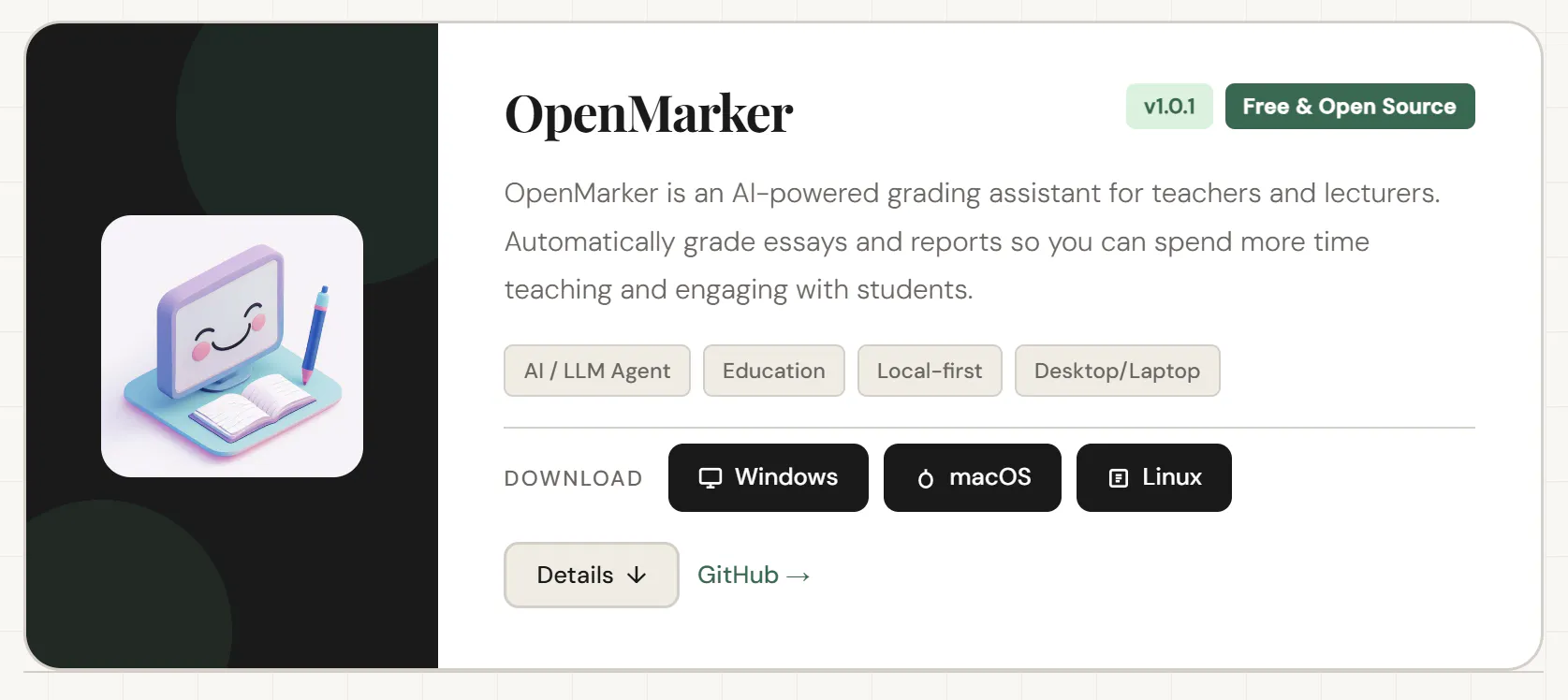
Introducing OpenMarker (v1.0.1)
OpenMarker is an open source desktop platform that allows educators to run LLM models locally as a assistant. This was a non-negotiable for me for two reasons:
Data Privacy: Student work never leaves the lecturer's computer.
Infrastructure Costs: Unlike citynoise, I didn't want to be buried under Infrastructure costs.
Right Tool for the job: I always think from the bottom up, and when we approach things that way, we don’t need a 30B or 40B (or bigger) model. What we need are good, practical models to start with. In v1.0.1, Currently have provided 4 models to run with, and the best part is that they will run locally on almost any modern machine, ranging from 3B to 7B parameter models. Even with just a 3B model, I got good results.
The Results: 7% Variance
I put the tool to the test using my own Year 2 coursework and the actual feedback I received from my lecturers. The results blew me away:
Consistency: OpenMarker achieved only a 7% variation compared to human markers.
Quality: In many cases, the AI feedback was more detailed and actionable than the human equivalent.
The best part is that these results came from a 3B model. With a good marking matrix and prompts in v1.0.2, I will be working on tuning the model itself to improve performance even further.
OpenMarker is not a Replacement; It’s an Assistant
The goal of OpenMarker isn't to replace. It's to handle the "heavy lifting" of grading long texts so educators can spend their energy where it actually matters: reaching out and spending time with students.
What’s Next?
I haven’t given up on citynoise I’m taking the lessons I learned about "solving real pain" and planning a proper relaunch on Product Hunt.
For OpenMarker v1.0.2, I’m working on:
Reducing that 7% variance even further.
I’ve already found some improvements for the software, such as editable marking sections and support for different file types.
I’m also working on a way for the LLM to mark assignments by imitating the lecturer’s style, so the feedback not only follows their grading criteria but also reflects their tone and phrasing.
Replies
Be the first to reply
Have a question or a thought to share? Add a comment above to start the conversation.