

The Multi-Role UX Challenge: How Do You Design a Family App Where Parents Lead and Kids Play?
Hi there, Product Hunters, it's Alex!
I'm Kvestify сreator, the application that transforms tedious domestic activities into thrilling family adventures (similar to Duolingo, but for cleaning! 😉).
Creating Kvestify was really enjoyable, but the main issue I had with the architecture was very simple: I was creating an app for families that would have to support two totally different users — the Parent (The Boss 👑) and the Child (The Player 🎮) — all in the same app.
If the User Experience of the app is unclear, it will only create new conflicts in the family, and that will totally defeat the purpose! 🤦 Below are the two major multi-role difficulties I overcame (and one I am still optimizing) that might be recognized by anyone who is building collaborative tools:
The end of the "Account" — identity crisis resolved
At the start of the development, I found that calling the family unit "Account" was very controversial and created friction right away. It was too severe and administrative, especially when inviting a co-parent or adding a new child profile. It caused misunderstanding about who owned what.
In order to facilitate cooperation and eliminate that heavy feeling, I made the decision to concentrate only on the obvious "Users" (the persons) and "Quest Profiles" (the single progress trackers). This makes the interaction feel more like a partnership, like sharing a Google Doc, instead of managing a bank statement.

The Great Role-Switching Optimization Headache 🔄
The Kvestify app is running now, but I am relentlessly optimizing the role change that the user goes through.
When the parent logs in, they should have instant and clear access to the "Parent View" (settings, stats, quest creation, etc.) and also be able to switch to "Child View" quickly to check if it needs it. The switch should be instant and evident.
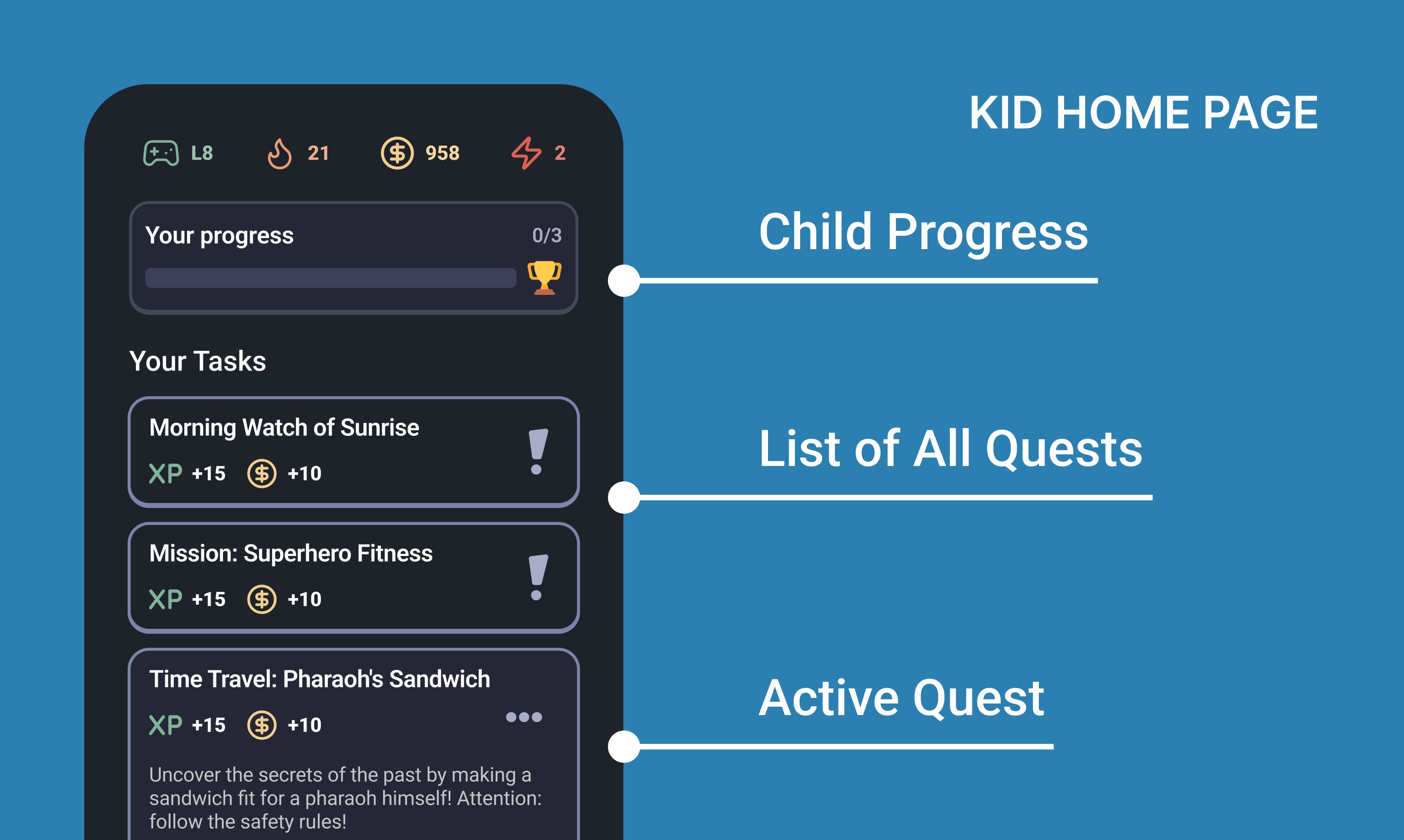
I'd love to hear your experience designing for high-friction, multi-users. 👇
Replies