


Business Automation in 2026: Why AI Assistants Are Now Essential — Not Optional
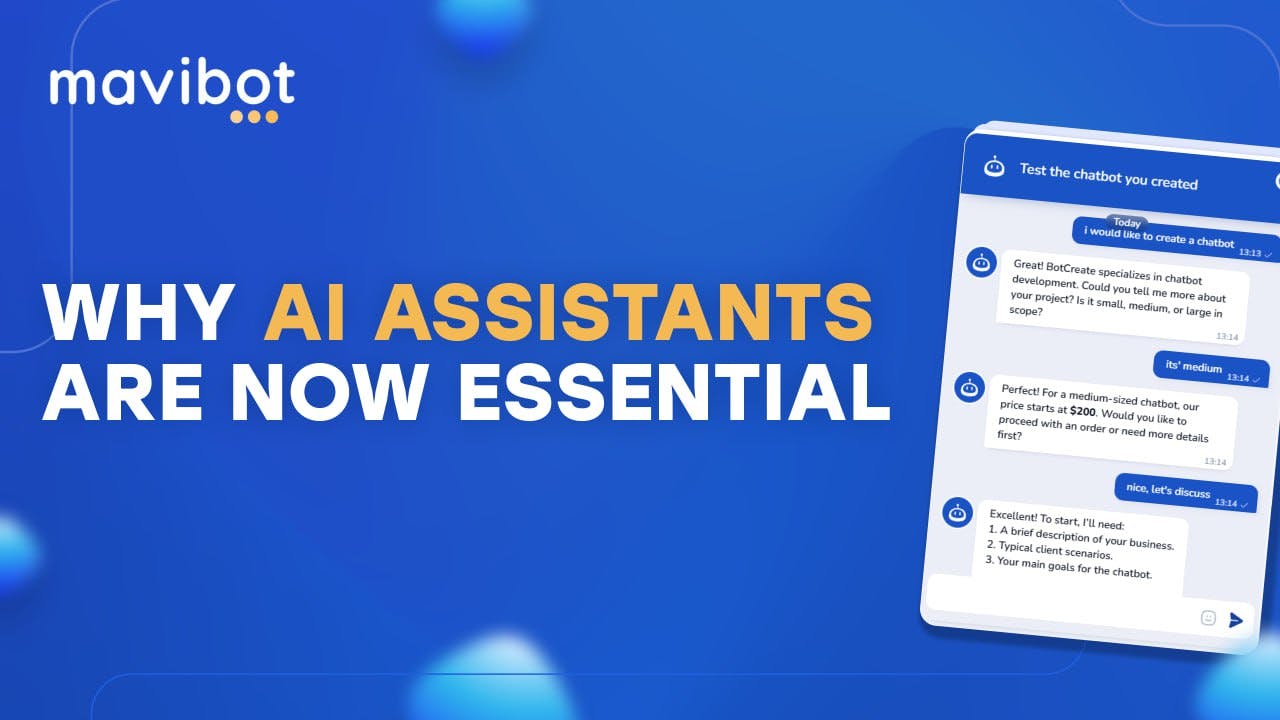
Remember when automation was about saving a few hours each week? In 2026, it’s about survival. Customer expectations have shifted, competition has intensified, and the tools have evolved. If your business still relies on manual processes and basic chatbots, you’re not just inefficient — you’re invisible.
Why 2026 is Different: The Five Shifts That Changed Everything
From Typing to Talking: Voice-First is Here
The rise of in-car interfaces, smart home devices, and wearable tech means customers now expect to interact by voice. Hands-free ordering, booking via voice command, and audible confirmations aren't futuristic—they're standard. Your automation must understand natural speech, accents, and intent, not just menu buttons.
From Reactive to Predictive: The Anticipatory Assistant
Modern AI doesn't just answer questions; it anticipates them. By analyzing past behavior, purchase history, and even external data (like weather or local events), a 2026 business assistant can proactively offer relevant solutions before a customer even asks. Think of it as a helpful employee who knows what your client needs next.
The End of App-Switching: The Unified Digital Employee
The era of juggling a separate tool for chat, email, CRM, and scheduling is over. Businesses now deploy a single, unified digital assistant. This "employee" manages the entire customer journey—from initial discovery and booking to payment, follow-up, and loyalty—within one coherent, intelligent interface. Data silos are a relic of the past.
Seamless GovTech: Trust Built-In
With the global rise of digital government infrastructure, automation now integrates directly with official systems. Think instant identity verification via national digital IDs, legally-binding e-signatures for contracts, and automatic tax/GST compliance checks. This isn't just convenient; it's a fundamental layer of trust and efficiency for regulated industries.
Emotion-Aware AI: The Human Touch, Automated
Beyond understanding words, the latest AI analyzes tone, sentiment, and emotional cues in text and voice. It can detect frustration and escalate to a human, recognize excitement and capitalize on upsell opportunities, or adjust its communication style to be more empathetic. This creates experiences that feel genuinely helpful, not robotic.
What Changed Since 2024: The Acceleration
Conversational AI is the Baseline. The simple, decision-tree bots of 2024 now frustrate users. They demand fluid, context-aware conversations that remember previous interactions and adapt on the fly.
Privacy by Design. Stricter global data regulations have made privacy and security core features, not add-ons. Automation tools are now built with zero-trust architecture and local data processing from the ground up.
Mobile-Only Reality. The "mobile-first" mantra is obsolete. For a vast majority of customer interactions, especially in emerging markets, the smartphone is the only touchpoint. Your automation must be designed for the small screen and mobile data constraints.
Ecosystems Over Features. No tool is an island. The value of an automation platform is now judged by its ability to connect seamlessly to the other software in a business's stack—from accounting and logistics to marketing and analytics.
Your 2026 Starting Point: Keep It Simple
This doesn't mean you need to implement all five trends tomorrow. The winning strategy remains surprisingly simple:
Identify One Real Pain Point: What repetitive task drains your team's time or creates customer friction? Is it answering the same 10 questions? Scheduling appointments? Onboarding new clients?
Automate That Single Thing: Choose a modern tool that can solve just this one problem using 2026-level capabilities (e.g., a voice-friendly booking assistant or a predictive FAQ bot).
Measure the Real Impact: Did it save time? Increase satisfaction? Boost conversions? Look at the data.
Expand Gradually: Use the success and learnings from step one to automate the next pain point. Build your intelligent, unified assistant piece by piece.
The Time is Now
The gap between businesses that have embraced intelligent automation and those that haven't is widening into a chasm. In 2026, an AI assistant isn't a luxury for cutting-edge companies; it's the essential central nervous system for any customer-facing business that wants to stay relevant, efficient, and competitive.
The question for 2026 isn't if you'll automate, but how intelligently you'll do it.
Ready to build your 2026-ready assistant?
Mavibot.ai provides the unified, intelligent platform to start simple and scale your automation.
Replies