

Atlasly
Your site did 5 days of research. We did it in 60 seconds.
83 followers
Your site did 5 days of research. We did it in 60 seconds.
83 followers
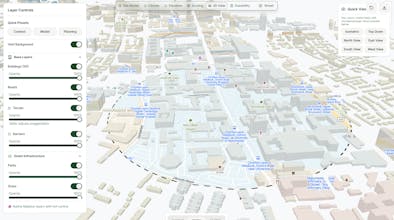
Architects and developers spend up to a week manually gathering site data before design can even begin, flood risk, planning rules, heritage restrictions, terrain, 3D Map, and more, scattered across dozens of websites. Atlasly does it in one click. Type any address and instantly get a complete site intelligence report. No GIS expertise. No tab switching. No wasted days. We're in beta with 1,000+ users and backed by Barclays Eagle Labs, Accelerate ME and Manchester Angels.




Atlasly
Congrats @deep_nandre How are you handling data coverage across different regions and planning jurisdictions? AEC professionals work across wildly different regulatory environments.
@deep_nandre @jerrybyday Absolutely! We are currently focusing Atlasly specifically on the UK market to solve this. Our strategy involves integrating directly with the new National Planning Data standards and using AI Agents to parse the NPPF (National Planning Policy Framework) alongside local council Local Plans.
For example - You can see exactly how a Green Belt or Grey Belt designation affects your specific site in minutes.
This is a great one. Would love to know more about how the data layer is structured — are you aggregating from official planning portals directly, or is there a human curation layer involved?
@jacklyn_i We’re aggregating directly from official UK portals, then using Agentic Curation to clean and cross-reference the data.
It’s about using AI to automate the verification process so the site analysis is actually project-ready.
How do you handle updates to regulations or planning rules across different regions? Is the data live or periodically refreshed?
@muhammad_umer_farooq4 We pull data from the Land Registry and official UK planning to keep our data live. Our agents also monitor the latest policy shifts in real-time, so your analysis reflects today’s codes, not last year’s PDFs. (For example, the latest NPPF in the UK)
@shatakshi_patil That’s really impressive.I’m very interested in what you’re building with Atlasly. Maybe there’s room for a small collaboration or exchange of ideas sometime. Would love to connect and learn more about your vision