
LobeHub
Agent teammates that grow with you
875 followers
Agent teammates that grow with you
875 followers
Today’s agents are one-off, task-driven tools — isolated, slow, costly, and hard to build — failing to unlock the full potential of AI models.LobeHub changes that. We build long-term agent teammates that grow with you. Anyone can easily create and collaborate with agent teams to deliver complex, end-to-end work. With multi-model support, LobeHub is faster, more cost-effective, and goes beyond single-agent systems.




LobeHub
Hey PH, I'm Arvin, founder of LobeHub.
Two years ago, I created LobeChat, an open-source, multi-model interface. LobeChat now has 70k GitHub stars, 14k forks, 2 million lines of code, and serves over 6 million users worldwide — yet most of it was built by me and my agent teammates. Today, I'm excited to productize the way I work into a new product: LobeHub.
LobeHub is the next generation of agent harness. LobeHub matches what Manus and Claude Cowork offer and goes beyond with capabilities today's agents can't support:
• Anyone can effortlessly build and team up with agent coworkers to deliver complex, systematic work — even assembling a quant team to execute trades. If token usage reflects how much AI power someone can leverage, today that power largely belongs to engineers. My mission is to democratize token consumption, empowering everyday users to craft their own agent teammates.
• Agent teammates are always-on and evolve with you. Today's agents are mostly disposable tools — task-driven with shallow, impersonal memory. At LobeHub, agents are true teammates. Each agent has persistent memory, editable by you, allowing humans and agents to co-evolve over time. We're building long-term agent teammates that grow alongside you — not just agents that complete tasks.
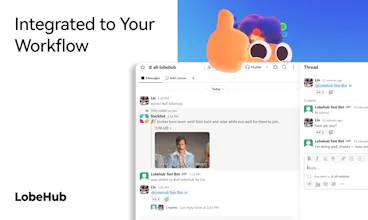
• A fundamentally new, agent-first experience. Spin up agents or agent teams while writing, chatting, brainstorming — from ideation to execution to delivery — across your entire workflow. Here, agents aren't just tools, they're units of work.
• Community-driven intelligence. My philosophy starts with people. Humans matter. AI intelligence and shared human intelligence are equally important. Through the LobeHub community, anyone can discover, reuse, and remix agent teammates and teams — customizing them to fit their own workflows and needs.
• Multi-model orchestration from day one. Our vision began with LobeChat's multi-model support, leveraging each model's unique strengths. By orchestrating multiple models, LobeHub delivers better cost efficiency and enables capabilities that single-model approaches simply can't match.
LobeHub is the ultimate space for work and life: find, build, and collaborate with agent teammates that grow with you. We're building the world's largest human–agent co-evolving network.
Ask me anything! 🚀
LobeHub
@arvinx God job, Arvin!
YouMind
@arvinx Brilliant product, congrats on your launch.
LobeHub
@undefiend_ph Thanks! YouMind is aslo amazing~ 🎉
I see that the landing page directly takes to the sign-up page. Is there a home page I can read more about the product? Or you recommend, I signup and explore? :)
Mom Clock
@rohanrecommends I was having the same question until I realized they have their landing page at root domain.
LobeHub
@rohanrecommends Go www.lobehub.com for the landing page
LobeHub
@rohanrecommends Sorry, as our current product requires an invitation code, the link directly takes you to the product page. Our official website is https://lobehub.com
Lancepilot
Congrats on the launch.
Agent teammates that grow with you is a strong concept. What’s the biggest problem LobeHub solves compared to single-agent setups?
LobeHub
@priyankamandal Thanks!
The biggest problem LobeHub solves vs single-agent setups is providing a dedicated agent harness for multi-agent work.
Instead of forcing one agent to do everything, LobeHub runs agent teams with two runtimes: an agent loop (where each agent executes its own tasks) and a supervisor loop (which coordinates, routes work, and keeps the overall plan on track). This significantly improves collaboration efficiency and, just as importantly, keeps each agent’s context space isolated, so they don’t bleed unrelated memory or assumptions into each other.
Lancepilot
How do LobeHub agents build long-term memory and context without becoming stale, biased, or overly confident over time?
LobeHub
@istiakahmad Great question. Memory in LobeHub is designed to be transparent and editable — it’s not a black box. You can inspect, edit, or remove memories at any time.
Agents also adjust what they keep based on ongoing interaction, rather than blindly accumulating everything.
Product Hunt
LobeHub
@curiouskitty Good question.
One of LobeHub's underlying design philosophies is user visibility and control. Our multi-agent system is not a module hidden behind the scenes, but rather individual "teammates" that are visible and interactive to the user.
First, the decision-making power lies with the user. Users can create their own agents or set up agent groups, where every member is explicitly visible.
Furthermore, users can intuitively see the responses and outputs of each individual agent.
When the entire multi-agent process is visualized in this way, it becomes very clear where issues arise or where results don't meet expectations.
Minara
I love how I can clone and adapt existing agents: great for learning, customizing, and experimenting. Congratulations on the launch!
LobeHub
@amberjolie Thanks! That’s exactly why we made agents clonable — it’s often the fastest way to learn and adapt them to real needs.
Lancepilot
What kinds of work become possible with agent teams that are fundamentally impossible with today’s single-agent or prompt-based tools?
LobeHub
@iftekharahmad Good question — this gets to the core of why we built LobeHub.
A single agent handling complex work quickly runs into a context problem: it has to remember too many unrelated things at once. For example, you probably don’t want your legal advisor to remember that you had McDonald’s yesterday — but in a single-agent setup, everything ends up in the same context.
To work around this, people already start doing complex engineering: different prompts for different scenarios, carefully scoped context, separate memories, different tools. At that point, you’re effectively creating multiple agents anyway.
LobeHub makes this explicit and more human-friendly. You can assign clear roles, memory, and constraints to different agents, let them collaborate, and supervise their interaction more naturally — instead of fighting a single overloaded agent.