

OpenAI
APIs and tools for building AI products
5.0•716 reviews•12K followers
APIs and tools for building AI products
5.0•716 reviews•12K followers
The most powerful platform for building AI products.
Build and scale AI experiences powered by industry-leading models and tools.
This is the 29th launch from OpenAI. View more

Codex Plugins
Launching today
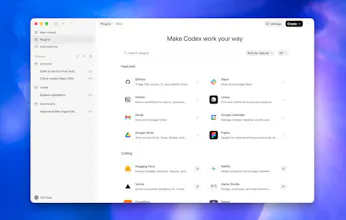
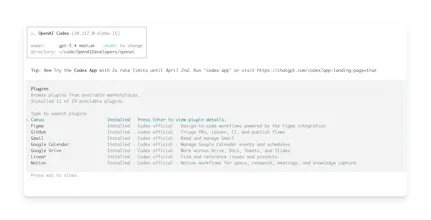
Codex Plugins package skills, app integrations, and workflows into reusable, installable bundles for teams and developers. Seamlessly connect tools like Slack, Figma, Notion, and Google Drive to streamline planning, research, coding, and post-work workflows. Build, share, and scale consistent workflows across projects with built-in skills, authentication, and integrations.





Free Options
Launch Team


 Gemini 2.5 Pro
Has anyone tested codex?
Is it better than claude code?
Codex Plugins by @OpenAI turn workflows into installable, reusable bundles, bringing tools like Slack, Figma, Notion, and Gmail directly into your dev flow.
Instead of scattered setups (skills, configs, integrations), plugins package everything... skills, app connections, and MCP servers... into one seamless workflow. That means Codex can handle not just coding, but planning, research, and execution across tools.
Perfect for developers and teams who want consistent, shareable workflows across projects. Build your own plugins or use curated ones to get started fast.
Key points:
Codex now integrates with tools like Slack, Figma, Notion, Gmail, and Google Drive.
Plugins let Codex handle planning, research, coordination, and post-coding workflows.
Example: The Google Drive plugin enables working across Docs, Sheets, and Slides in one loop.
Plugins bundle apps + built-in skills + authentication, so Codex can instantly use these tools effectively.
Available in Codex app, CLI, and IDE extensions.
Developers can build and share custom plugins.
More plugins and capabilities are coming soon.
Perfect for developers and teams who want consistent, shareable workflows across projects. Build your own plugins or use curated ones to get started fast. Codex is evolving from a coding assistant into a full workflow automation tool for developers and teams.
@rohanrecommends This is interesting — but it feels like the real shift isn’t just bundling tools, it’s where workflows start.
Most workflows today begin after the opportunity is already clear (task, ticket, request).
Curious if you see this evolving toward earlier stages — like capturing intent or signals before they even become structured work?
The reusable bundle concept is the right abstraction for teams. One thing I’m curious about: how do you handle plugin versioning when a shared plugin gets updated? If three agents in a workflow are all depending on the Slack plugin and someone pushes a breaking change, does it propagate automatically or do agents pin to versions? That’s usually where shared tooling falls apart in practice.
minimalist phone: creating folders
This is insane; it will manage 3 different tasks from 3 different tools. In seconds. No human is as versatile as this.
Congrats on the launch! 🚀
As a QA, this looks useful, planning to try it in my workflow soon