Your AI agent has write access to production. Do you actually control what it does? rbitr is the enforcement layer between agents and the tools they call. Real-time policy, human-in-the-loop approvals, and an immutable audit trail. Built for teams shipping agents that take real actions.
While experimenting with AI agents, I kept hitting the same wall: the moment an agent gains write access to a real system (e.g creating tickets, modifying records, triggering refunds) existing security tools stop making sense. IAM assumes static roles. API gateways operate at the route level. Logs tell you what happened, not whether it should have. Nobody had a clean, reusable answer to "how do you actually govern what an agent is allowed to do?" That gap was the inspiration.
I'm trying to help teams shipping AI agents in production face an impossible tradeoff: lock agents down to read-only and lose most of their value, or grant write access and hope nothing goes wrong. Neither is acceptable. rbitr solves this by sitting between agents and every tool they call — classifying each action, evaluating policy in real time, and enforcing ALLOW, DENY, or REQUIRE APPROVAL before anything executes. High-risk actions get held for human review with replay-proof, token-bound approvals. Every decision is logged with full context for audits and security reviews.
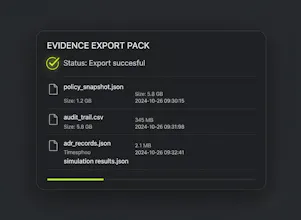
I started by solving the hardest problems first: exact-once execution guarantees, cryptographically safe approvals, and immutable audit trails. Early on I thought the gateway and policy engine were the core product but I quickly realised the approval workflow and evidence layer were the real differentiators. That's what enterprises actually need to trust agents in production. The product evolved from "enforcement proxy" to a full governance control plane with policy versioning, simulation, rollback, and exportable audit evidence.
Report
No reviews yetBe the first to leave a review for rbitr