
Golden Kitty voting time, to be precise.
Only four days left to vote for your top products from 2022: crown the best in AI, Data and Analytics, Design Tools, Developer Tools, E-Commerce, SaaS, and more.
Personal productivity, at scale

Operational productivity at enterprise level is a complex beast, and there’s no singular explanation for why it tends to decline as organizations grow.
The challenge: For many, the scaleup experience is associated with decreases in decision-making efficiency, alignment, and employee engagement, often attributed to increases in red-tape, communication gaps, and social loafing.
As a reaction to witnessing this phenomenon take hold during his tenure at Robinhood, maker John Reinstra whipped up a seasoned engineering team of five (ex Meta, Robinhood, Amazon) along with two designers (ex Netflix, Atlassian), and built General Task.
“I watched [Robinhood] grow from 75 people to over 3,000, and as that happened, I saw the company become far less efficient,” he explains. “Towards the end, I was spending hours every day triaging the endless emails, messages, tasks and alerts that all required my attention, while also constantly being blocked by others due to poor prioritization. ”
The fix: Reinstra developed General Task to help people better structure their workday by combining AI-automated task prioritization with renowned personal productivity methods like mono-tasking and time-blocking. Users can integrate Google Calendar, Slack, Github, and Linear to schedule tasks, manage pull requests, track assigned issues, and convert Slack messages into assignable tasks.
“Our initial integrations support primarily the use-cases of startup employees,” says Reinstra, “We have many more integrations on the way, including JIRA and Asana coming soon.”
The four-column design works even on a 13-inch Air, and gives you a view over navigation, your to-do list, the context attached to tasks, and your calendar.Take two minutes to try it out and let the team know what you think?
Your agents stopped answering and started doing
Your agents call tools, write to databases and move money, so a wrong answer is now a wrong action, which is a considerably worse meeting. Arcjet runs policy before every LLM call, tool call, query and API request: prompt injection, sensitive data, bots, rate limits, spend quotas, and your own rules in Rego on top. It reads the OpenTelemetry you already emit, so switching it on is one environment variable, no code changes and nothing to deploy. Each check also reads the earlier steps in the same workflow, so an agent's tenth action gets judged against the first nine and not on its own. JavaScript, Python and Go SDKs all at 1.0, agent framework guards included, free tier to start on.
Daily Top Products


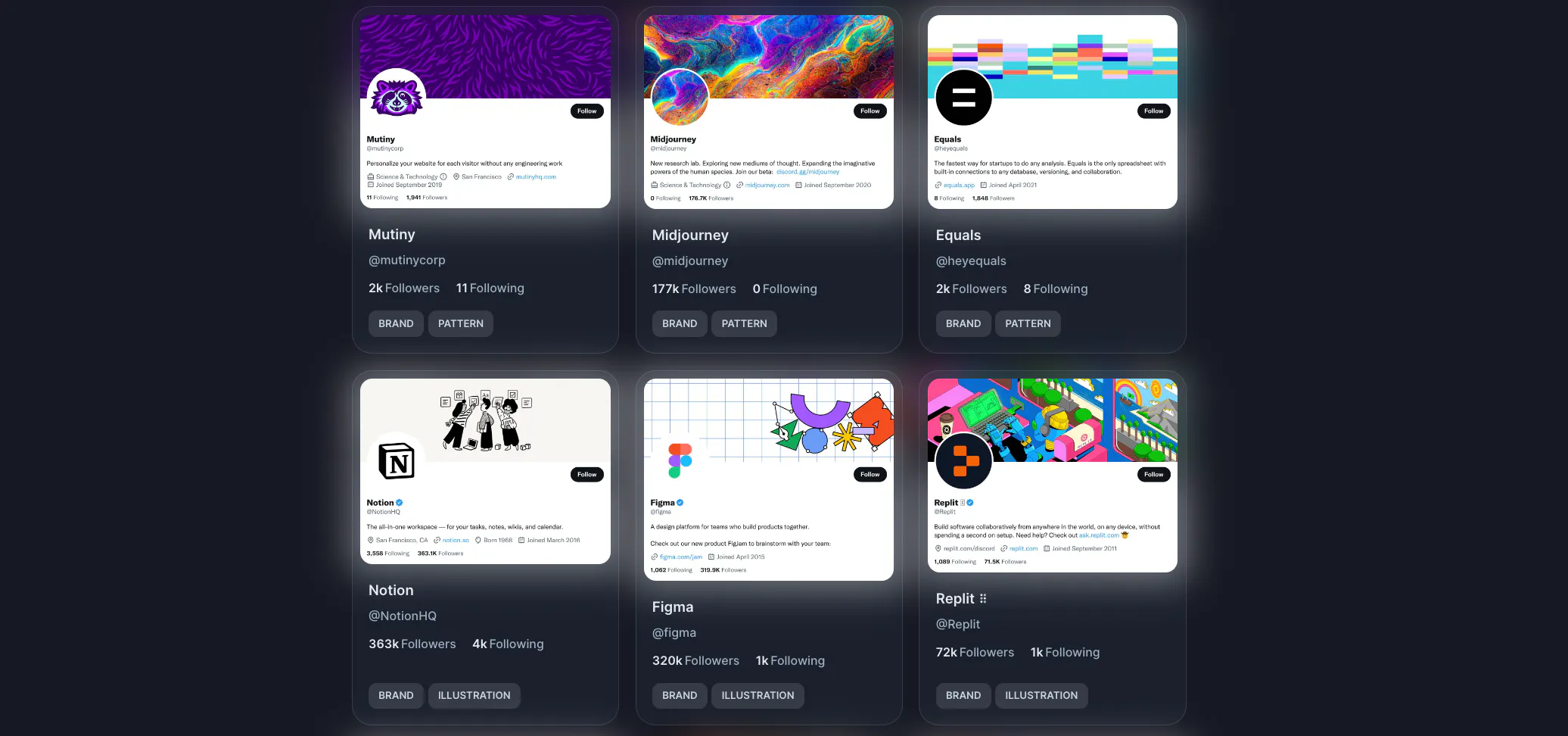
- Twitter Headers Gallery will inspire you to update your brand profiles today.
- Komo AI offers more “delightful” search experiences for brainstorming, research, and exploring Reddit, YouTube, TikTok, Twitter, and more.
- AI With Vibes is a newsletter that promises to make you “AI smarter and funnier in just 5 minutes.”
- Two Minute Reports consolidates Marketing and Product data into a Dashboard in Google Sheets, pulling from Google Analytics, major social ads platforms, Shopify, and more.

- Feedback Widget by Olvy uses AI and GPT-3 to manage collecting, analyzing, actioning, and responding to general and in-app feedback from product users.
- Rayst is a Chrome extension that reveals the company, tech stack, and statistics like monthly visitors behind any website (data source unknown).
- Swimm aims to make it easier for developers to locate trustworthy, up-to-date documentation (directly in their IDEs) by updating it as the code changes.