That's a lot of units
Happy Thursday! What goes well with coffee? News, of course! I’ve gathered some for you.
🚗 EV charging just got a $623 million boost from the US government.
🛍️ Google Cloud is rolling out gen AI features specifically for retailers.
🐇 Rabbit sold 10,000 units of its R1 handheld AI device in one day.
P.S. Did you know we have a new podcast? Catch up with all the tech news you missed in the Product Hunt Weekly Digest Podcast.
*Jedi wave* These are the GPTs you’re looking for
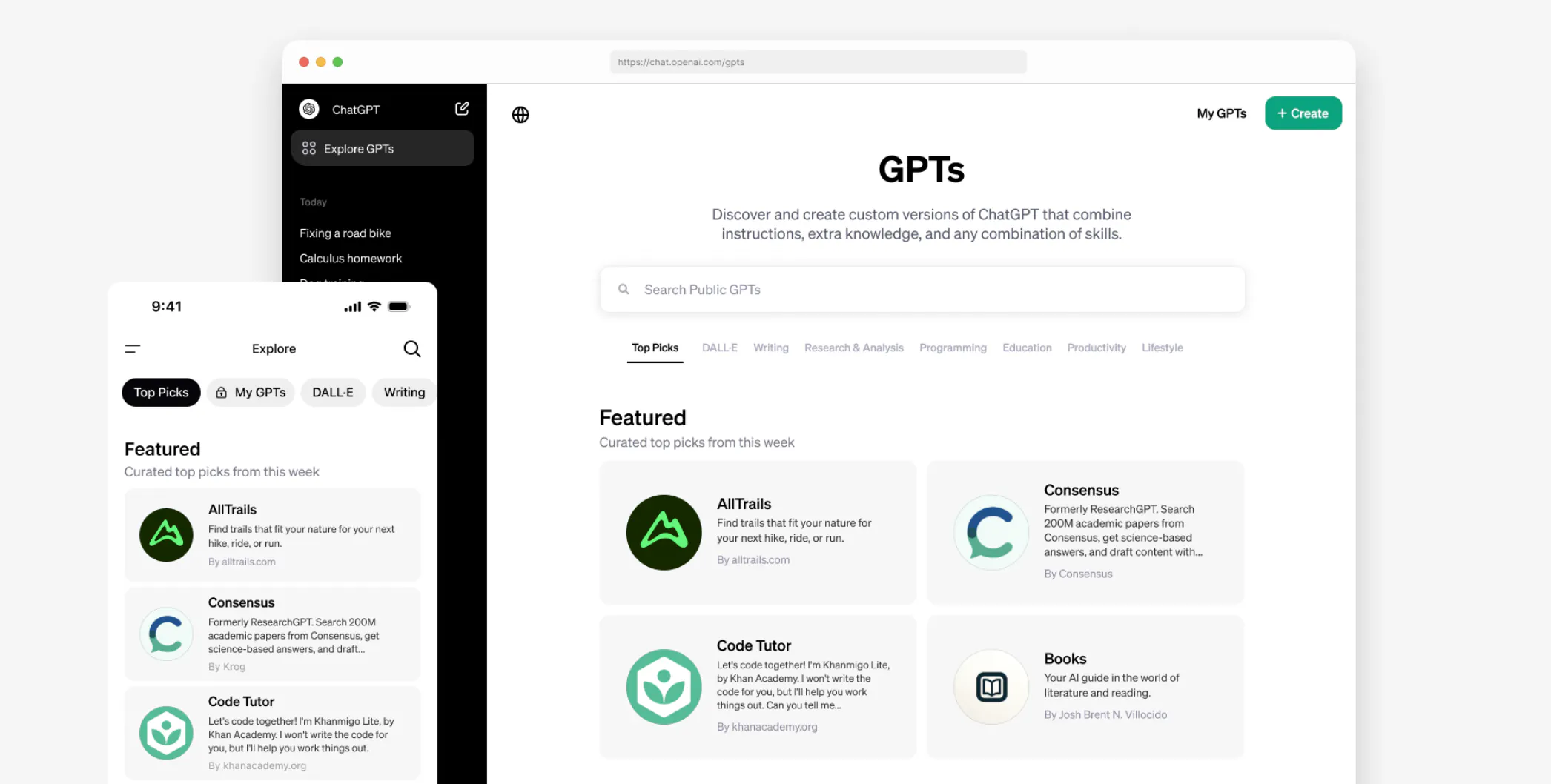
The AI race is already in full swing and has been for some time, with OpenAI, Google, Microsoft, Meta, and more all vying for some sweet market share. Now, OpenAI is looking to place itself firmly ahead with a new kind of app store.
The company launched its GPT store yesterday, a platform where users can upload their own custom-trained ChatGPT bots, called GPTs, or search and download others based on specific use cases like writing, cooking, productivity, etc.
The GPT store was initially slated to release around November, but the Sam Altman - OpenAI board drama put a brief halt to it whilst the company worked to get back on track.
According to the company announcement, the GPT store already boasts a whopping 3 million GPTs ready to download, with some built by companies like AllTrails, Canva, and Khan Academy.
What’s a GPT? Back in November, OpenAI launched GPT Builder, a platform to make it easier for creators from all walks of life (including non-developers) to create their own ChatGPT models trained on specific niches. Similar to how makers have been launching wrappers for some time now.
What’s still a bit fuzzy is the payment details. Back in the initial announcement, a lot of buzz was made about OpenAI paying creators for their GPTs. No word yet on how that will work, but the company has stated they are working on it, with an expected announcement in Q1.
Your agents stopped answering and started doing
Your agents call tools, write to databases and move money, so a wrong answer is now a wrong action, which is a considerably worse meeting. Arcjet runs policy before every LLM call, tool call, query and API request: prompt injection, sensitive data, bots, rate limits, spend quotas, and your own rules in Rego on top. It reads the OpenTelemetry you already emit, so switching it on is one environment variable, no code changes and nothing to deploy. Each check also reads the earlier steps in the same workflow, so an agent's tenth action gets judged against the first nine and not on its own. JavaScript, Python and Go SDKs all at 1.0, agent framework guards included, free tier to start on.
Daily Top Products