
The Leaderboard
by Product Hunt
Wednesday, Apr 29
Wednesday, Apr 29
Your sleep score is guesswork
Gm legends, happy Wednesday.
A Polish agency open-sourced the wearable health layer — including the scoring algorithms your Oura ring won't explain. A 4-person startup has Microsoft doing its AI evals. Netlify shipped a Postgres database that branches with your code. And Orhan (@orhan_kilic) got 16% App Store conversions by making his app more boring.
Wearable health scores, now open source
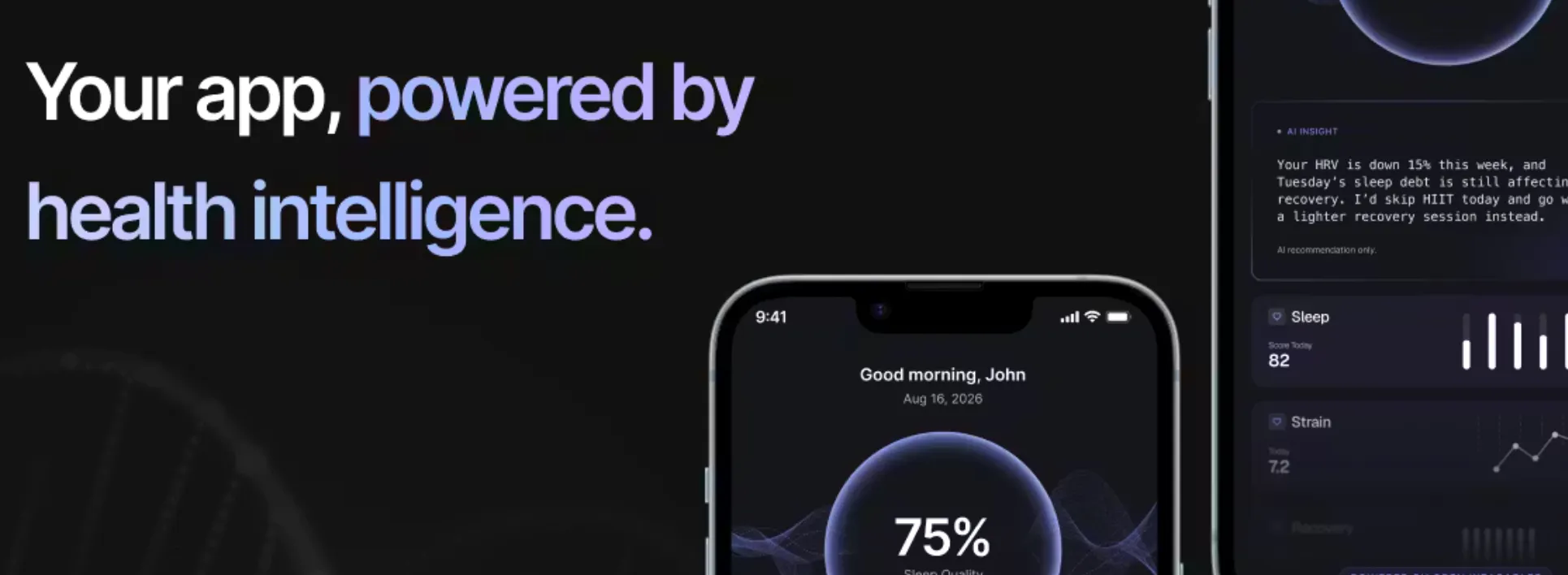
Open Wearables is a self-hosted, MIT-licensed API unifying 200+ wearables with open health scoring algorithms, built by Momentum, a Polish healthcare agency that open-sourced it after rebuilding the same data layer for clients one too many times.
🔥 Our Take: Wearable companies treat their readiness and sleep scores like trade secrets. You get a number with no explanation. Being able to see what the algorithm thinks "good HRV" means is a different kind of foundation, especially if you're building anything clinical or trying to make a real health claim.
AI evals without the annotation work

Plurai turns a plain-English description of how your AI agent should and shouldn't behave into a deployed custom eval model in minutes, no labeled data required — four people, Microsoft, Google, Nvidia, and IBM as customers.
🔥 Our Take: Most teams skip evals entirely because building a proper pipeline is its own project. If you can describe what good and bad looks like and get a working model in minutes, you'd actually do it. That's the real claim, and it's more interesting than the benchmarks.
Each branch gets its own database

Netlify Database is a one-click Postgres database — powered by Neon — built into the Netlify platform, with each Deploy Preview automatically getting its own isolated database branch.
🔥 Our Take: The branching is the part that matters. Teams have been sharing a single staging database across all their preview branches, which means one migration can silently break everyone else's preview. Each branch having its own state is an obvious thing that somehow nobody sorted out until now.
Boring = Sales
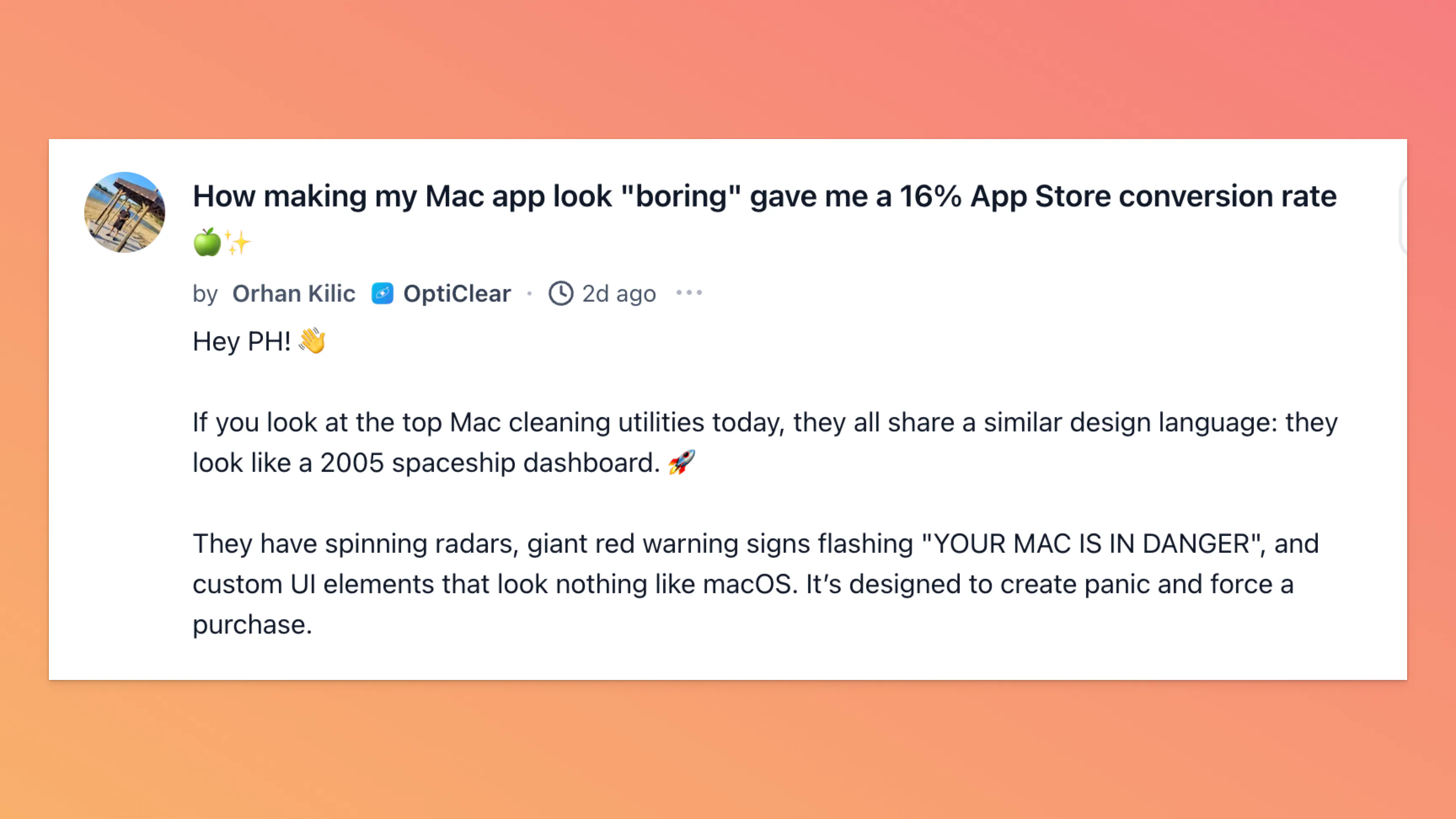
Orhan Kilic (@orhan_kilic) posted about a deliberate design bet he made for his Mac storage cleaner, OptiClear: he replaced the "spaceship dashboard" aesthetic common in cleaning apps with native SwiftUI, neutral copy, and no alarmist language. "Found 4.2 GB of system junk" instead of "Your Mac is in danger!" 16% App Store conversion followed.
The replies mostly validated him. The consensus was that flashy utility dashboards create distrust more than urgency. One commenter pushed back: does boring risk disappearing on a crowded App Store page? Orhan's answer was basically that the numbers didn't leave much room to argue.
"When you stop yelling at them, they actually start reading" — Maliik, on what happened to engagement when the alarmist copy came out.
Good thread if you've been wondering whether your app's polished, "professional" design is actually working against you.
Daily Top Products


Monday through Friday
Our ultra-fast Daily: Three takes on new products. Yesterday’s top ten launches. That’s it.