
Google vs. Airtable
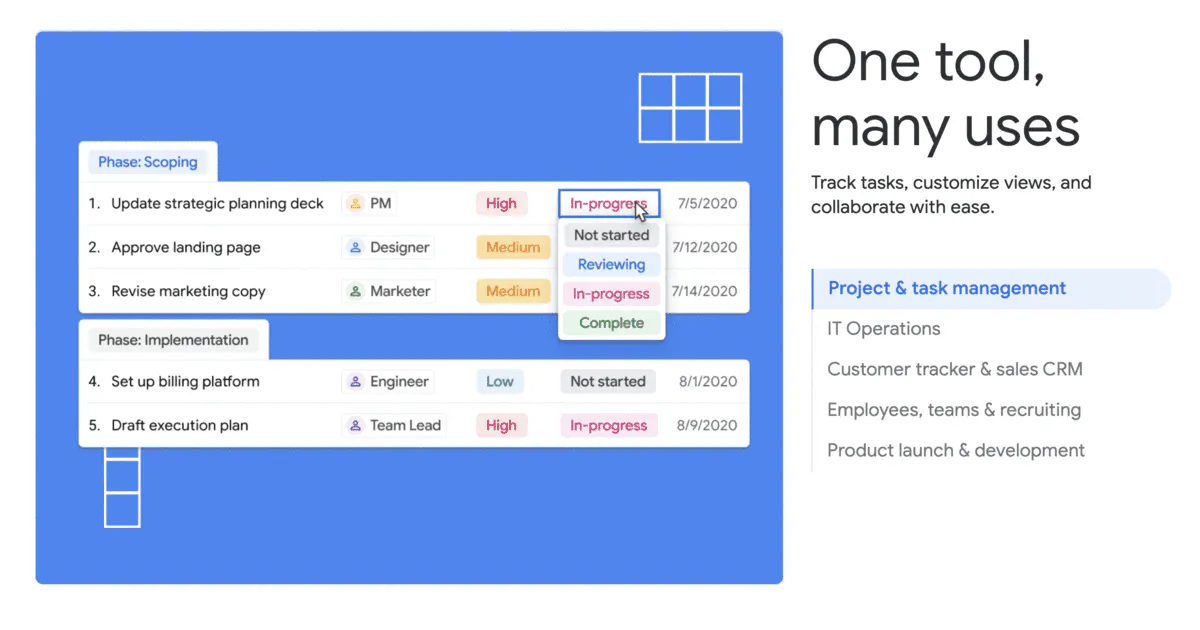
Google’s in-house incubator Area 120, launched Tables last week, a tool for collaboration, workflow, and automation.
This new Google tool is drawing some direct comparisons with the no-code giant Airtable, which recently upgraded its new platform with Sync, Marketplace, Apps, and Automation while raising $185M. We wrote about this in more detail.
Google positions Tables as a project management tool to get teams on the same page (and the same virtual table) with bots, automation, and seamless integration to other Google products like Sheets, Groups, and Contacts.
While there are many productivity tools in the market and many adopting a Kanban board approach, Trello, Monday.com, Asana to name just a few, Google has an advantage of tapping into its existing user base of millions of users already invested in Google’s ecosystem (Gmail, Drive, Docs).
The product was launched in a Google-like freemium fashion.
You can use Tables for free, with support for up to 100 tables and 1,000 rows. The paid plan includes a 3-month trial, starts from $10/month/user giving you up to 1,000 tables and 10,000 rows/table.
Would you switch to Tables?
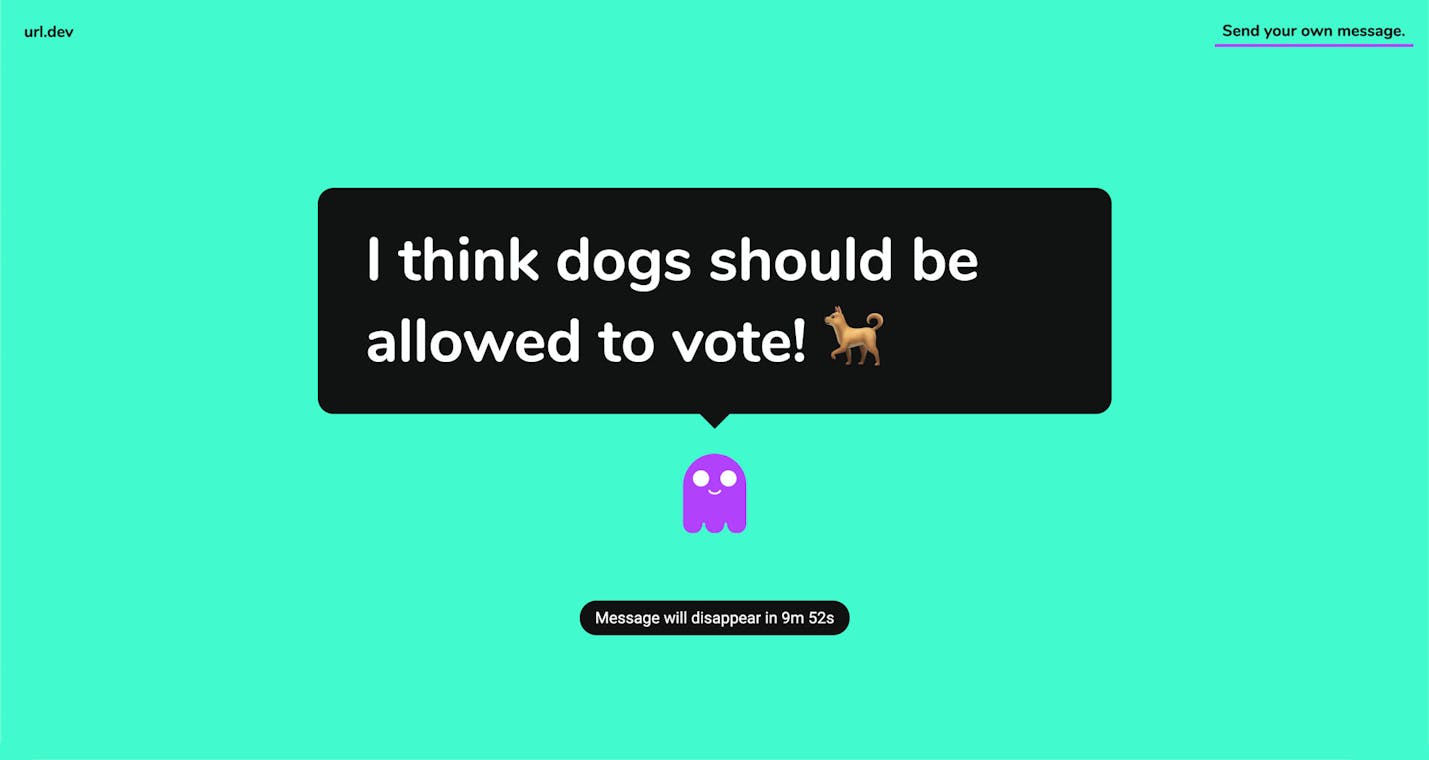
This tool wants to make disappearing URLs and self-destructing messages cool as well.
Your agents stopped answering and started doing
Your agents call tools, write to databases and move money, so a wrong answer is now a wrong action, which is a considerably worse meeting. Arcjet runs policy before every LLM call, tool call, query and API request: prompt injection, sensitive data, bots, rate limits, spend quotas, and your own rules in Rego on top. It reads the OpenTelemetry you already emit, so switching it on is one environment variable, no code changes and nothing to deploy. Each check also reads the earlier steps in the same workflow, so an agent's tenth action gets judged against the first nine and not on its own. JavaScript, Python and Go SDKs all at 1.0, agent framework guards included, free tier to start on.
Leaderboard highlights


Every Sunday
Everything you missed this past week on Product Hunt: Top products, spicy community discourse, key trends on the site, and long-form pieces we’ve recently published.