The Roundup
Everything you missed this past week on Product Hunt: Top products, spicy community discourse, key trends on the site, and long-form pieces we’ve recently published.

“I think of habit formation as filling a bucket one drop at a time. Building that infrastructure, rather than building yourself up.”
That’s what Twitch co-founder Justin Kan told us about his approach to building healthy habits.
If you have trouble with habits, you’re not alone. It’s a common topic of discussion we see in the Product Hunt community and we all have our own stories to tell. Kan’s story included hitting a rock bottom moment and looking to exercises in meditation to find his way to his way out.
When he was worried he’d fail, he turned to Twitter and asked his followers to help keep him accountable — a kind of building in public, only building on your self infrastructure. That started his journey to launching Kin, a social habit-forming app.
“I've been on a quest to improve my mental and physical well-being so I can present the best version of myself to the people around me. Amongst other things, this quest led me to start building Kin with @amittm, @damienkan, and @omarjalalzada.”
Kin’s goal is to help you create long-lasting changes and the makers have wrapped their learnings so far into the app, building off of concepts like breaking down your habits and even self-acceptance. Along with tracking, Kin bakes in accountability with chats and courses to help you learn about habit formation.
We spoke with Jalazada and Kan last week on Twitter Spaces to learn from their expertise on building habits. Here's a snippet from one of our favorite user-submitted questions.
Q: “Working at a startup can be extremely difficult and can take a toll mentally and physically. What should you do to not get burned out?”
A: “Developing some sort of ritual is key to bringing you some peace. If there’s no framework for you to hang on to, the energy of your environment is going to consistently pull you around. There’s a general tendency to believe “This person meditated or is working out, so if I meditated I will feel happier." BJ Fogg has a pretty good framework to identify your own aspirations. An example: You might be really into a particular sport or your kids. Spending 10 minutes with those might be a lot more beneficial to your mental well-being and physical well-being.” - Omar Jalazada, cofounder of Kin
You can also read our interview for more about habit formation from Jalazada and Kan here.


Last month we wrote about the growing space of identity verification with the launch of Persona, which its founders have called “Stripe for identity verification.”
Not to be outdone, Stripe has launched Stripe Identity. The new product lets businesses programmatically confirm the identity of global users. In other words, Stripe’s making it easier for makers to confirm their users are who they say they are.
Like its competitors, Stripe Identity will make identity verification, which is normally cumbersome and complex to build and execute, more accessible to businesses.
Stripe users get the benefit of having identity tools centralized among Stripe’s other core business operations so they don’t have to hop between payments, subscriptions, and verification. Verification can start with grabbing a link from your Stripe dashboard (i.e. no-code), or can scale to embedded verification using Stripe’s pre-built libraries and SDKs.
Stripe Identity rounds out a number of impressive expansions from the company recently:
Stripe Tax - Calculate and collect sales tax, VAT, and GST with one line of code
Stripe Payment Links - A no-code way to create payment pages in just a few clicks
Stripe Invoicing - Create and send a Stripe-hosted invoice in minutes, without code
Stripe Treasury - Embed financial services in your platform
That’s not including what they’ve been working on over the last twelve months.
Stripe Climate - Direct a fraction of your revenue toward initiatives that remove carbon
Stripe Billing Customer Portal - Let customers manage their subscriptions
This product growth was to be expected after Stripe closed a $600M fundraising round in March at a valuation of $95 billion. Co-founder John Collison explained that the company planned to use much of the raise to invest in Europe, telling TechCrunch:
“Whether in fintech, mobility, retail or SaaS, the growth opportunity for the European digital economy is immense.”
The recent release of Stripe Tax was the perfect example of Stripe’s execution. Stripe Tax was built out of Stripe’s Dublin Engineering Hub, and together the products take the company one step closer to Collison’s goal of building a global payments and treasury network that works everywhere.


While products that market themselves as open-source alternatives to X may still have an air of rebellion, open-source founders regularly view open-source as the only option to achieve their mission.
Baily Pumfleet told us:
“It was very clear from the start that [Calendso] will always be open-source, because we believe that scheduling should be accessible to everyone.”
John O’Nolan said:
“Since the idea behind Ghost was to build the best software for publishers and journalists, it made a lot of sense to structure as a non-profit SaaS company, making open-source software.
Among last week's launches was an open-source alternative to Retool, and along with it, we rounded up 7 of the biggest open-source launches from the last year.
ToolJet (like Retool)
App builder tool for building on top of the data using
Calendso (like Calendly)
Calendar and scheduling tool to integrate into your product
Jitsu (like Segment/Fivetran)
Event collection and data integration
Screenity (like Loom)
Screen recording and sharing
Chatwoot (like Zendesk/Intercom)
Omnichannel communication platform
Athens Research (like Roam Research)
Knowledge graph for notetaking, research, and documentation
Porter (like Heroku)
Kubernetes-powered PaaS that runs in your own cloud provider
Jam (like Clubhouse)
Clubhouse-like audio rooms as a service
For a weekly dose of open-source, check out Console, a new newsletter from Jackson Kelley, an engineer from the Amazon Alexa team. Console dives deep into a new open-source project and the developer behind it.


It’s the billion-dollar question: How do you know if something is a good idea?
Two new products launched last week that empower makers to test and validate their ideas, helping to separate the good ones from the bad ones and ones that need improvement.
For makers and aspiring founders who need hands-on support to get to the starting line, there’s Day Zero.
Day Zero is an iteration from the founder of Day One, a fellowship for early-stage founders. You might see where this is going. Day Zero is a community for founders in their formative stages. The Day Zero community helps people to explore business ideas alongside serial founders and industry experts. New and aspiring founders can gain the tools and mentorship they need to ideate and validate their ideas “so your next big thing doesn't stay inside your head.”
Early Day Zero community members shared their experience:
“This product makes it feel *good* to scratch that entrepreneurial itch without spending a lot of $, quitting a job, or needing to announce it to the world” - Alifya Valiji
For makers who are already running or ready to start, the first step is often testing. Maker Avi Muchnick was used to creating burner pages to test his ideas but found that the tools and process for it were cumbersome.
“I would use Squarespace's website builders to spin up fake pages with surveys attached, and then would take out Google ads against those pages. Bottom line, this was a major process.”
Muchnick built Burner Page to allow makers to be up and running with tests in 60 seconds. He created the product first for himself and, after validating the idea with early testers, decided to focus on Burner Page. The Product Community has welcomed the new tool.
“I think this product is an amazing idea for young entrepreneurs. It helps get their feet wet...” Gidharee Saran
We know what it’s like to have a head full of swirling ideas or even just one gnawing at you. It can feel both exciting and overwhelming. Our best advice:



“CAPTCHA,” which stands for “completely automated public Turing test to tell computers and humans apart,” was coined by a group of computer scientists at Carnegie Melon University originally to help Yahoo! keep bots out of its chat rooms. One of those computer scientists, Luis von Ahn, went on to start reCAPTCHA (and later Duolingo) which was acquired by Google in 2009.
As essential as CAPTCHAs have become, memes and complaints are all over the internet. There are news articles about difficulty snagging newly-released concert tickets and CAPTCHAs altogether not working on websites for vaccination bookings. There are also Reddit groups like /r/captcha and /r/CaptchaArt. And of course, the memes. Although Google explains that with its CAPTCHAs, the company is using all of our frustrating experiences to train its AI and improve its products, sometimes people just don’t have the time to spend.
Other than memes, we’ve seen makers respond in a couple of different ways. The first is to bring us joy — like this DOOM Captcha that was launched last week. Just kill four enemies and you’re cleared. Maker, Miquel Camps Orteza, made it clear this is just for fun.
"Don't take this too seriously this is a little project for fun, if do you know how to code it's pretty easy to break the security of this."
Orteza also released Squat Captcha last year, which uses a webcam and desktop environment to force someone to do squats before continuing their online transactions.
On the more serious side, the team at Cloudflare has made it their goal to get rid of CAPTCHAs completely. The company used back-of-the-envelope math to calculate that humanity wastes about 500 years per day on CAPTCHAs, starting with the average 32 seconds it takes a user to complete a CAPTCHA challenge.
Cloudflare has put together a new way to prove you’re a human through what it calls “Cryptographic Attestation of Personhood.” It involves touching or looking at a device, supported through USB security keys like Yubikeys.
This is only an experiment right now so you won’t see it in many places beyond the Cloudflare website, and there are potential pitfalls. For example, Ackermann Yuriy of Webauthn Works told VentureBeat that this method could be gamed by using something as simple as a drinking bird toy to touch the security sensor — which is not a human.
Still, the idea offers an alternative solution, and one that has benefits for those with visual disabilities. For now, you can get nostalgic and...


Google’s not planning to play second fiddle though. Last week was its annual Google I/O developer conference. One of the biggest announcements was Smart Canvas which is not a new product but a host of updates that make its Google Docs, Sheets, and Slides more collaborative.
Smart chips (i.e. @mentions) now work for documents too instead of just people. Combine that with pageless docs, emojis, connected checklists, and table templates and you’ve got a collaborative workspace that jumps back into the future alongside competitors.
Not content with taking on just Notion, Google Sheets is getting a timeline view and teams can now edit content from a Google Chat room, which combined with other tools gives it some lite project management potential. There’s also now a quick way to present your docs directly to Meet, and in the fall Google will add Meet directly into Docs, Sheets, and Slides so you can meet and collaborate side-by-side.
Google had told us they were working on updates to Google Meet last month which included standard Zoom features like background replacements, improved pinning (and multi-pinning), streamlined controls, and higher quality meetings. They’ll soon be adding live captions and translations too. That may cause concerns for Otter.ai.
Smart Canvas wasn’t the only buzzy news of I/O. Google announced that Android has surpassed the milestone of 3 billion devices. Those users can try out the beta of Android 12 today which Google itself says is “the biggest design change in Android's history.”
Google has unified Android software and hardware ecosystems under a single design language which it’s calling Material You (a progression of its Material Design system introduced in 2014). The updates are heavy on personalization which has been a priority for Android from the start. Users can customize the color palette and adjust things like size and line width. Designs will follow you across the entire OS and not just on your phone but to Chrome OS, wearables, and other Google products.
Not last and not least, Google introduced LaMDA, a new natural language processing technique that makes AI conversations more natural-feeling by better responding to unusual or unexpected queries — i.e. if you’re talking about planets and you change the topic, it won’t be thrown for a loop. This could mean better interactions for your toddler and AI in the future.
For today, you can get started with those smart-er chips and checklists in Google Docs or let us know what you think of the updates.



This space has been growing and evolving. If you have opened a financial account online recently, you may have been asked to record a video of yourself speaking a specific prompt. This kind of tech is not only handy for the user, it powers a company’s process for satisfying KYC (know your customer) and AML (anti-money laundering) regulations.
Startups in this space have been working to make that process easier, quicker, and accessible to various industries and business sizes.
Case in point: Passbase which recently launch Biometric Authentication. Passbase launched its core product on Product Hunt less than a year ago — a “full-stack” solution enabling companies to integrate identity verification into their products, without code or natively with their API and SDKs. The Passbase founders have referred to their product as “Stripe for identity verification.”
The new iteration adds biometric authentication (along with more features and updated API). This means that, for companies using Passbase, once a user has completed the onboarding process and been verified, they can use biometrics (in this case, face ID) to authenticate themselves again, as needed while using a product.
Launches over the last year show how competitive this space is. In February, Persona, a fully automated identity verification suite, launched on Product Hunt followed by a $50M Series B. Like Passbase, Persona’s founders explained that their experience implementing identity verification in past jobs was full of pain points and stitched-together solutions. Maker Rick Song explained:
“We want to support every company with access to affordable identity verification solutions that can be integrated easily, without engineering bandwidth, and without having to commit to a costly contract.”
More recent Product Hunt launches in this space include Authentiq 2.0 and Invoid, an identity verification solution for India.
Each touts a familiar message about making identity verification accessible for more companies. With the tech in place, we’re eager to see what interesting use-cases pop up outside fintech.



“It's like when you rode on the train with a complete stranger before the internet.. You were more willing to share intimate information and discuss topics… This app is like a digital version of this conversation.” - Mark Khramko
Postmodern. works by enabling timed conversations between strangers that last from 5 to 60 minutes, depending on the prompt you choose to discuss. Prompts are topics of conversation, which seem to have a nice balance of being relatable yet broad. For example, “I don’t want my job to define me, but I’m not sure what should.”
Postmodern.’s maker Nathanial explained his motivation for the app:
“It’s critical that we have the ability to intellectually explore without fear of social ramifications… Just two brains bouncing off of each other exploring the void.”
In a way, Postmodern. is the flipside of the dating apps we covered last month which use prompts to help you make lasting connections. Don’t expect anything permanent from Postmodern. — you won’t be able to return your conversations once they’re over (we suppose there’s always Craigslist missed connections).
Even those who don’t consider themselves to be social may find something for them in Postmodern.’s completely anonymous framework. After more than a year of separation, many of us are getting chatty and have been reminded of the value of human connection.
Here are 7 more products that make for good conversation.
Historico - Daily historical events in an iPhone widget
mindf***- Bad Unicorn brings us Headspace with profanity
Fish Swami - Put your epic catch on record to show your friends
Cappuccino - Record audio "beans" with friends; listen tomorrow
Read This Twice - What’s on Elon Musk's reading list? Find out.
Humit - If reddit and Spotify had a baby


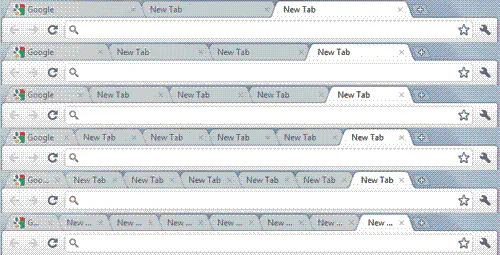
Mighty has just launched — a faster browser that is entirely streamed from a powerful computer in the cloud.
“When you switch to Mighty, it will feel like you went out and bought a new computer with a much faster processor and much more memory. But you don't have to buy a new computer. All you have to do is download a desktop app.”
Mighty is the newest company from Mixpanel co-founder Suhail Doshi. Mighty says that its speed will enable users to have 50+ tabs open without your computer coming to a crawl. It’ll also give users 2+ hours of battery life. Designing in Figma will feel 2x faster.

Suhail explained in Mighty’s launch blog that while the team initially started its work by looking at streaming Microsoft Windows (“80%+ of humanity still runs Windows”), it became clear that the better focus was browsers now that people have shifted much of their activity to web apps.
“From the user's point of view, the browser is the operating system.”
Mighty suggests its impacts go beyond the browser. Suhail's master plan is to reignite the future of desktop computing. Today, power users are chucking out hardware for newer, pricier models every few years. Suhail’s vision is the opposite. He sees a future where we upgrade less, replacing expensive computers with lower-powered ones, yet still achieving multi-day battery life.
Critics may deem software speed less necessary as hardware improves, but Suhail views things as a virtuous cycle where one inspires the other.
“By changing the constraints we're all used to as software and hardware engineers, a new kind of computer is possible. A computer that can directly benefit consumers to take advantage of cloud infrastructure and networking.”
Mighty is now onboarding new users from their waitlist every week.



Recently Slash launched with a service to save you from the consequences of forgetfulness. Slash lets you issue joint, shared debit cards that you and friends can “co-own” so you can split the costs on things like streaming subscriptions. This also means you can quickly create new cards, say with a limit of $1, to skirt being charged once your free trial expires. As maker Victor Daniel Cardenas notes, you’ll be “sticking the finger to free trials!”
“We started Slash as an answer to the ridiculous number of streaming, music, news, and other subscription services that have popped up, each offering their own silos of exclusive content.”
Remember not long ago when we talked about all the different forms of fractional ownership popping up? Add this one to the bank.
Slash’s two main use cases are growing in relevancy.
In the early days of streaming, apps like Netflix and Hulu were seen as an escape from excessive cable bills. As Bloomberg just reported, “If you put together the flagship streaming services… it would now cost you $92 a month in the U.S… as much as a typical cable-TV subscription.”
Separately, Vox writer Emily Steward just lamented about free trial enticements, and did a deep dive on the psychology and finance behind them, noting “Free trials flip the switch from choosing to buy to remembering to quit.”
Slash may be playing in gray territory. Commenters asked how the product will stand up against Terms of Service violations. It looks like the makers are willing to face the risks, partially because splitting amongst a household is totally kosher and partially because...
“Our bet is that it's pretty unlikely that most of them will crack down on cost-splitters, as they depend on these users to keep their service afloat!”
Last summer we saw a similar product, Braid, launch on Product Hunt. Braid enables group accounts by connecting to your existing bank accounts. Like Slash, Braid’s makers noted a lack of Venmo features and stitched-together solutions with apps and excel sheets as a driving motivator behind their product. Unlike Slash, Braid currently offers one credit card paired to a group.


