

Building an AI Chief of Staff taught us something: not every important email is urgent
One of the biggest challenges we've encountered while building FounderFlow is teaching AI the difference between information that's important and information that actually requires an executive's attention.
At first, it seems straightforward: analyze incoming emails, identify priorities, and help founders decide what to do next.
But we discovered that prioritization is more complicated than it looks.
An email from a VIP isn't necessarily urgent. A revenue-related conversation doesn't always require immediate action. And an unresolved thread shouldn't remain on someone's follow-up list after they've already responded.
These are the kinds of problems we've been working to solve.
What we've been improving
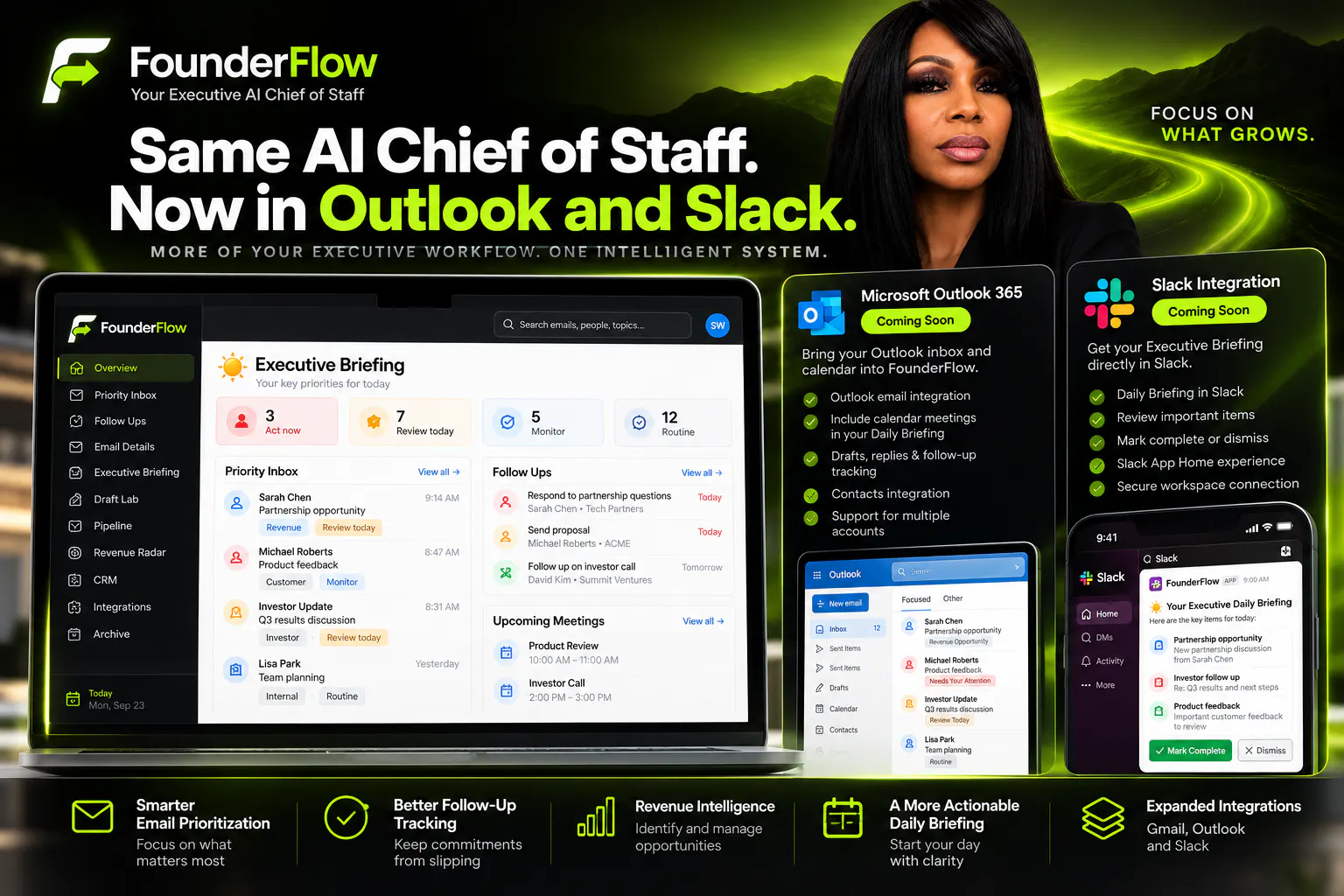
We're refining FounderFlow's decision intelligence to distinguish between five levels of attention: Act now, Review today, Monitor, Routine, and No action required.
We're also strengthening how the system handles completed conversations, outstanding commitments, and follow-ups so executives aren't repeatedly reminded about work they've already handled.
Expanding beyond Gmail
Another challenge has been making the experience work across the tools executives already use.
We're developing Microsoft Outlook 365 support so FounderFlow can work with Gmail, Outlook, or both. That includes email intelligence, meeting information, drafts, and follow-up tracking.
We're also testing a Slack integration that brings executive briefings into Slack, with the ability to mark items complete or dismiss them.
Both integrations are progressing through testing ahead of production release.
What we're learning
The hardest part of building an AI Chief of Staff isn't generating summaries.
It's building enough context and reliability for someone to trust the system's recommendations.
An AI assistant that constantly labels everything urgent doesn't reduce workload. It creates another source of noise.
We're trying to build something that does the opposite.
I'd love to hear from other founders and makers:
When you think about using AI to manage your daily workload, which is more valuable to you?
An AI that summarizes everything happening across your tools.
An AI that identifies the few things that genuinely need your attention and helps you follow through.
And what would make you trust its recommendations?
We're working through these questions as we build FounderFlow, and I'd be interested in hearing how others approach them.
Replies
Be the first to reply
Have a question or a thought to share? Add a comment above to start the conversation.