

Built Number to Words Converter for invoices & technical documents — would love your feedback!
Hey Product Hunt community! 👋
When drafting commercial invoices, legal contracts, or official financial reports, converting numerical amounts into formal written English text (e.g., "$1,250" to "One Thousand Two Hundred Fifty") is a routine requirement to prevent ambiguity and tampering.
To make this process effortless and error-free without relying on heavy or ad-cluttered websites, I vibe-coded a dedicated, browser-based Number to Words Converter micro-tool.
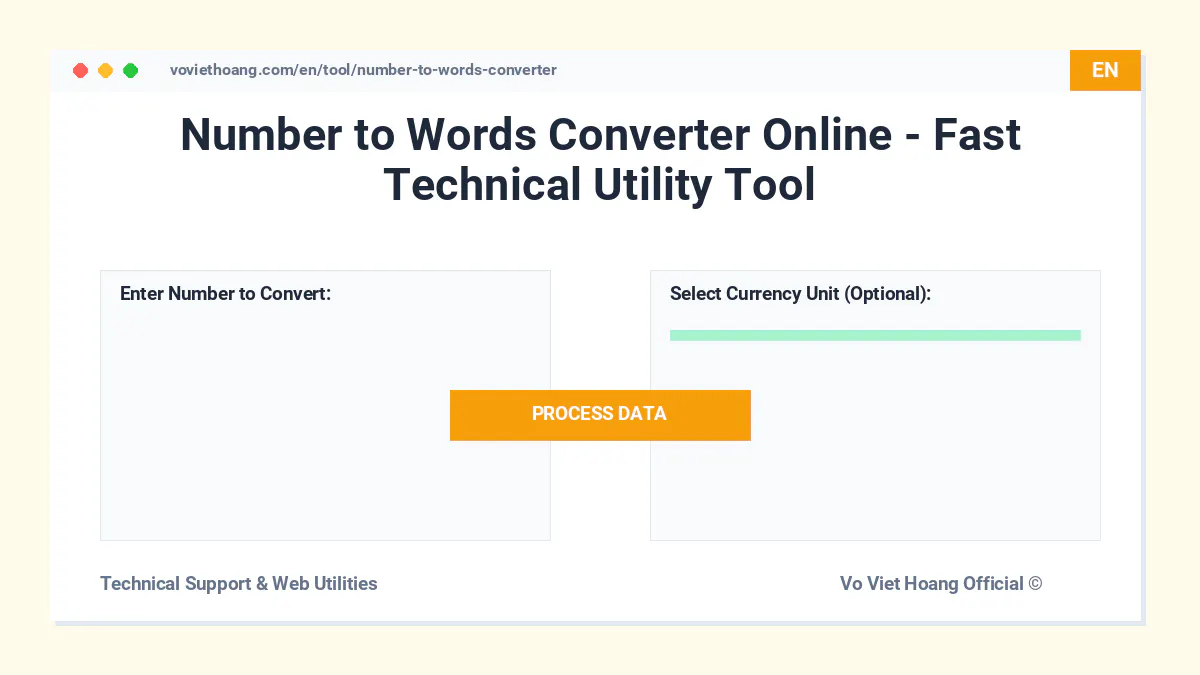
Key features & functionality:
Instant Text Conversion: Accurately converts small and large integer values into written English word formats in real-time.
Financial & Legal Ready: Designed to help webmasters, freelancers, and accountants quickly format invoice totals and official statements.
100% Client-Side & Private: All conversion logic executes directly in your browser using JavaScript—ensuring complete privacy for sensitive numerical figures.
I built this utility using PHP and vanilla JS to keep it lightweight, fast, and responsive. You can test it out directly here: Number to Words Converter
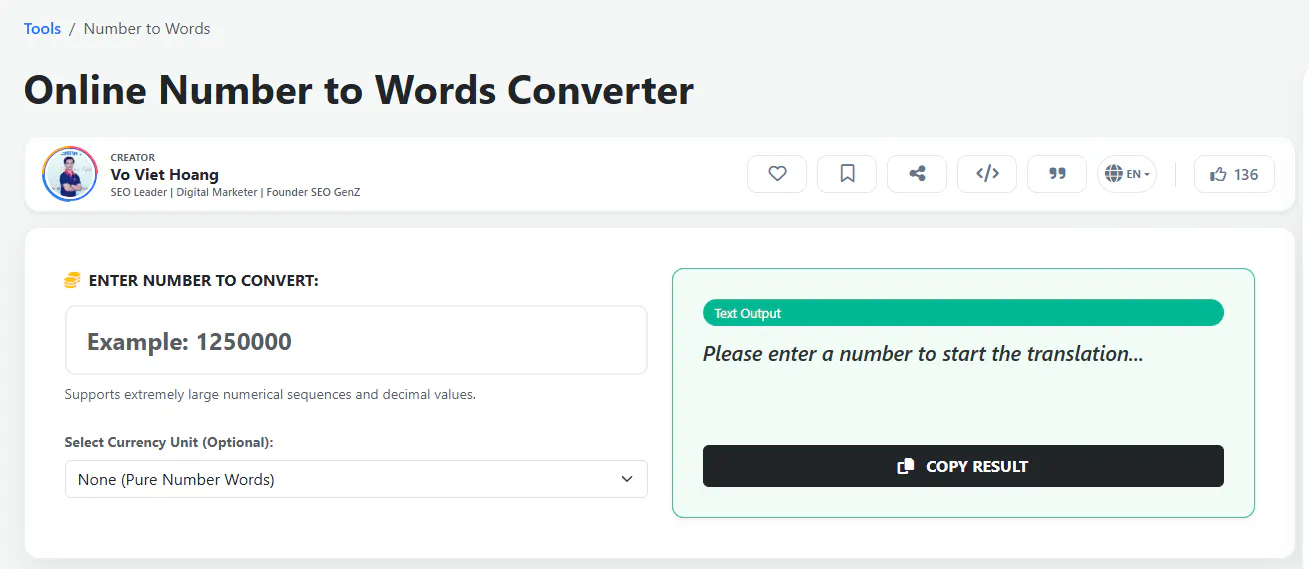
Question for builders & business owners: How do you usually handle number-to-words formatting in your billing or contracting workflows? Are there specific currency prefixes or localization formats (e.g., European vs. American numbering scales) you'd like to see supported next? Would love to hear your thoughts! 🚀
Replies
Thanks for stopping by! I'm planning to add currency formatting options (USD, EUR, GBP) and decimal handling for cents in the upcoming update. Feel free to give it a test run, leave your feedback, or share what micro-tools you're building as well! 🙌
For UK and EU legal documents specifically, two things trip people up that are worth building in early rather than retrofitting later.
First, short scale versus long scale. Most of Europe outside the UK still uses the long scale in places, where a billion means a million million rather than a thousand million. The UK switched to short scale officially decades ago but you still see the old usage in some formal and legal contexts. Worth deciding explicitly which scale you're outputting rather than assuming everyone reads a billion the same way.
Second, UK cheques and a lot of legal documents require the word "only" appended after the amount, and the pence or cents component written out in full rather than as a fraction. Skip that and the output reads like an American template with a currency symbol swapped, which is the kind of detail that makes an accountant not trust the tool even when the core conversion is correct.
I'd build GBP and EUR as genuinely separate locales rather than currency label swaps on the same US template. The formatting conventions underneath differ enough that treating them as one template with three currency symbols is where these tools usually fall down.