Hi everyone, I m Hamza, based in Faisalabad, Pakistan. I m a product builder with 4 years of experience in design, and I build what I design: websites, dashboards, and AI tools.
I recently launched Flintel (getflintel.com), an AI tool that finds what people say about a brand, product, or topic, starting with Reddit. Every answer shows the source posts, buying-intent signals, and sentiment behind it. X, LinkedIn, and Facebook are on the roadmap.
The hardest part of building it wasn t the AI. It was deciding what to show first, so that an answer can be trusted at a glance.
I m here to learn from other makers and to get honest feedback.
I'm building Design Master, an open-source desktop app for creating UI mockups and preparing them for a coding agent.
It keeps the mockups, brand rules and assets together, then exports a DESIGN.md and an implementation brief for your coding tool. Projects are stored locally, and AI generation uses your own OpenRouter key.
The part I'd like feedback on is the handoff. What's one thing you've given a coding agent that noticeably helped it follow your design more closely?
A specific example would help me figure out what to improve next.
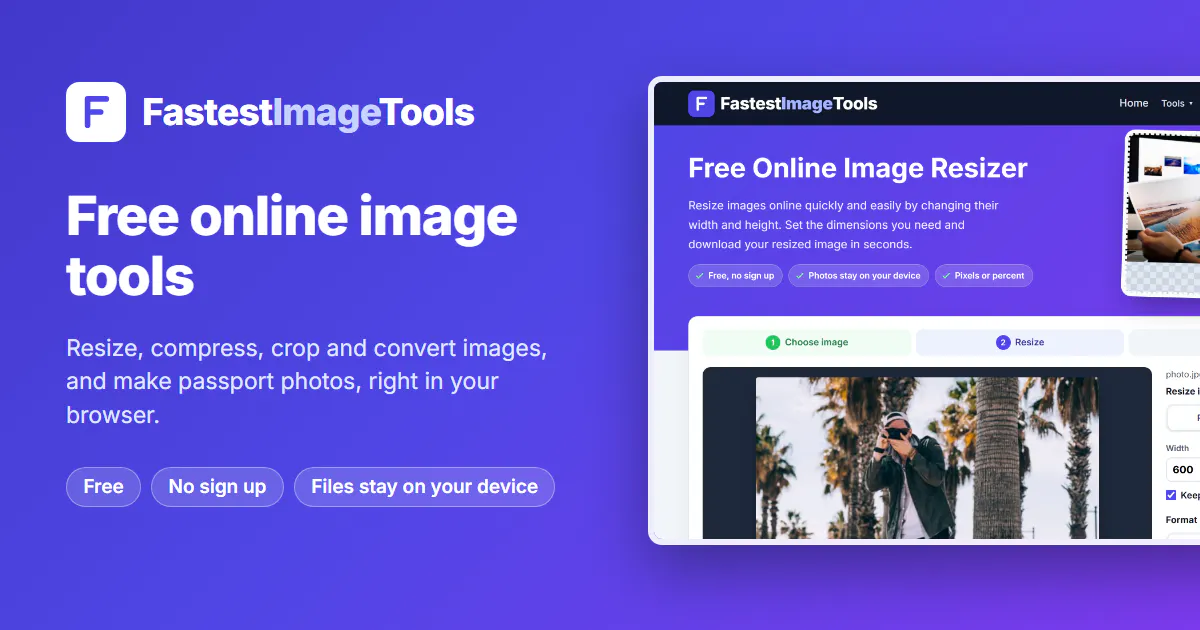
Hi, On Tuesday, November 4, we're launching FastestImageTools, a set of free online image tools for the everyday use keeping privacy as top priority. These tools work instantly as no photos or images uploaded. Weather is conversion from image to pdf or resizing or editing or bulk conversion all done freely and privately. Try it with a real photo you needed to compress or convert. how it worked? give feed back fastestimagetools
I noticed that many people need simple tools to manage their daily money calculations, such as expenses, savings, budgets, and other financial tasks. Sometimes, finding the right calculator can be confusing, so I decided to explore some useful online options.
I recently came across Calcotia, which offers different calculators for everyday needs. I thought it might be helpful to share here. Has anyone tried Calcotia? What do you think about it? I would love to hear your feedback and suggestions.
I'm a product owner and spend most of my day in meetings. Writing the minutes afterwards was the part I hated, so I built CalNote AI. It's an iPhone app that starts recording when a meeting on your calendar starts (one tap on the notification), stops 10 minutes after it ends, and saves a clean note to Files, Obsidian or Notion.
I'm not a developer. The first UI came from Rork, and the server, code reviews, tests and App Store submissions were done with Claude Code.
What happened since 1.0 went live on Oct 28:
Oct 29: 1.1, a full redesign the day after launch
Oct 31 to Nov 2: three more updates (a second nudge if you miss the start, keeping Pro after a reinstall, sharing the summary as plain text)
We're excited to announce the launch of our Virtual Card feature, designed to solve some of the most common challenges businesses face with shared business cards.
STARTDB: making Korean company research easier to evaluate
Disclosure: I operate STARTDB. This product introduction was prepared with AI assistance using our public product pages. The screenshots below are from the official site, captured on November 2, 2026; they are not customer results or proof of a completed API integration.
The problem I want to discuss
A company list can look useful while still being a poor basis for a decision. A regional supplier search, an industry comparison, and a product-market research brief need different filters and different evidence. Before collecting more rows, it helps to write the decision the list is supposed to support and the information it cannot establish.
We ve been working on this problem for a while, and I m curious how others handle it. Are you checking ChatGPT or Perplexity manually, using a tool, or ignoring it for now?
We're launching PingAura on ProductHunt on 4th Nov, and I d love to hear what you d want from a product in this space.
We ve made a lot of progress on the backend and core systems. We re building our own open-source ASR NMT TTS pipeline and aiming for ~1 second real-time translation.
Right now, we support 17 output languages and 10 input languages, with plans to expand further.