


Duckov Explorer — A Fully AI-Made WebGL 3D Roguelike Game
Hey everyone! 👋
I’m an indie developer, and recently I tried something I wasn’t sure was even possible —
👉 building a complete 3D roguelike game entirely through AI collaboration.
The result is Duckov Explorer, a fully AI-made WebGL game where every stage — from concept art and modeling to logic and interactivity — was handled by different AI tools.
Here’s how the whole process came together 👇
🎬 Stage 1: Visual concept — generating the look with GPT
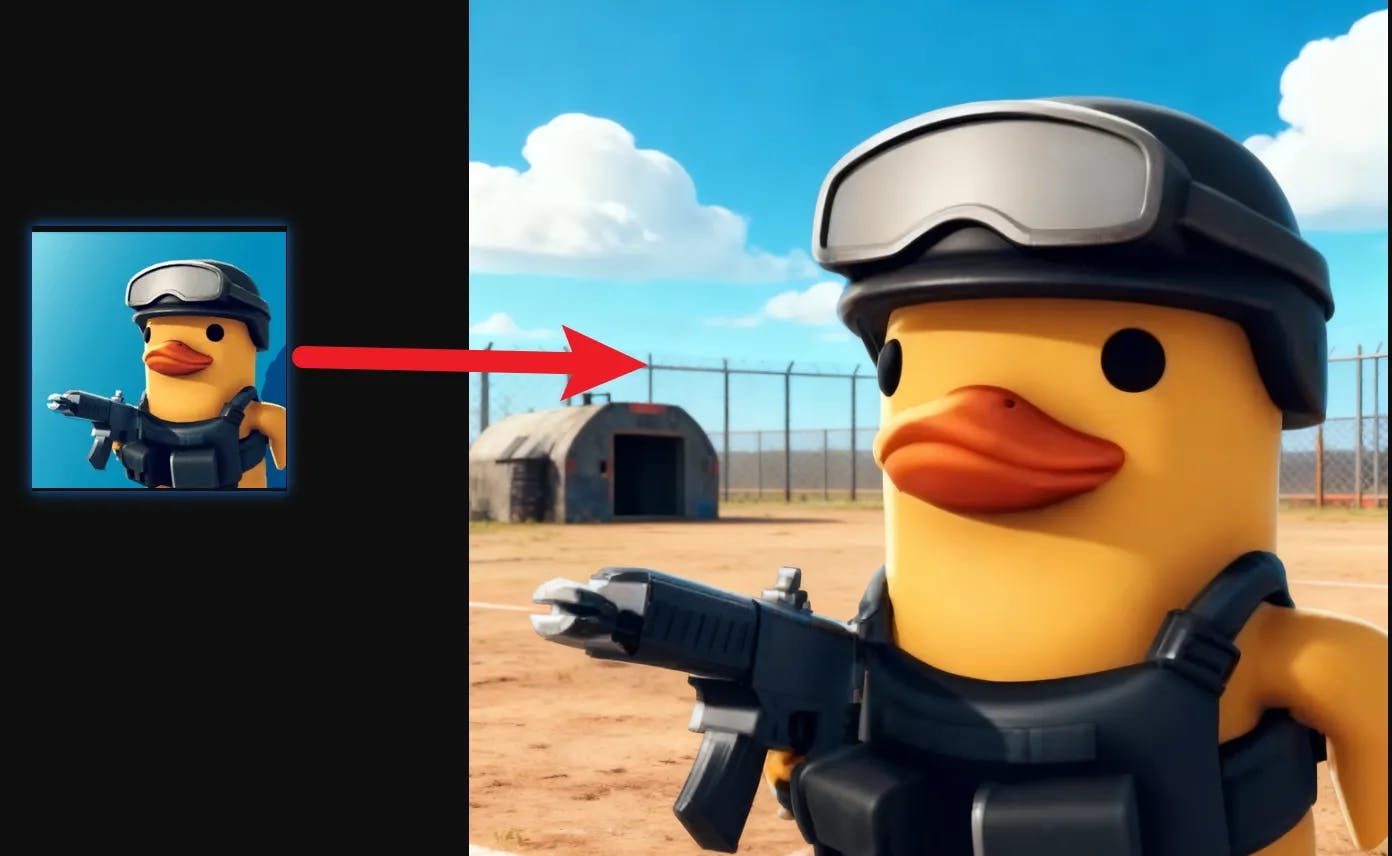
I started by defining the visual style.
I collected a few reference screenshots from the web, then fed them into GPT with a prompt to generate concept images in a unified aesthetic.
GPT surprised me — it didn’t just copy references; it enhanced them with better lighting, atmosphere, and a sense of depth.
These AI-generated visuals became my world-building guide for later stages: the ruins, the base town, the battle arenas… everything started here.
> 🎨 Summary: GPT acted as my visual director, defining the mood and style of Duckov Explorer’s universe.
🧱 Stage 2: Character modeling — creating Duckov.glb with Fast3D
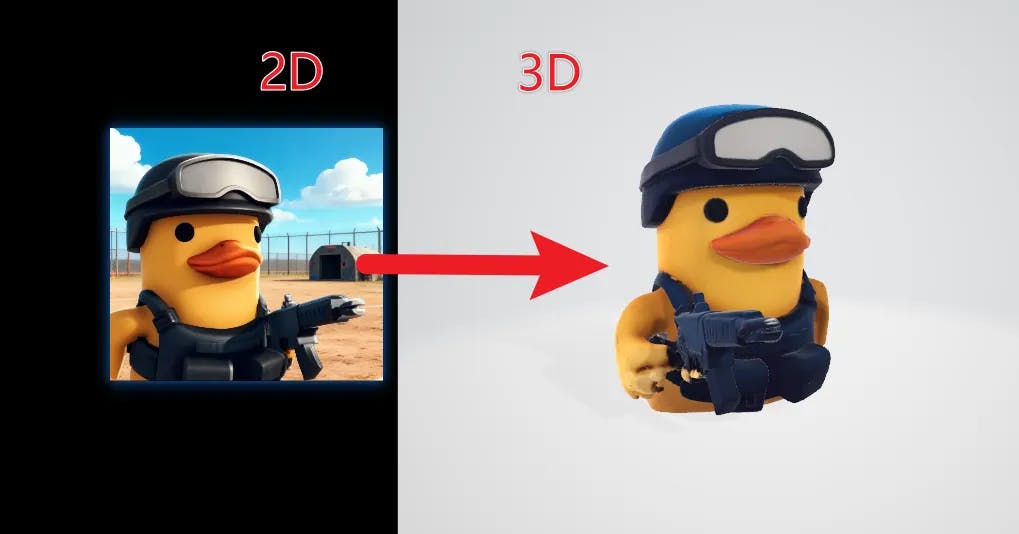
Next, I used Fast3D to generate the main character model — the duck adventurer himself, Duckov.
I took the concept art generated by GPT and asked Fast3D to turn it into a 3D `.glb` file.
The result was a fully textured model with a basic rig, ready to be imported into a WebGL scene.
While this stage only produced the protagonist model, it became the anchor point for the entire game.
> 🧱 Summary: Fast3D handled the 3D generation step — creating the playable hero model Duckov.glb that everything else was built around.
🧠 Stage 3: UI & interaction design — prototyping with Gemini
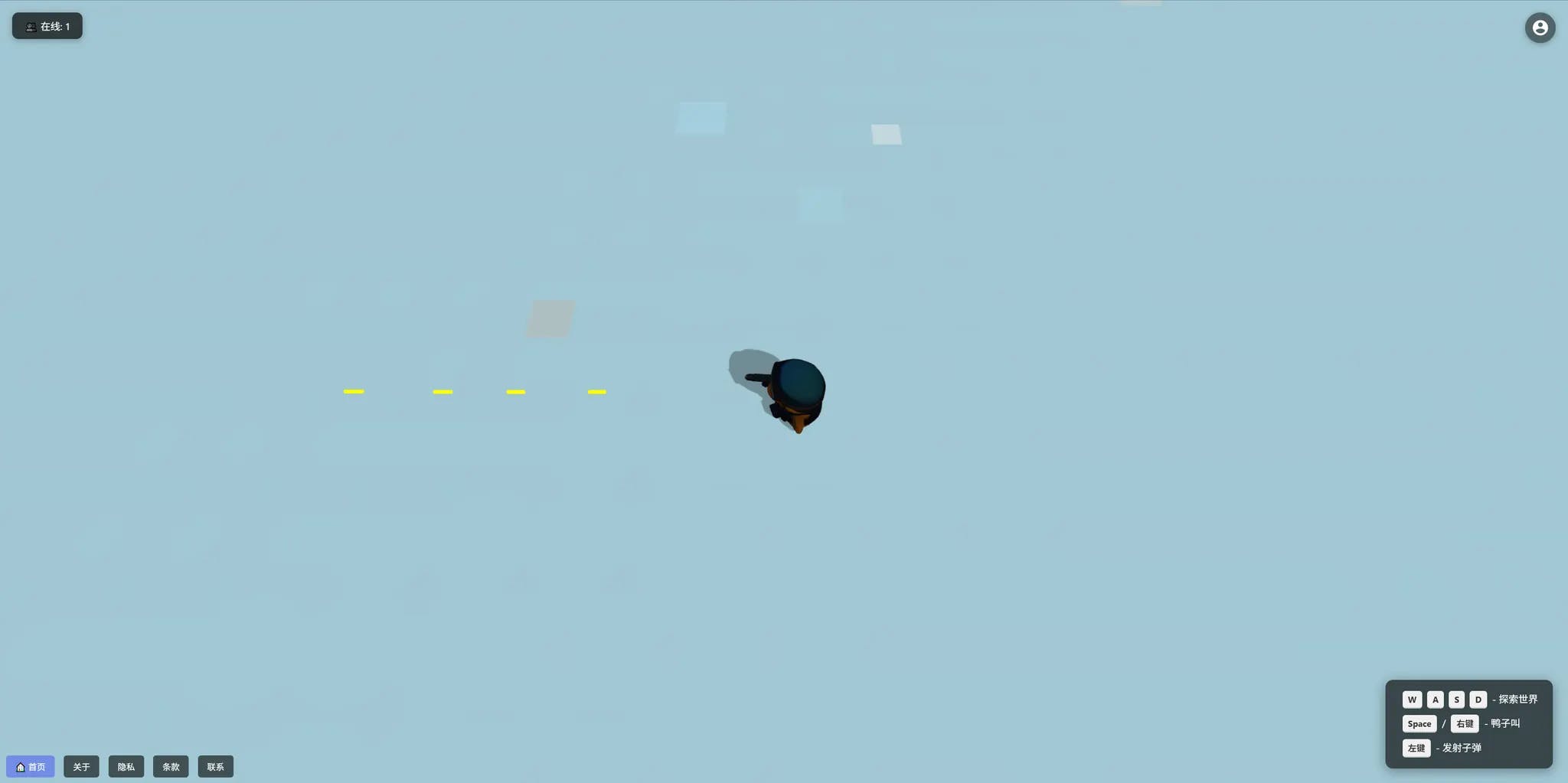
Once I had the character, I moved on to designing the game’s UI and interaction flow using Gemini.
I described the gameplay structure:
- Player controls Duckov to explore random dungeons.
- Real-time combat with melee attacks.
- Experience and equipment upgrades.
- Procedural map generation each run.
Gemini generated the entire interface prototype — menus, health bars, buttons — and even annotated the interactions like:
> “Open chest → drop loot → trigger reward event → refresh UI.”
>
> 💡 Summary: Gemini worked as a UI/UX designer, giving me a ready-to-use prototype structure without any manual layout work.
>
⚙️ Stage 4: Gameplay implementation — building logic with Cursor + Claude 4.5
This was the most exciting part.
I imported the Duckov.glb model and the Gemini prototype into Cursor, then used Claude 4.5 as my development partner to build all the gameplay logic.
Using natural language prompts, I could describe features directly:
> “Make Duckov move forward when W is pressed with a smooth animation.”
“Spawn enemies when entering a new room.”
“Drop XP orbs when enemies are defeated, and trigger a level-up effect.”
>
Claude 4.5 generated and debugged the entire WebGL/Three.js code automatically, handling animations, camera logic, collisions, and item systems.
> 🔧 Summary: Claude 4.5 was my game programmer + technical director, turning the concept into a working 3D game.
>
🕹️ Stage 5: The final result — Duckov Explorer demo
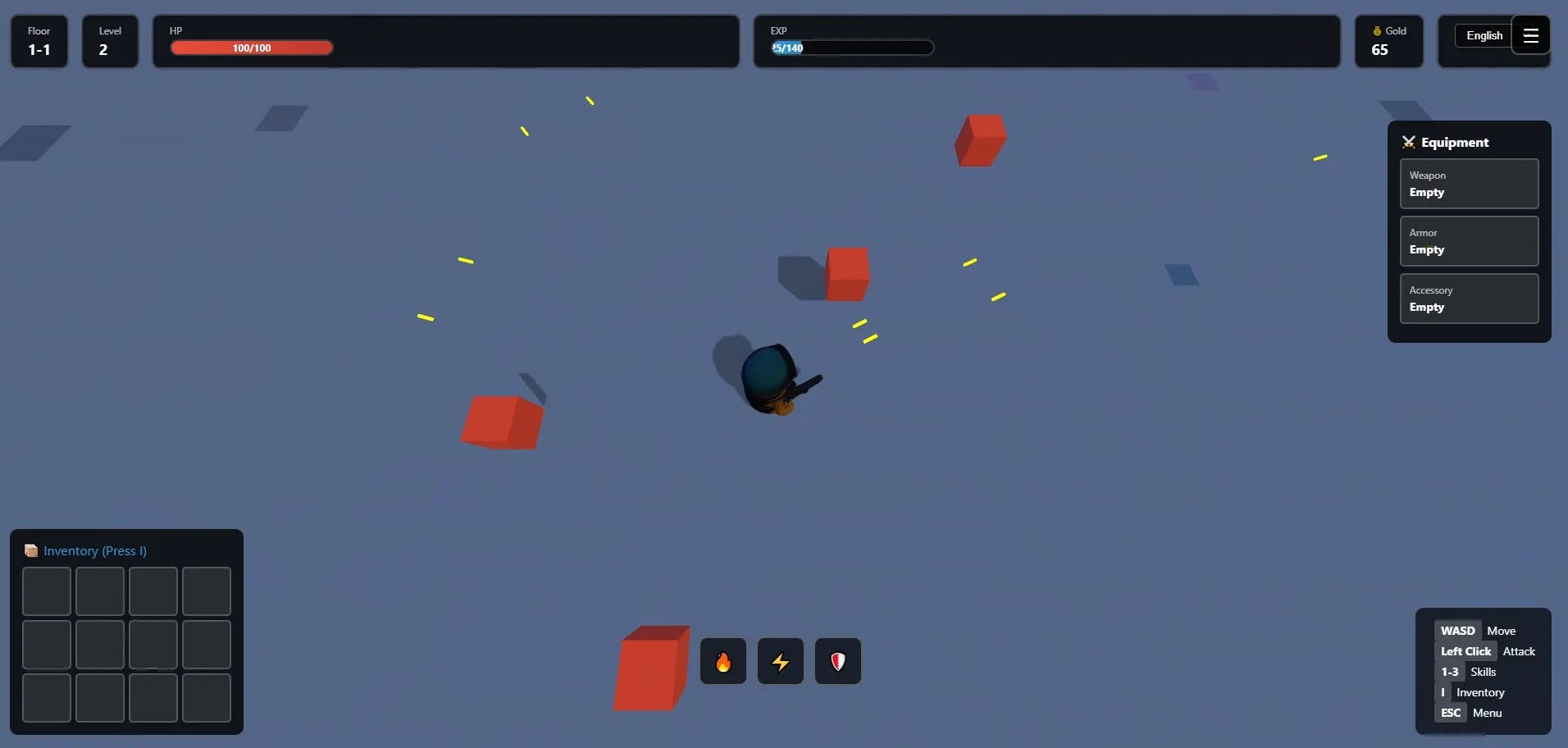
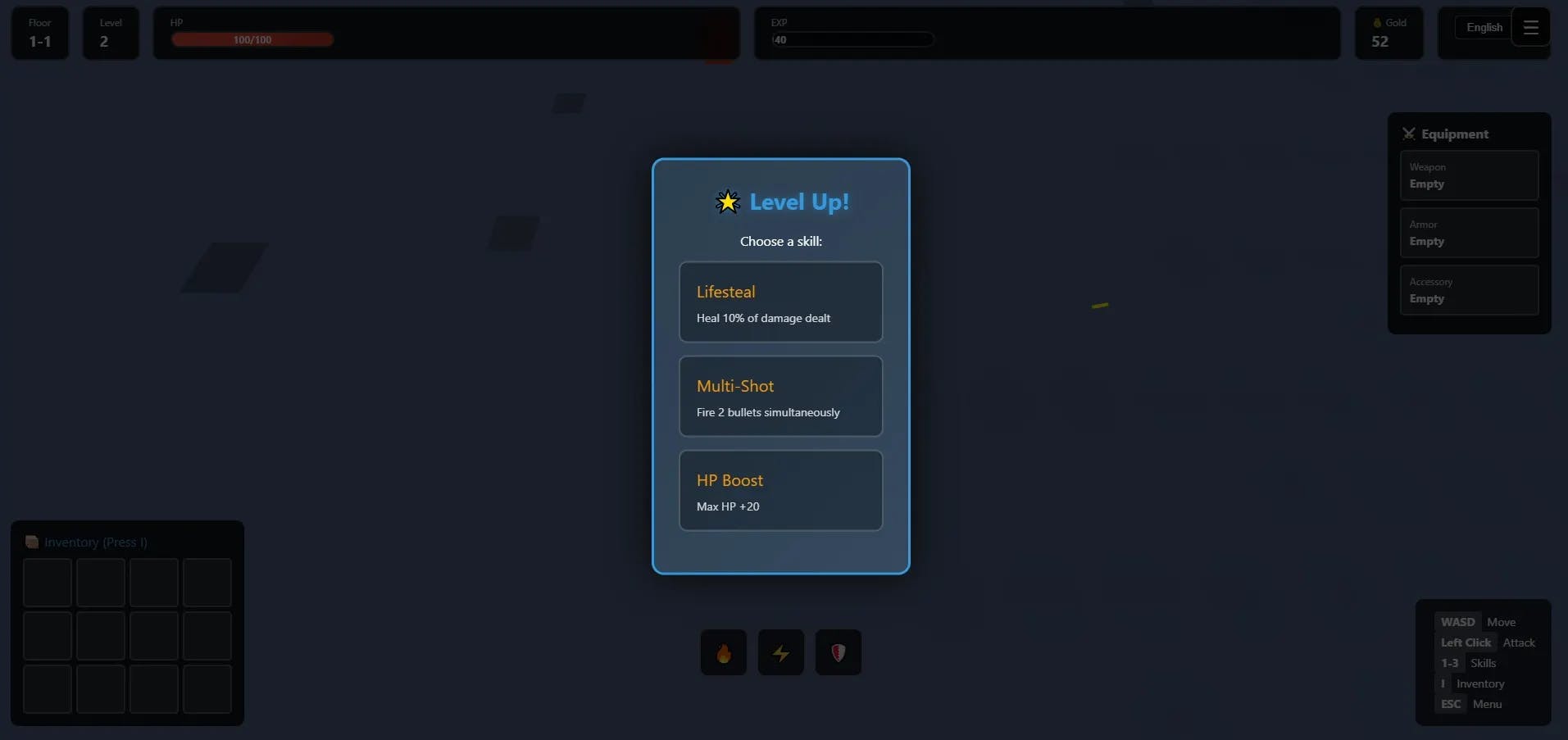
Now the game is fully playable right in the browser!
It’s a WebGL-based roguelike featuring:
- Randomly generated rooms and encounters
- Real-time combat system
- XP and upgrade mechanics
- Browser-native performance — no install needed
---
💬 Reflection — AI as a true “co-developer”
What amazed me most is how naturally the AIs worked together.
GPT imagined the world, Fast3D brought the hero to life, Gemini built the UI, and Claude made it move.
I wasn’t “coding” — I was directing.
It felt like collaborating with a tireless, context-aware teammate who could understand goals, fill in logic, and even fix its own mistakes.
> “AI isn’t just a tool anymore — it’s becoming part of the creative process.”
>
---
🧭 What’s next
I plan to expand Duckov Explorer with:
- New enemy types and boss AIs
- A procedural dungeon generator
- A storyline system generated by AI
I’ll also share the full prompt chain and project workflow soon so others can try similar experiments.
---
❤️ Closing
If you’re also exploring AI-powered game development,
feel free to test it out, share thoughts, or discuss workflows!
I’d love to connect with other creators experimenting with this new frontier.
---
Replies