

Subagents cost 3.6x the tokens on a small task. Where do they pay off?
I ran the same read-only task in Claude Code twice: explain 4 source files and how they relate. Once with a single agent reading all four, once with a lead agent that launched one subagent per file and combined the answers. 3 runs each, same model, token counts from the CLI's JSON usage output (input + output + cache read + cache creation, subagents included).
Single agent: about 106k tokens, $0.14 on average. With 4 subagents: about 383k tokens, $0.41. So 3.6x tokens and 2.9x cost, and it was not faster either (about 12s vs 18s, though one run's timing looked unreliable). Cache reads dominate the token count and are billed cheaper, which is why cost grew less than tokens.
Caveats: n=3, one small task, one model. The files fit easily in one context, so subagents had no isolation benefit here. I did not test the case where each subagent would otherwise dump a huge output (big logs, large search results) into the main context.
What I'm unsure about: where is the crossover? Is it file count, size of intermediate output, or tasks that run long enough that the main context gets polluted? And do you have a rule of thumb for when you hand work to a subagent versus keeping it in the main thread? Real numbers from your own runs would be especially useful.
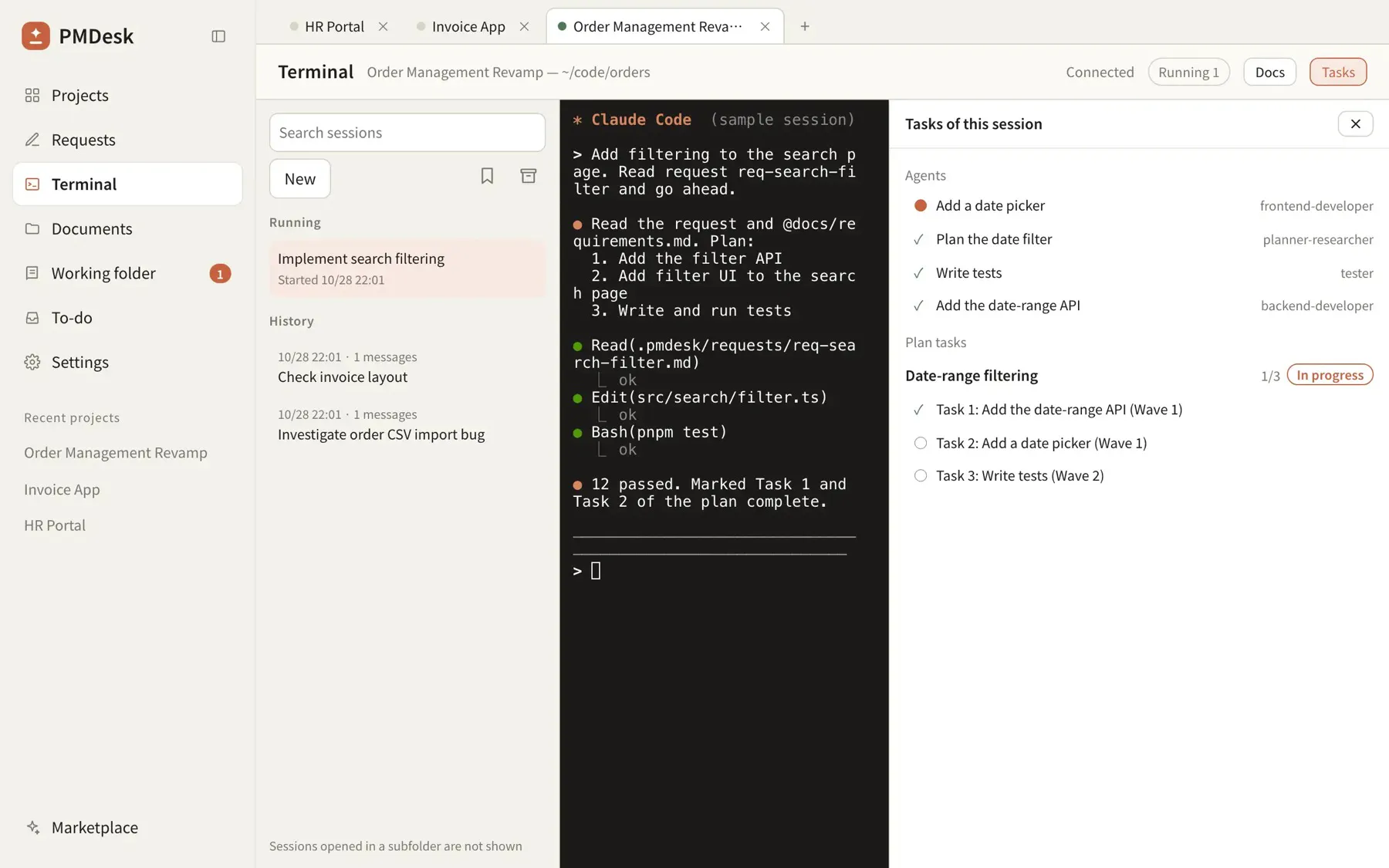
Disclosure: I'm the maker of PMDesk, so I'm biased; the screenshot is its Tasks pane listing a session's subagents (sample project, no real data).
Replies
A single agent loses context mid-task and rebuilds a helper that already exists two files away under a new name. Subagents only pay off for hard scope boundaries, isolating discovery from implementation so the worker never blindly rewrites existing code.
for ops work my line is about reading, not the size of the change. if a task means going through more than two or three files or any research, it goes to a subagent with a narrow brief and a word limit on the answer. what bit us was subagents reading whole files instead of the lines they needed, the transcripts got huge. does your 3.6x include that kind of over-reading?