•
9mo ago
Beyond the Prompt: Is "Vibe Coding" making us better architects or lazier engineers?
The shift toward "Vibe Coding" feels like we ve finally moved from being construction workers to being conductors. We are spending less time fighting syntax and more time sculpting the "intent" of our software.
However, as I ve been leaning into this AI-native workflow, I ve noticed a recurring tension that I d love to get the community s take on:
1. The "Black Box" Debt: When we "vibe" our way through a feature in 20 minutes that used to take 4 hours, are we unknowingly inheriting technical debt that will haunt us when the "vibe" inevitably breaks?
 •
10mo ago
Am I making a mistake building Superhuman for devs?
I have been cranking out apps for the past few years and loving it. Then one morning a week or 2 ago I got a little ambitious and decided to build a desktop email client because outlook was so-so and superhuman was ridiculously expensive.
Is this a big mistake? Am I wasting my time ?
 •
9mo ago
What is your AI setup and how much does it cost you ?
 •
1yr ago
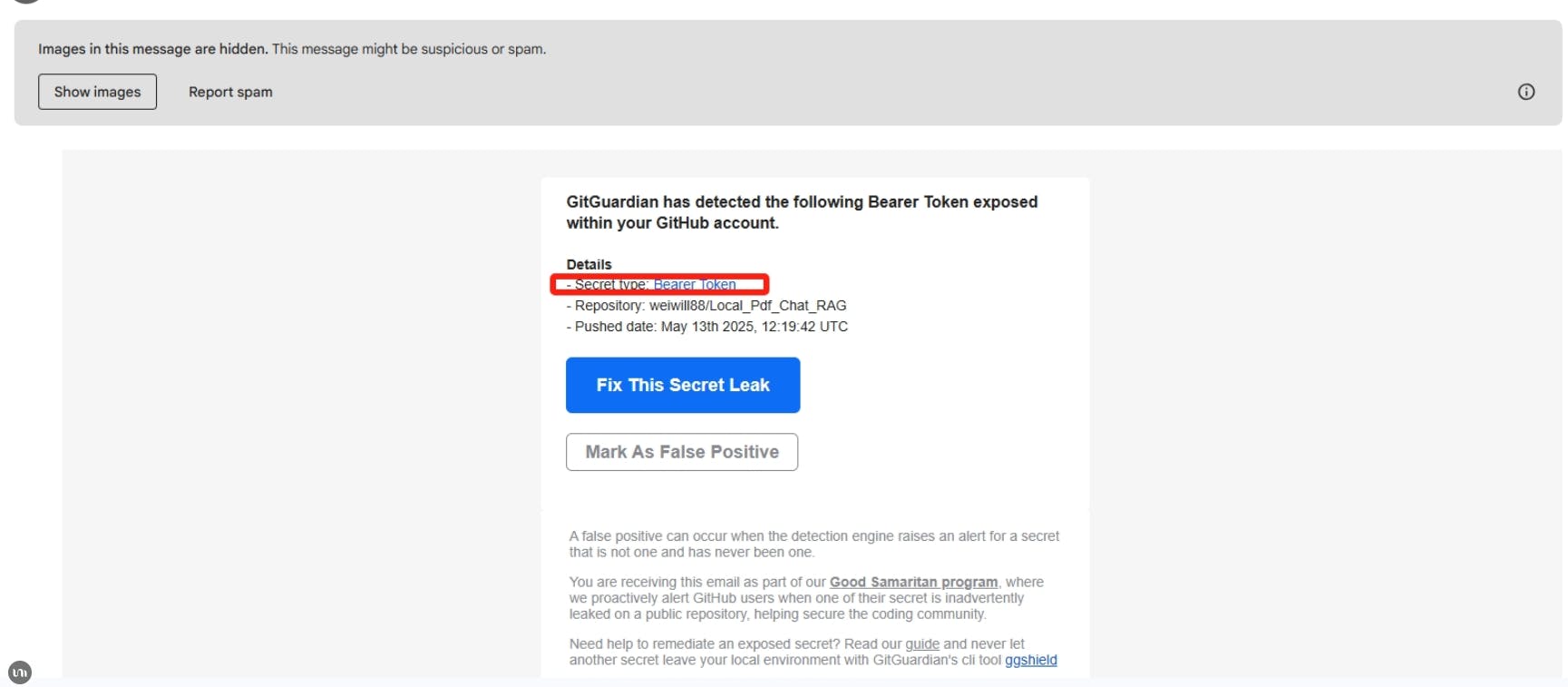
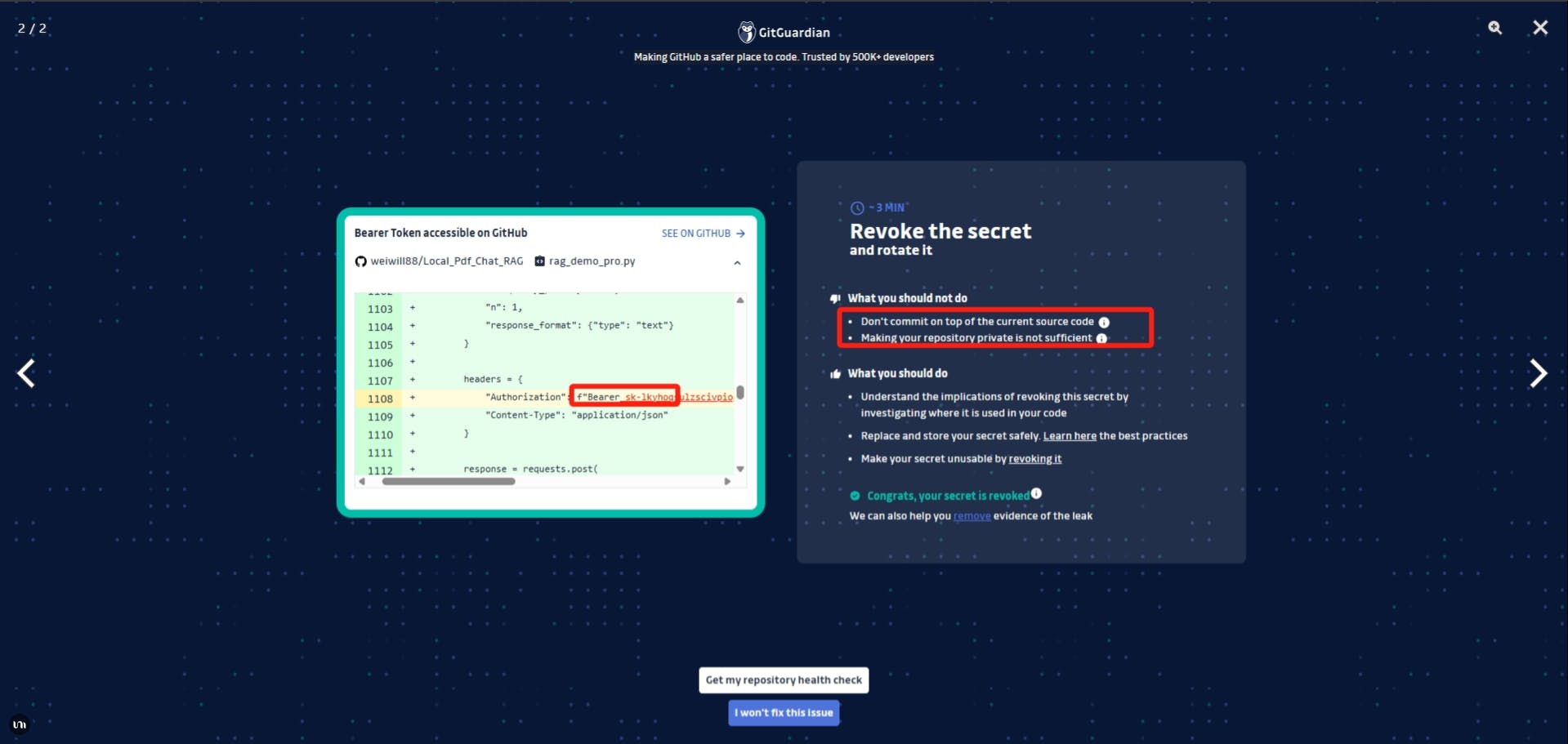
Almost Leaked My Key—Thank God for GitGuardian
This morning I opened my inbox to find an alert from GitGuardian about a leaked key. My first thought: Great, another phishing email. Nearly deleted it on the spot. Then I realized yesterday when I was using Cursor to bulk-update my scripts, I d left the API key in plain text
 •
1yr ago
Wicked fast prototyping
Hey all!
I'm one of the cofounders of Anchored Growth, a sales tech platform to help companies solve the pain in the neck issue of siloed data and insights from fragmented sales tools! We'll be launching soon. We hit a great milestone this week. We're onboarding our first beta users!
But more on that later.
I know there's a lot of talk around vibe coding and the validity of it. From a non-technical co-founder, vibe coding has exponentially increased our development speed. I'm not talking about using the output as our product, I'm talking about getting the ideas out of my head and put into a useable prototype.
Instead of trying to build a great user story and make sure that Chase, our CTO knows what I mean, I just create a quick prototype with Lovable that works good enough, is directionally correct then shoot over a screen recording of the walkthrough and the lovable file. Boom! he knows exactly what I'm looking for.
I'm not confident in vibe coding being production ready, but it's great for ideation and rapid prototyping.
Are there any other tools out there that I should be looking at as a non-tech cofounder to help Chase streamline the build?
 •
1yr ago
Do you predict people will actually watch AI-generated films?
Here's an idea we are thinking about:
Netflix for AI generated fims, pretty self explanatory
Problem
This week, Google unveiled Veo 3, its latest AI video model capable of generating hyper-realistic videos from text prompts. The line between AI-generated and human-made content is blurring rapidly.
 •
1yr ago
I have learnt full-stack development in 90 days and you can do it too.
It took me 3 failed and 1 successful attempts.
Thanks to our AI overlord, I ship several thousands of lines of code everyday
My background: 15 years in tech working from digital marketing to product designing and management. I had practical experience of entire software development lifecycle, just didn't know how to code.
 •
10mo ago
Can Product Managers keep up with Vibe Coding?
Our team pushes code constantly - multiple deploys per hour some days. The problem? Nobody can keep up with what's changing. You check the repo in the morning, grab coffee, come back and suddenly there are 47 new commits.
Good luck understanding what actually matters or how it affects your work. We built Doculearn to solve this with automated flashcards. Here's how it works:
 •
1yr ago
How can I talk w my codebase while I am away from my desk?
 •
1yr ago
Vibe Coding Techniques from YCombinator
4 days ago Tom Blomfield from Y Combinator posted a video explaining some of the techniques to be good at Vibe Coding. Tom says in the start that the best techniques for Vibe Coding are the ones used by professional Software Engineers to write code (kinda ironic).
Before we talk about what Tom has to say about Vibe Coding, here are some of the reviews about Vibe Coding from the YC Founders.
Nicole Lu - If your AI editor is taking you into a loop, sometimes it helps to go to the LLM's website and paste the same code.
Skyler Ji - I open both Cursor and Windsurf side by side, give them the same problem to solve and pick the best response.
Sacha Servan-Schreiber - Take Vibe Coding as a new programming language. And to get the best results, you will have to provide a lot of context
Arshad Shaikh - I usually do Vibe Coding in the reverse direction. I write the test cases followed by the code that then has to satisfy these test cases. I never micro-manage an LLM while Vibe Coding.
Antoni Gmitruk - Spend time crafting the architecture and other details with an LLM before offloading it to an AI editor.
Vibe Coding Advice from Tom:
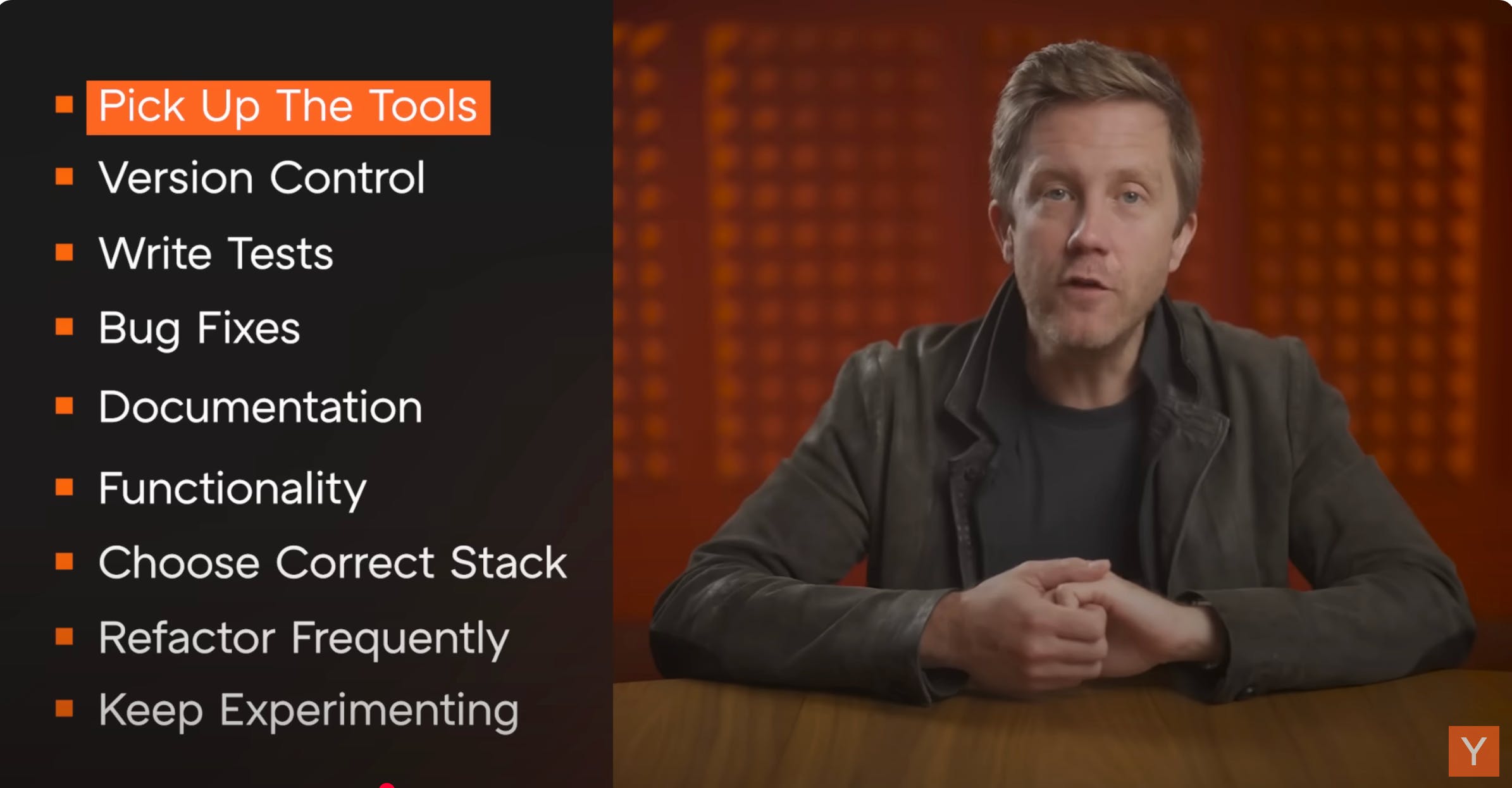
1. Pick Up the Tools: If you don't know a lot about programming start with Lovable or Replit. These tools give you a feel of the UI. And if you know how to write code (doesn't matter how good you are), you should try dabbling with tools like Windsurf or Cursor
2. Use Version Control Religiously: Once you have something you think is working, feel free to push to github. Do not rely on the LLM to revert the code for you because this is not always reliable
3. Write High Level Tests: Have your LLM write high level tests for your software so that you safeguard your application against unwanted changes by the LLM.
4. Bug Fixes: Sometimes, when you encounter an error message, just copy pasting the error stack is good enough for the LLM to solve it for you. For complex bugs, it's okay to reset after a failed attempt and starting over. Again, Github is your friend.
5. Documentation: You can download all the documentation for the framework you're working with and put it into a subfolder for the AI editor to access.
6. Choosing the tech stack: It's a safe bet to work with something that has been around for a long time and has a lot of open source code available.