
Launched this week

Anvil
Run a fleet of parallel Claude Codes
165 followers
Run a fleet of parallel Claude Codes
165 followers
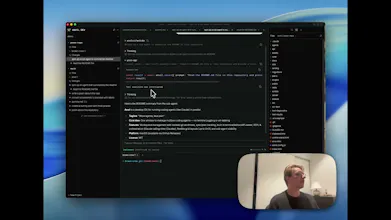
The IDE for parallel agent work. MIT licensed, farm to table, fun. With one click git worktree isolation, first class plan tracking, color coding for agent states, flexible layout arrangement, and so much more, Anvil is crafted to make developers extremely productive, minimizing context switching and maximizing agent parallelism.


Running parallel Claude Codes is a game changer for productivity. We've been using Claude heavily while building Parsli and the bottleneck is always sequential execution. How do you handle context sharing between the parallel instances?
@talal_bazerbachi2 Hi Talal! I typically share context through plan artifacts (markdown files). In Anvil you can actually drag a markdown file from one worktree to another, or have an agent reference those other worktrees.
Product Hunt
@curiouskitty this is a great question, I don't see the two (orchestration and verification) as mutually exclusive, but if I had to choose one I'd pick verification. Anvil starts with orchestration features because in order to get to verified results it often takes more work than one agent's context can handle.
For instance, I'll often use the anvil repl to loop claude until it can fully self verify, something that in one context window (even with compaction) would go awry.
Feels like dev tools are moving from “AI assistant”
to “AI team”.
Parallel agents sounds powerful
but also messy if not managed well.
Curious how you keep control over multiple agents working at once.
@new_user___2902025abb5753b18b341a5 a great plan and testing suite. Is super important, I rarely kick off agents fully blind
this looks super fun, congrats! the REPL thing where Claude can call other Claudes programmatically sounds wild, any examples of what people are actually using that for?
@jens_deryckere1 The most practical use case is calling claude in a loop to execute against a larger task or plan file. There is a skill /breadcrumb-loop which allows you to do this. Whats nice about this skill is it compacts when the agent hits 100k tokens in its context window, and leaves a "breadcrumb" markdown file for the next agent to read and continue with.
Other things I've seen are people orchestrating entire workflows like compound https://github.com/EveryInc/compound-engineering-plugin
Instead of running each step manually they will script the entire thing. I can't say I'd recommend this second one bc I think human in the loop is important for the planning phase to get things right and make sure the architecture is sound
How are you handling state isolation between parallel agents? When you run multiple Claude Codes on the same codebase, conflicts in shared files are the main issue I've hit. Do they each get their own branch or working copy?
@mykola_kondratiuk Anvil makes using git worktrees very simple. This creates an isolated copy of your codebase for agents to run in. Worktrees are different than branches because you can have multiple checked out at the same time (its a full copy)
I've been running 3-4 Claude Code sessions in tmux and losing track of which agent is doing what is a daily struggle. The git worktree isolation alone would save me from merge conflict hell. Does Anvil handle cross-agent dependency — e.g., Agent B waits for Agent A's PR before starting?
@ilya_lee the way I would typically do this kind of thing is by writing a custom orchestration skill, and yes anvil is really great for this kind of thing.
You can start by creating a plan file initially which details all the PRs you want to create, then have a parent agent manage the different phases. These parent agents can actually create worktrees themselves should you need.
I'd be curious though what your typical use case is?