

Apple
Think Different
4.9•48 reviews•5.5K followers
Think Different
4.9•48 reviews•5.5K followers
The hardware and software creators known for iPhone, Mac, iPad, Apple Watch, iOS, MacOS, the App Store, and more.
This is the 306th launch from Apple. View more
AlivePing Check-in
Launched this week
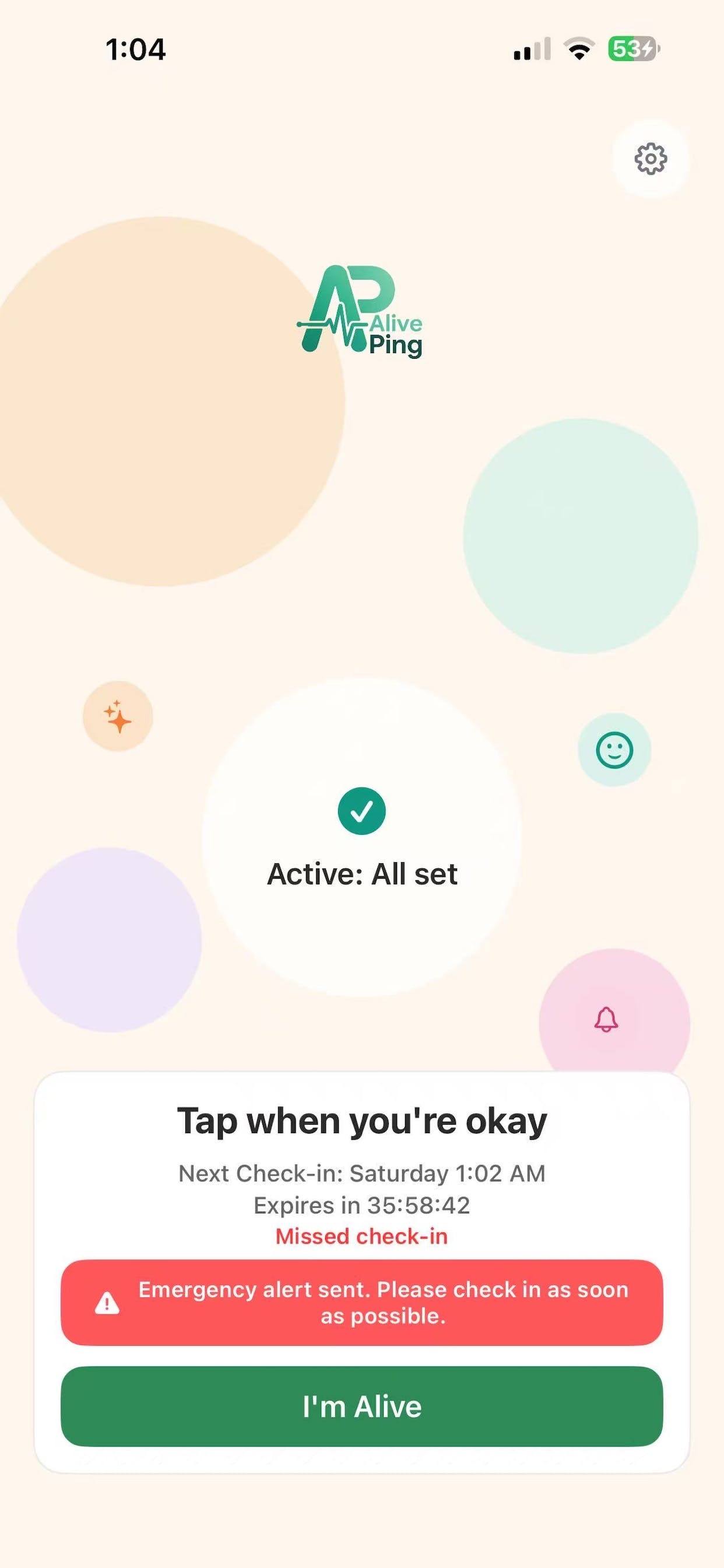
AlivePing Check-in: A Vancouver-built safety check-in app. Schedule daily check-ins—miss one, and it alerts your trusted contacts, no location tracking needed.
Built for solo living, seniors, and families. Free on iOS, Android coming soon.
Key features:
• Flexible check-ins
• Automated alerts
• Privacy-first design
• 100% Canadian-made
Feedback welcome!


Free Options
Launch Team / Built With




The no-location-tracking angle is a smart choice. Most safety apps default to GPS tracking which creates a bigger privacy problem than it solves. How are you handling the alert delivery when a check-in is missed? Push notifications, SMS, or both? Curious about the reliability tradeoffs there.
@krisba95
Hey Christian — appreciate the thoughtful question. The “no location tracking” choice was intentional for privacy.
Alert delivery is layered + redundant:
Tier 1: we nudge the user to check in via on-device notifications (local + push).
Tier 2 / Tier 3: we notify the user’s trusted contacts via SMS, and premium users can also enable automated voice calls (available for Tier 2 and Tier 3).
The user also receives an on-device alert; and we send a silent push to wake the app in the background so it can reconcile state and show a visible fallback notification if needed.
Reliability tradeoffs: push is great UX but can be delayed/suppressed by iOS; SMS/voice tends to be more dependable for urgent escalation, but requires stricter compliance (consent/opt‑out/rate limiting).
Curious: for a safety check‑in product, would you expect SMS only, voice+SMS, or push only by default?
Links: https://apps.apple.com/ca/app/aliveping-check-in/id6759118161 | https://www.verveai.ca/products/aliveping