
Atoms
Turn your ideas into products that sell
1.5K followers
Turn your ideas into products that sell
1.5K followers
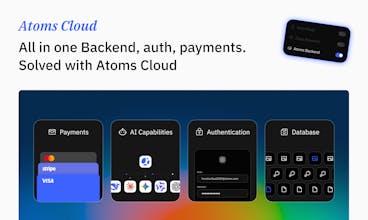
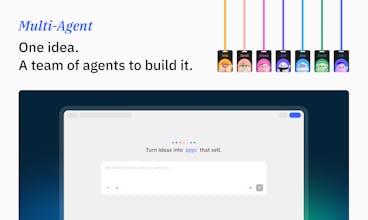
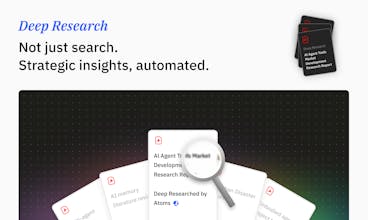
Atoms is a vibe business team that turns your ideas into business. It researches your market, designs the product, builds frontend and backend, connects auth and payments, and ships a live app you can charge for, not just a prototype





This framing around owning the full chain from idea to revenue is interesting. A lot of tools stop at building, but the moment traffic and pricing enter the picture things usually fall apart, so curious how Atoms handles those trade-offs.
Atoms
@viviana_madeleine Great point. We handle this by making the key assumptions explicit and forcing trade offs into the open: channel, CAC, conversion, pricing model, and what metric you’re optimizing for. Then we propose a smallest viable test plan before investing in a bigger build, so you can de risk distribution and pricing early.
How do you decide when an idea is worth killing versus iterating further. Market research can point in many directions, so curious how much autonomy the agents have in that decision.
Atoms
@robert__spencer Great question. We treat it as a staged gate: the agents can recommend “kill” when the core assumptions fail (no clear buyer, no plausible channel, no willingness to pay, or no wedge vs alternatives), but they don’t make irreversible calls on their own. The system will surface why it thinks it’s weak, what signal would change the conclusion, and what the smallest next test should be.
The promise sounds ambitious, and that’s exciting, but also raises some skepticism. Owning a full P&L is messy even for humans, so it’d be interesting to hear where Atoms still relies heavily on human judgment.
Atoms
@peyton_walsh Totally fair. Humans still own the high leverage judgment calls: positioning, pricing direction, risk tolerance, and what “good enough” means. Agents help by generating options, making trade offs explicit, and keeping the decision trail consistent across research, build, and GTM.
Seeing multiple model providers listed makes sense here. Curious how you choose which model handles which part of the pipeline and whether that changes as the product matures.
Atoms
@beulah__missie We route by job to be done: long context reasoning and synthesis, fast structured extraction, code generation, and cost sensitive batch work may go to different models. The routing can evolve as models improve; we continuously evaluate quality, latency, and cost across tasks.
This seems especially appealing for non-technical founders who still want to end up with something real and live. The key will probably be how opinionated the system is versus customizable.
Atoms
@emmawalsh Yes, this is a key design point. We aim to be opinionated by default (so you can move fast), but customizable via constraints: stack, infra, target user, pricing model, channel focus, and risk preferences. If you share your constraints, it should adapt rather than force a one size plan.
One suggestion would be sharing a concrete example of a shipped product that’s already charging users. Even a small breakdown of choices made along the way would help people understand the process better.
Atoms
@melina_cross Agree this would help a lot. We’re working on publishing case studies with a clear breakdown of the key choices. In the meantime, the most concrete place to inspect end to end outputs is AppWorld. If you tell me what kind of business you want to see (B2B SaaS, DTC, game), I’ll point to the closest example we can share today.
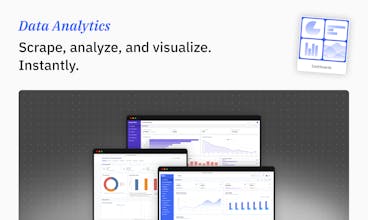
This looks interesting! What charting library are you using? Does it support more advanced chart types like Sankey, Gantt, radar, etc?
Atoms
@greenflux Good question. It can vary depending on the app and stack you choose, and we’re expanding coverage for more advanced chart types because it's generated by code