Local-first cloud cost optimization software that finds idle compute, orphan storage, and unused network resources across 47 providers, with savings and ESG reporting.
No reviews yetBe the first to leave a review for Cloud Waste Scanner
Maker
📌
Thanks for checking out Cloud Waste Scanner.
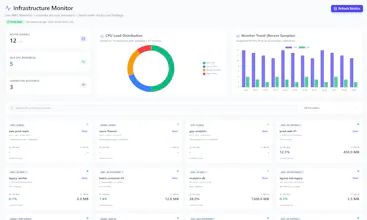
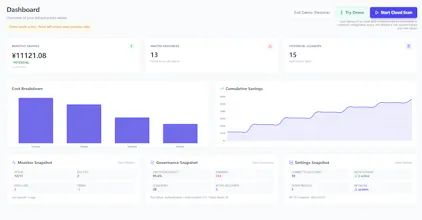
We built this for DevOps and FinOps teams that can see cloud spend, but still struggle to turn insights into action. Cloud Waste Scanner focuses on practical workflows: detect idle and oversized resources, prioritize savings opportunities, and execute remediation in a weekly operating rhythm.
If you’re managing cloud costs with limited bandwidth, we’d love your feedback on your current workflow and what slows your team down most. We’ll use it to improve the product quickly.
Report
Maker
Cloud cost control is not only a detection problem. It is also a communication problem. A finding must become a sentence that finance can trust, a checklist an operator can follow, and a weekly rhythm that does not collapse after the first cleanup pass.
The skills release is a practical step toward that operating model while preserving the Community boundary: local-first evidence, source-visible packages, no hosted credential dependency.
A practical cloud cost optimization workflow you can run today: connect accounts, route correctly, notify the right owners, then close findings with evidence.
Cloud waste rarely comes from one dramatic mistake. It comes from small leftovers across services, providers, and ownership boundaries.
What helped this team was not a heroic spreadsheet. It was a repeatable review path: local-first scan, clear findings, fast alerting, and handoff-ready outputs for cleanup owners.
We do not see this as winner-takes-all. CloudZero has earned its position in enterprise SaaS cost intelligence. CWS is built for teams that need local control, faster operational closure, and lower boundary friction.
If you are evaluating cloud cost optimization tools, this is the fastest way to run a real setup session. It also gives your team a practical baseline when comparing cloud governance tools and finops tools.




Cloud cost control is not only a detection problem. It is also a communication problem. A finding must become a sentence that finance can trust, a checklist an operator can follow, and a weekly rhythm that does not collapse after the first cleanup pass.
The skills release is a practical step toward that operating model while preserving the Community boundary: local-first evidence, source-visible packages, no hosted credential dependency.
http://192.168.1.7:8088/blog/community-skills-github-codex-claude-release.html
https://cloud-waste-scanner.com/blog/first-scan-in-15-minutes.html
A practical cloud cost optimization workflow you can run today: connect accounts, route correctly, notify the right owners, then close findings with evidence.
https://cloud-waste-scanner.com/blog/cloud-waste-scanner-user-guide-account-proxy-notification-scan-result.html
Cloud waste rarely comes from one dramatic mistake. It comes from small leftovers across services, providers, and ownership boundaries.
What helped this team was not a heroic spreadsheet. It was a repeatable review path: local-first scan, clear findings, fast alerting, and handoff-ready outputs for cleanup owners.
https://cloud-waste-scanner.com/blog/march-rain-disappearing-coins.html
We do not see this as winner-takes-all. CloudZero has earned its position in enterprise SaaS cost intelligence. CWS is built for teams that need local control, faster operational closure, and lower boundary friction.
https://cloud-waste-scanner.com/blog/industry-intelligence-cloudzero-vs-local-first-cws.html
If you are evaluating cloud cost optimization tools, this is the fastest way to run a real setup session. It also gives your team a practical baseline when comparing cloud governance tools and finops tools.