

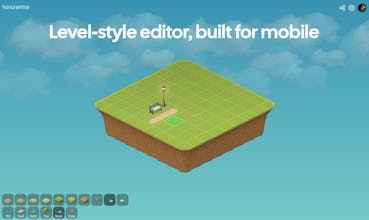
Build a digital park for family, history, or anything that matters. Place monuments on an isometric map. Let others contribute. Each park becomes part of a growing world of memory.
I m curious how people actually preserve family history right now.
Is it:
Mostly oral stories that get forgotten over time?
Scattered documents and photos?
A proper family tree somewhere online?
Or nowhere just something you mean to do one day ?
Would love to understand what s real.
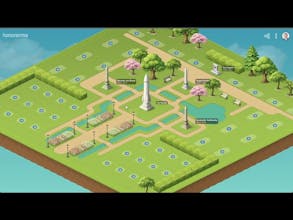
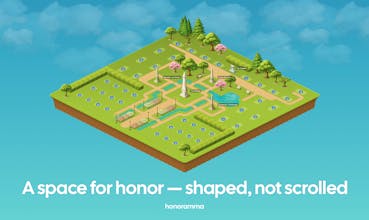
What makes it fantastic is its interactivity. Instead of static profiles and structured information, it uses isometric spaces that people can actually explore. That changes the feeling completely — it becomes a place with atmosphere, not just another page with data.
One improvement could be a global map that connects all parks together. Right now each park exists as its own space, but a world map where you could discover parks by location, theme, or history would make the experience feel much more alive. It would turn Honoramma from individual parks into a connected universe people can explore.
I also looked at projects like MyHeritage and The Million Dollar Homepage.
MyHeritage is about structured genealogy data: profiles, trees, records. The Million Dollar Homepage was more like a public digital space where people could claim a visible place on the internet. Honoramma sits somewhere in between: it keeps the idea of memory and heritage, but expresses it as an interactive place rather than a database or a static page.
I love that it feels like building a place, not just filling out data. It’s emotional but still structured.The concept is unique. I’ve never seen remembrance turned into something spatial and interactive like this.
Faster initial load would make the experience smoother.
I'd also like to see more customization themes.
I considered just keeping memories on social media, but that doesn’t feel stable long-term.


Hey Product Hunt community 👋
I’m Pavel, the founder of Honoramma.
After 10 years, Honoramma is finally launching on Product Hunt. Honestly, the concept scared me at first, but I kept coming back to it. I once heard Sam Altman say that the best ideas often sound “terrible” at first. Maybe this is one of them 🙂.
The problem
Even in 2026, we still don’t have a modern digital space for memory. The main place we go to remember someone is still an offline memorial.
This may sound harsh, but since Facebook launched and social platforms took over our lives, more than 1 billion people have passed away. And what have we, as the digital world, built for memory? What will happen to our social profiles?
Yes, we have databases of the deceased and family tree tools, but those are information organizers, not ways to express memory and relationship. Feeds are great for news and updates, but the atmosphere of remembrance, I believe, needs a different format.
Our solution
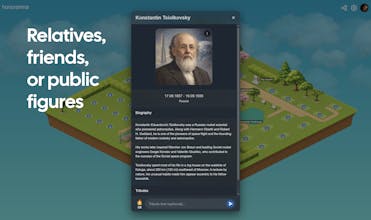
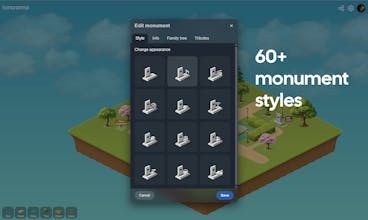
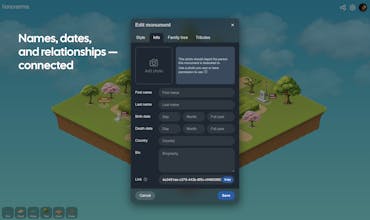
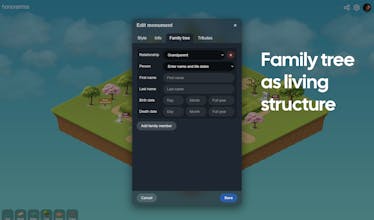
Honoramma is a platform for building an entire world of memory and respect. It’s a place where anyone can create a monument for a person, an event, or a pet, or build their own park and connect relatives’ monuments into a family tree.
We go beyond the traditional memorial format by focusing on the expression of honor, whether someone is living or not. These are places of memory, and they exist outside of time, especially in our fast-moving world where almost everything flows away like a river.
What is it for?
✨ Gather your family history into one shared park
✨ Express respect for public figures
✨ Honor meaningful eras and events
✨ Create a single monument for someone important
I made a few example parks:
👉 Bach Family Park 👈 complete family tree
👉 Beyond Earth 👈 about space
👉 Leonardo da Vinci 👈 a single memorial
Something unexpected happened
One of our early users created a park called👉Launch Stars Park👈a tribute to iconic product launches that inspired them. And somewhere in that park, there’s a very small Honoramma monument standing next to much bigger ones.
That made me smile 🙂Huge thanks to El for creating it.
How does pricing work?
Even though subscriptions are popular today, I don’t think that model fits “eternal memory.” What happens if there’s no one left to keep paying? That’s why buying a monument slot or a park map is a one-time purchase.
You don’t need to pay anything to explore or try Honoramma. Payment is only required when you decide to activate your own park.
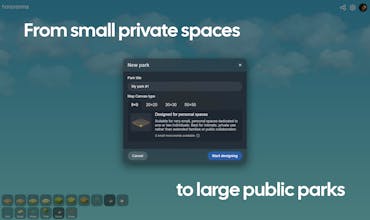
Here are the starting prices:
✨ Small park: $55
✨ Medium: $95
✨ Large: $215
🚀 First-week launch credit available: we cover $200 of your first 30×30 Park. You pay $15.
Monument slot prices are set by the park creator, but the current default prices are:
✨ Small slot 1×1: $19
✨ Medium slot 2×1: $29
✨ Large slot 2×2: $99
For example, for our Product Hunt launch, I created a special free park 👉 Free Launch Park 👈 where monument slots are free.
Because there’s no subscription model, sustainability becomes the key question.
We built Honoramma around paid tributes (small paid actions inside parks), and we believe that ongoing flow will be enough to keep the platform healthy and running.
Curious what you think 😉 I’ll be here all day, ask me anything
If you're curious about long-term sustainability, data permanence, or how ownership works, I’ve added detailed answers in our FAQ.
And if you have ideas for where Honoramma should evolve next, we’re collecting feature suggestions publicly, you can vote or suggest your own.
Building this openly matters to me.

El @honoramma Congrats on the launch! 🎉 This looks interesting. How is it different from something like MyHeritage or Geni?
El @maxim_streltses Thanks for raising this, I’ll answer in the other thread so everything stays in one place

El @honoramma How did you balance emotional significance with UX design so the platform feels respectful rather than like another scrolling feed?
El @kimberly_ross We borrowed a spatial interface people already intuitively understand, similar to classic city builders, and then removed competition, scores, and game mechanics.
We simplified everything and shifted the visual tone toward calmness and stillness. The goal was familiarity without gamification.
Did it feel more like a place to enter rather than something to scroll through?

Congrats! I was genuinely surprised (in a good way!) to see you mention me in your maker comment 😊
By the way, why does the park layout get locked after activation?
@elsixli I honestly think your idea of creating a park for iconic product launches is brilliant. It’s such a creative and unexpected way to use the platform, and it perfectly shows how flexible the concept can be.
Thanks for asking.
Once a park becomes Public, people start reserving specific locations for monuments. They need certainty that the layout won’t suddenly change. Locking the map keeps things fair and predictable for everyone.
If you want full flexibility, you can keep the park Private and edit it anytime.
@honoramma thanks So basically once it’s public, it’s frozen forever? What if I realize later that I want to expand or redesign it?
@elsixli When you activate a park as Public, it means the spatial and architectural layout is fully ready for monuments. Locking it protects people who reserve spots and place something meaningful there.
We all know the situation when you buy an apartment with a view and suddenly a new building appears in front of your windows. We want to avoid that in digital space.
If you ever need to rethink it, you can simply create another public park. Later, we’ll also allow multiple parks to be connected on a global map.
Congrats on the launch! 🎉 This looks interesting. How is it different from something like MyHeritage or Geni?
@maxim_streltses Thank you, really appreciate it 🙌 That’s a great question.
Platforms like MyHeritage or Geni focus on organizing genealogy data and building ancestry trees.
Honoramma is a bit different. It’s less about research and more about recognition. We’re building a meaningful space where appreciation, memory, and presence can be expressed visually and publicly.
So we see it as complementary, not a replacement.
@honoramma Thank you that makes sense. Is it more like a digital memorial space rather than a genealogy tool? Can families collaborate on a single park together?
@maxim_streltses Yes, it’s more of a digital memorial space than a traditional genealogy database. Family trees are supported, but the focus is on shared space and meaning, not just structured data.
Right now one owner manages a park, but true multi-member collaboration is one of our nearest updates.

Really curious about this. If someone buys a slot in my public park, do I earn anything from that?
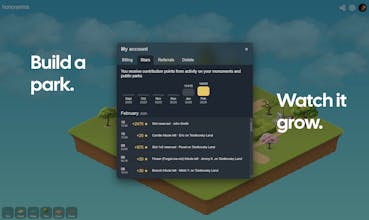
@olegataman Hi Oleg, good question. At the moment, Public Parks aren’t designed as guaranteed payout models. Instead, park and monument owners receive contribution points based on activity and slot purchases.
We don’t promise fixed payouts yet. But active contributors are a core part of the ecosystem, and as the platform evolves, the economic layer will evolve too.

Interesting project 👍 How do you prevent abuse or inappropriate content?
@creeeator Important question👍We combine structured ownership with reporting and moderation tools. Public parks are locked after activation, which means even the owner can’t change the core structure. That protects contributors and keeps the space stable. Moderation tools are there to prevent misuse, and we’re continuously improving that layer.

Nice idea 🙂 How customizable are park layouts and themes?
@romansong Thanks 🙂 You can add water, paths, different type of trees, flashlights, benches, bushes and flower beds. We are going to add time change (day-night) and different themes (earth, mars, moon etc)

Love the concept 🙂 Can monuments be dedicated to anyone? For example, could I create a park for my dog?
@feruzovich Love that example 🙂Yes, monuments can be dedicated to anyone meaningful to you. You can create parks for people, family history, cultural moments, and we’re planning categories soon so creators can clearly define whether a park is for remembrance, living people, pets, historical events, or mixed themes. We want structure, but not restrictions.



Thank you so much for such a thoughtful review, it really means a lot.
I’m especially glad that it feels like “building a place” rather than just filling out data. That spatial, emotional layer is exactly what we’re trying to create.
On performance, absolutely agree. We’re actively optimizing the initial load, and it will get smoother soon.
More customization themes are definitely coming. Right now we focused on the core experience first, but expanding visual identity and themes is part of the roadmap.
Yes, you’re correct, parks and slots are a one-time purchase. No recurring subscription is required to keep them active. Regarding storage, we intentionally keep it focused for now to maintain structure and clarity, but richer media support will expand over time.
And thank you for mentioning support. Really appreciate you taking the time to share this 🙏