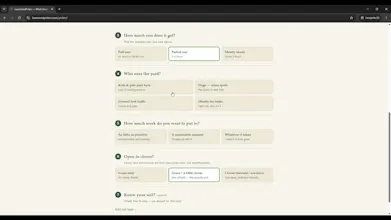
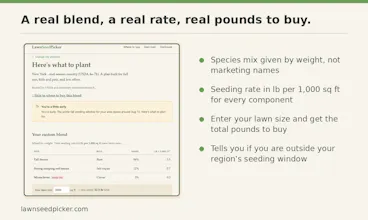
Most people buy grass seed by reading the bag. LawnSeedPicker asks three questions — zip code, sun exposure, foot traffic — and returns the species blend and seeding rate that university extension research says will actually survive there. You get percentages by weight, lb per 1,000 sq ft, total pounds for your lawn size, and whether you're inside your seeding window. Free, no signup.
No reviews yetBe the first to leave a review for LawnSeedPicker
Maker
📌
Hi PH 👋
I built this because I killed a lawn. I bought the bag with the nicest photo, spread it at the rate printed on the label, and watched most of it fail. When I went looking for why, I found that land-grant university extension services have published exactly this data for decades — which species survives which conditions, at what seeding rate — and none of it is anywhere near the point of purchase.
LawnSeedPicker asks three questions and gives you the answer those researchers already published. Zip code maps to your USDA zone. Sun exposure and foot traffic narrow the species. You get a blend and a seeding rate in pounds per 1,000 sq ft.
The part I care most about: every rate traces to a specific extension PDF — Rutgers, Penn State, Cornell, UMass, NC State, USDA. Where the seed bag and the extension research disagree, and they disagree constantly, the research wins. That conflict is the whole reason the tool exists.
Honest disclosure: the "where to buy" links are affiliate links, disclosed on the site. That's how it stays free. The recommendation itself is never influenced by what pays — a couple of picker slots point at lower-commission retailers because those were the accurate products.
It's a solo project, a no-build Preact app on Cloudflare Pages. Would genuinely love to hear where the recommendations feel wrong, especially from anyone in the transition zone — that's the hardest region to get right.
— Jon