
Launched this week

Lenz
Fact-check any statement with source-backed, multi-model AI
28 followers
Fact-check any statement with source-backed, multi-model AI
28 followers
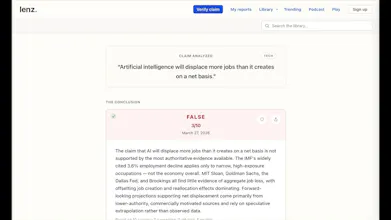
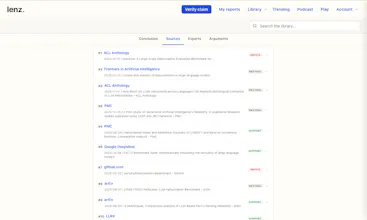
Lenz is an AI fact-checker. Paste any claim and Lenz searches for independent sources, has multiple AI models argue both sides and a separate AI panel review the evidence before reaching a scored verdict — with every source and argument and step of the process visible to you. Most AI tools give you one model's best guess from memory. Lenz orchestrates a multi-model research system based on real sources so no single model's blind spots drive the conclusion. Try it free at lenz.io/ph






Hi PH, Vicky here (co-founder, non-tech side)
Sharing a bit more on the “why” behind Lenz.
We didn’t build it for obvious fake news, they are easy to spot - we built it for the convincing stuff that sounds right. The kind you don’t think to question.
Misinformation moves faster than fact-checking. Most fact-checkers publish a handful of articles a week, while a single claim you stumble upon online can take 30+ minutes and 20+ tabs to research.
Lenz is, in a way, the tool I wish I didn’t need.
Unexpected side effect: I argue less with my teenagers 😄 Instead of “that’s not true” → “let’s check it.”
Curious to hear what you think.
I’ve used Lenz to fact check scholarly materials in philosophy. More specifically, contentious topics like Heidegger, where personal opinions can bias the way he’s interpreted. I’ve found that Lenz has a solid way of grading truth claims on the 1 to 10 scale which really helps separate where on the spectrum a claim lies.
An interesting use case @ivan_spasov thanks for sharing!
Philosophy is exactly where things get tricky as it’s less about clear facts and more about interpretation (and bias:)
Really glad the truthfulness score was useful - sometimes claims sit on a spectrum .
Were there were any results that surprised you?
@vicky_dodeva something that surprised me was that results filter opinions from facts very well. To give an example with one of my use cases - an important part of Heidegger’s work is his critique on metaphysics and if philosophy has answered the question of Being as such through the study of metaphysics. He is very harsh in his commentary that historically metaphysics doesn’t actually answer this question. But here is where it gets interesting - does he himself actually answer it? Explicitly, based on primary texts - no, at least not in a direct way. Scholarly texts might say that he actually does though. But this is the real distinction here - what has Heidegger explicitly said and what is an interpretation.
I found that Lenz is actually very good at making that distinction. What is actually true by virtue of the actual text and what is a scholarly interpretation.
@ivan_spasov wow, this is a really thorough example, Ivan, thanks for sharing it. That distinction between primary text and interpretation is exactly what we hope Lenz helps surface
@vicky_dodeva That distinction is extremely valuable in the humanities in general, so things like this could really help verify work in academic discourse.