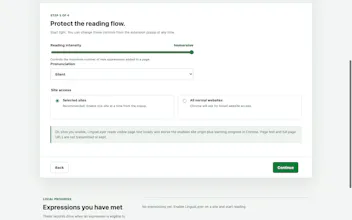
LinguaLayer turns everyday web reading into contextual language practice. Choose Chinese-to-English or English-to-Chinese, set your level, topics, and intensity, then meet a small number of useful expressions directly inside real articles. Hover for meaning, hear pronunciation, restore the original text, and track what you know. The free Core pack works without an account; Pro unlocks technology, business, news, exam, academic, and travel vocabulary packs. Page text stays on your device.
No reviews yetBe the first to leave a review for LinguaLayer
Maker
📌
Hi Product Hunt! I built LinguaLayer because most language-learning tools pull you away from the thing you actually wanted to read. I wanted the learning to happen inside normal web pages, in small doses, without turning every article into a lesson.
LinguaLayer supports two separate directions: Chinese pages → English and English pages → Chinese. You choose your level, reading topics, and intensity. It replaces only a limited number of suitable expressions, and you can hover for meaning, listen, restore the original text, or mark an expression as known.
The extension is local-first: visible page text is processed on-device, the Core pack works without an account, and site access is granted per site by default. Pro adds specialized vocabulary packs for technology, business, news, exams, academia, and travel.
The Chrome extension is now live. I’d love feedback on whether the replacements feel useful without interrupting your reading flow.
Report
One thing that would really help me is being able to save articles I practice on and come back to them later, maybe with a personal library so I can revisit tricky vocabulary in context. The idea of doing it without an account for the free pack is nice, but losing progress between sessions feels like a miss for building real retention.
Report
Maker
@helinrs48 Thanks Helin, this is a great point. Just to clarify, Free progress is stored locally in Chrome and persists between browser sessions. An account is only needed for syncing across devices or Chrome profiles.
A personal library for saving articles and revisiting vocabulary in context is not available yet, but it’s now high on the roadmap. Thanks for the thoughtful feedback!
Report
The privacy-first approach where page text stays on your device is genuinely thoughtful, especially for a learning tool that needs to process what you're reading. Nice to see a language app that respects how much of our browsing happens on sensitive material.
One thing that would really help me is being able to save articles I practice on and come back to them later, maybe with a personal library so I can revisit tricky vocabulary in context. The idea of doing it without an account for the free pack is nice, but losing progress between sessions feels like a miss for building real retention.
@helinrs48 Thanks Helin, this is a great point. Just to clarify, Free progress is stored locally in Chrome and persists between browser sessions. An account is only needed for syncing across devices or Chrome profiles.
A personal library for saving articles and revisiting vocabulary in context is not available yet, but it’s now high on the roadmap. Thanks for the thoughtful feedback!
The privacy-first approach where page text stays on your device is genuinely thoughtful, especially for a learning tool that needs to process what you're reading. Nice to see a language app that respects how much of our browsing happens on sensitive material.