

lyfbuk
turns your memories into a book, publish it on Amazon
10 followers
turns your memories into a book, publish it on Amazon
10 followers
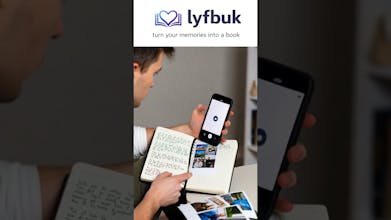
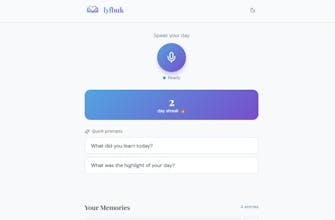
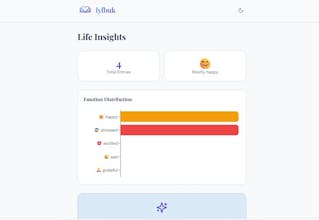
Most journaling apps simply store your daily entries. LYFBUK goes further - it transforms your memories into a complete life story. You can capture moments using text, voice, photos, videos or even scanned handwritten journals. AI then organizes these memories into chapters and turns them into a beautifully formatted book you can publish on Amazon. Instead of just keeping a journal, you are gradually creating your own life book.


I love the concept of turning raw personal input into a polished creative output — it's a pattern I think we'll see a lot more of with AI. The fact that you support voice and photos as input, not just text, makes this way more accessible. How does the AI handle organizing memories chronologically vs thematically? Like if someone uploads a mix of travel photos and journal entries from different years, does it try to weave them into one narrative?
@mattias_s
Thanks for the thoughtful question - this is actually one of the key challenges LYFBUK is designed to solve.
When memories are uploaded (text, voice notes, photos, videos or handwritten journal scans), the AI first extracts context signals like timestamps, dates mentioned in text, location hints and visual clues from photos.
From there, LYFBUK organizes memories in two ways:
Chronological timeline:
If dates or metadata are available, the AI places entries on a timeline so your life story can unfold naturally from past to present.
Thematic grouping:
If memories are from mixed periods (for example travel photos from different years), the AI can group them into themes like Travel, Family, Career, or Milestones.
When generating the book, users can choose the structure - timeline-based, theme-based, or a hybrid. So travel photos and journal entries from different years can either become part of the life timeline or be woven into a chapter like “Journeys and Adventures.”
The goal is to turn scattered memories into a coherent, meaningful life story while still letting the user shape how their book is structured.
@scholareum Really thorough answer, thanks! The hybrid approach sounds smart — letting the AI suggest structure but giving the user final control over how it's organized. The context signal extraction from photos and voice notes is clever too. Does it handle multiple languages in the same book (e.g., if someone journals in both English and their native language)?
@mattias_s
Great question - and yes, this is something we’re actively thinking about while building LYFBUK.
Since LYFBUK accepts multiple input formats (text, voice, photos and handwritten notes), the AI first converts everything into structured text. For voice inputs we use ElevenLabs to generate accurate transcriptions, which makes it possible to process spoken memories just like written ones.
From there, the system detects the language used in each entry. If someone journals in multiple languages (for example English mixed with their native language), LYFBUK can preserve the original language while still organizing the memories chronologically or thematically.
When generating the book, users can choose how they want it handled:
• Keep entries in their original languages
• Translate everything into one language for a smoother narrative
• Use a hybrid format, where the original entry is preserved but the generated narrative is in a single language
The goal is to respect how people naturally record memories, which often includes switching languages depending on context, while still turning those moments into a coherent life story.
@scholareum Smart approach using ElevenLabs for the voice-to-text pipeline. The mixed-language preservation is key — that's where most tools fall short. Looking forward to seeing how the final book layouts turn out!
@scholareum BTW — on the voice side, we're actually working on voice cloning in MusicOrb so users can create singing personas. The idea is you upload a voice sample and the AI generates music that sounds like your persona singing. Since you're already deep into ElevenLabs for the speech-to-text side, curious if you've explored their voice cloning for output too? Would be interesting to compare approaches.
@mattias_s
That’s a really interesting direction - love the idea of “singing personas.”
On our side with LYFBUK, we’re currently using ElevenLabs primarily for high-quality speech-to-text and voice processing, especially to make voice journaling as seamless as writing.
We have explored voice cloning conceptually, but our current focus is slightly different: we’re thinking about voice as a memory layer, not just input. For example, preserving someone’s natural voice in their life story - imagine a book where certain chapters can be “heard” in your own voice or even a loved one’s voice.
That said, your approach with MusicOrb is super compelling because it leans into creative identity, while LYFBUK is more about personal memory and authenticity. There’s definitely an interesting overlap though - especially in how voice can make digital content feel deeply personal.
We may eventually explore voice-based output (like narrated life books or memory playback) and voice cloning could play a role there - but with a strong emphasis on consent and preserving the emotional integrity of personal stories.
Would love to see how your approach evolves - feels like both products are exploring different sides of the same 'AI + Identity' space.