No reviews yetBe the first to leave a review for mdspec.dev
AppSignal — Full-stack monitoring for errors, metrics, and logs
Full-stack monitoring for errors, metrics, and logs
Promoted
Maker
📌
Every developer has felt repository pressure with AI agent assisted development: that hesitation before committing a half-baked idea. It’s the visual noise of 500-line Markdown files cluttering your docs/ folder, and the pain of cross-team coordination when a spec lives in a repository half the stakeholders can't access. When specs live strictly inside your repo, they create a bottleneck:
WIP Clutter: Your Git history gets littered with "draft" commits that add no value to the code.
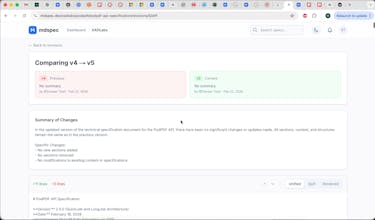
Fragmentation: Discussions across teams become long, disconnected, and hard to track.
Reuse Friction: Specs are often duplicated across features or projects without tedious copy-pasting.
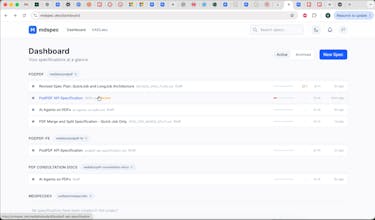
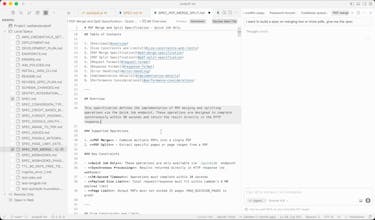
Most importantly, repository pressure steals our freedom to explore. It forces us to be "done" before we've even started. By moving specs to a parallel platform, we unlock the ability for both developers and AI agents to explore alternative scenarios, perform deep codebase analysis, and even prototype new tooling out of existing logic—all without the drag of repository constraints. Whether you're using an AI agent within your IDE for complex system work or manually mapping out a new architectural path, mdspec gives you the space to be messy and analytical until you're right.
Hey What will I see or achieve in my first session that makes me go: “yep, I’d pay for this”?
Report
Maker
@andrey_chernyshev1 Either yourself or couple of devs working on front end and backend, this makes it easier to share the specs like Endpoint documentations faster between two repositories. Mainly in B2B space. Most use cases are for enterprise teams. e.g If you want to give any part of your software to compliance, this makes it easy.
Report
@zameermfm yeah it come as a real relief. But is there kind of aha moment, like a specific event that hits a user so they are ready to even pay


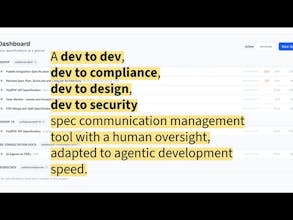



Every developer has felt repository pressure with AI agent assisted development:
that hesitation before committing a half-baked idea. It’s the visual noise of 500-line Markdown files cluttering your docs/ folder, and the pain of cross-team coordination when a spec lives in a repository half the stakeholders can't access. When specs live strictly inside your repo, they create a bottleneck:
WIP Clutter: Your Git history gets littered with "draft" commits that add no value to the code.
Fragmentation: Discussions across teams become long, disconnected, and hard to track.
Reuse Friction: Specs are often duplicated across features or projects without tedious copy-pasting.
Most importantly, repository pressure steals our freedom to explore. It forces us to be "done" before we've even started. By moving specs to a parallel platform, we unlock the ability for both developers and AI agents to explore alternative scenarios, perform deep codebase analysis, and even prototype new tooling out of existing logic—all without the drag of repository constraints. Whether you're using an AI agent within your IDE for complex system work or manually mapping out a new architectural path, mdspec gives you the space to be messy and analytical until you're right.
@zameermfm
Hey
What will I see or achieve in my first session that makes me go: “yep, I’d pay for this”?
@andrey_chernyshev1 Either yourself or couple of devs working on front end and backend, this makes it easier to share the specs like Endpoint documentations faster between two repositories.
Mainly in B2B space. Most use cases are for enterprise teams. e.g If you want to give any part of your software to compliance, this makes it easy.
@zameermfm yeah it come as a real relief.
But is there kind of aha moment, like a specific event that hits a user so they are ready to even pay