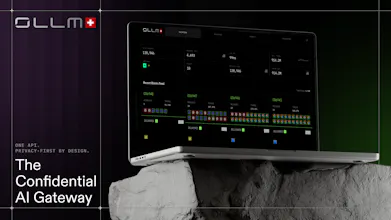
OLLM is a privacy-first AI Gateway that offers a curated selection of popular LLMs deployed on confidential computing chips such as Intel SGX and NVIDIA. Zero-Knowledge architecture means zero data visibility, retention or training use. Data now also stays encrypted during processing, not just in transit or at rest. To add an extra layer of verifiable privacy, OLLM provides users with cryptographic proof that their requests were safely processed in a TEE.
No reviews yetBe the first to leave a review for OLLM.COM
OLLM is one of the first AI platforms that actually closes the trust gap instead of just asking you to “believe the privacy policy.” It lets you run open‑source LLMs inside confidential computing environments (TEEs) and gives you cryptographic attestation for every call, so you can prove where and how your data was processed. This makes it a genuinely usable option for teams handling sensitive code, financial data, or patient records who want modern AI workflows without sacrificing compliance or peace of mind.
Report
Very useful. Many people worry about how private their data and code really are when sent over the network, since protection at every step can’t be guaranteed. This seems to address that concern.However, the document button on the website doesn’t work. It would be good to know how users can verify that the data is truly encrypted, rather than just trusting what’s reported.
Report
This hits a real nerve.
That “blind trust” feeling around AI tooling is something a lot of us quietly worry about, but rarely see addressed this directly. I really respect how you turned that fear into something concrete and verifiable — cryptographic proof > promises. 👏
Curious: for teams just starting with OLLM, what’s the easiest first workflow to move over without slowing dev velocity?
Report
This is actually refreshing to see. Privacy is usually just a buzzword in AI, but running LLMs on confidential hardware and proving it cryptographically is a big deal. The fact that data stays encrypted even during processing is something most people still ignore. Curious to see how this scales.




OLLM is one of the first AI platforms that actually closes the trust gap instead of just asking you to “believe the privacy policy.” It lets you run open‑source LLMs inside confidential computing environments (TEEs) and gives you cryptographic attestation for every call, so you can prove where and how your data was processed. This makes it a genuinely usable option for teams handling sensitive code, financial data, or patient records who want modern AI workflows without sacrificing compliance or peace of mind.
Very useful. Many people worry about how private their data and code really are when sent over the network, since protection at every step can’t be guaranteed. This seems to address that concern.However, the document button on the website doesn’t work. It would be good to know how users can verify that the data is truly encrypted, rather than just trusting what’s reported.
This hits a real nerve.
That “blind trust” feeling around AI tooling is something a lot of us quietly worry about, but rarely see addressed this directly. I really respect how you turned that fear into something concrete and verifiable — cryptographic proof > promises. 👏
Curious: for teams just starting with OLLM, what’s the easiest first workflow to move over without slowing dev velocity?
This is actually refreshing to see. Privacy is usually just a buzzword in AI, but running LLMs on confidential hardware and proving it cryptographically is a big deal. The fact that data stays encrypted even during processing is something most people still ignore. Curious to see how this scales.