

Predictive AI
Image and Video Enhancement and Analysis Platform
154 followers
Image and Video Enhancement and Analysis Platform
154 followers
Image and Video Enhancement and Analysis Platform. Suite of transformative based AI going beyond current market capabilities, allowing for advanced image and video enhancement and analysis. Already used in courts for defendant early release and prosecution.





Hey @aborschel
Just checked out Predictive AI — and honestly, this feels like one of those products that arrives exactly when the industry needs it.
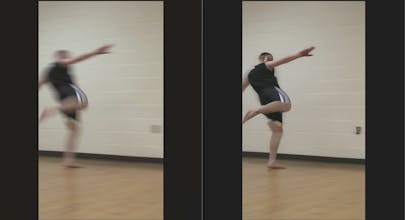
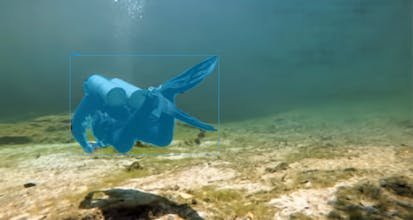
What immediately caught my eye is how you’re pushing machine vision beyond the usual “enhance image quality” promise. The blend of a full drone video relight & deblur, visual analysis, and AI-first video enhancement for both the public and businesses is genuinely impressive.
The positioning is super strong too — “Tomorrow’s AI, Today” isn’t just a line… the platform actually reflects that. The clarity of the mission, the Techstars backing, and the way you're giving users more control over their visual experience really stand out.
I’m especially excited to see how your API access + enterprise-grade model development opens up possibilities for creators, companies, and devs who want more than just surface-level AI tools. This looks like something that can genuinely redefine how we perceive and process visual content.
Huge congratulations to you, Alexander 🙌— and the entire team behind Predictive Equations. Excited to try it out and see the kind of transformations it can pull off in real workflows. Launch days like this are always special, and this one definitely feels like a big one.
@pankajvnt That’s a powerful use case, enhancement tools are common, but reliably doing it at a level trusted in legal settings is a completely different bar. The fact that it’s already being used in courts for both early release and prosecution says a lot about the tech’s rigor.
Curious how you handle chain-of-custody and auditability. Do you provide transparent logs or a forensic trail for how an image/video was enhanced so it can stand up under scrutiny?
@pankajvnt @fernando_scharnick Currently in the final output filename we include how it was enhanced, we are adding shortly additional similar authorship for external parties to source where the output came from (Predictive AI) but also what model was used. We hope once implemented that will become a standard for AI outputs.
@pankajvnt @aborschel That’s a great direction, having clear authorship + model attribution baked right into the output is exactly the kind of transparency standards the space needs. Once that lands, it’ll make audits and external verification so much smoother. Excited to see it become the norm!
Hey, @aborschel. Just checked out Predictive AI, and this is genuinely impressive work. Video enhancement tools usually focus on surface-level fixes, but your approach of combining detail restoration, deblurring, denoising, recoloring, and harmonizing under one ecosystem feels far more aligned with real investigative workflows. The fact that your models are already being used in legal settings adds a whole different layer of seriousness to the platform.
The interface looks intuitive for non-technical users, but the underlying capability to upscale inputs from x2 to x8 puts your engine in a very different bracket.
I also like the clarity of the mission on your website. You are positioning machine vision not as an editing tool but as a way to help people perceive reality with sharper accuracy.
I am curious about one thing from a technical standpoint. When you process low-resolution or noisy footage, how are you balancing hallucination control with aggressive enhancement? Are you relying on a confidence mapping layer during reconstruction, or do you use a constraint-based approach to prevent over-generation in legal use cases?
Looking forward to learning more about your model architecture as you scale. Great launch today, and congratulations to the entire team.
@virajmahajan22 Love the insight! The models we use per their architecture do not introduce changes via content- it is possible because of how deblur works that removing the distortion can cause minor coloration changes on the green scale, but apart from this very mild effect there is no method to introduce hallucinations. What is possible with our Ai is they may fail to understand what they are improving, in which case you just don't get the output. A one in several million possibility.
Regarding reconstruction layers - we don't use any of what you mentioned, allowing our AI to remain lightweight. We use a chain of deterministic reconstruction layers that preserve pixel-level fidelity and suppress hallucination. There is no GAN architecture involved is another way to put it, so there is a near 0 chance of any additional details that aren't already present being introduced.
Video enhancement for legal cases? That's powerful use case! ⚖️
What's the quality improvement you typically see? Can it work with really low-res footage?
@mskyow Hi there, the quality improvement can be anywhere from 20% to as much as 90% enhancement depending on type of noise or data loss. Some models perform better than others, some in combination with others to get even further.
Generally I would say you can expect to see anywhere from 33%+ depending on level of damage to the original media. Noise is entirely eliminated, most types of blur though this changes depending on the sensor.
It actually works better with low resolution! It can work on as much as 8k, but at that point you're really talking more about DPI than resolution, though both increase the perceptual quality of the output.
Interesting idea! And where else can this be applied besides courts?
Predictive AI
@mykyta_semenov_ Predictive AI can be used anywhere, with no limits on industry, purpose, or sector. Any place that depends on photos or videos can benefit from clearer visuals.
The idea is simple. Better clarity leads to better decisions, and Predictive AI gives you both. Have you tried it yet? Claim your code from here. We look forward to your feedback.
@pankajvnt No, I just watched the video. I don’t have a need for this, but I really liked the idea itself. I think your service could be interesting to large platforms that work with photos and videos, like Instagram. Have you thought about reaching out to them and selling your idea as a ready-made technology?