Qadence helps teams manage projects, track progress, identify risks, and stay aligned. Go beyond task tracking with execution intelligence that helps you understand what's happening and what needs attention next.
I've been using this tool since beta and it's been very effective for a project manager like me that just wants to keep things simple. Give me a simple UI and a simple breakdown of tasks and I'm good to go. Qadence is doing that presently. Of course, there's room for improvement, but I can understand that the product is still going through rigorous refinement.
vs Alternatives
It's very simple to use
Ratings
Ease of use
Reliability
Value for money
Customization
Report
4 views
Maker
📌
Hi Product Hunt!
We're excited to finally introduce Qadence.
We built Qadence because we found ourselves using project management tools that were either too complex or still required us to manually dig through tasks just to understand what was happening on a project.
We kept asking ourselves: if you're still carrying the mental load of piecing together context, is your project management tool really helping?
So our team at Check DC built Qadence to turn project data into clear insights, helping you quickly understand what's happening, what's at risk, and what deserves your attention next.
We'd love your feedback!
What project management tool do you use today, and how do you keep track of the bigger picture without spending time digging through tasks?
Report
How does the execution intelligence piece actually work under the hood - is it flagging risks based on deadlines and dependencies, or are you pulling in signals from how teams actually communicate and update work?
Report
Maker
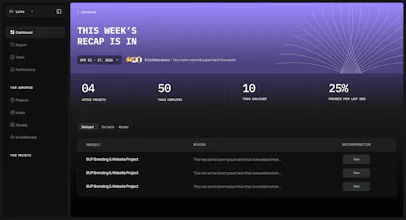
@aslhanercawk6n Hi! Right now, Qadence flags risks using signals like project deadlines, time spent on projects, task status changes (including what changed and when), cycle (our version of sprints) progress, task effort estimates, and the weight of tasks within a cycle.
These signals feed into our Weekly Insights, which summarize risks and highlight projects or cycles that may need attention while telling you what also went well that week.
We're also working on expanding this by incorporating signals from team communication and connected tools like Slack, so execution intelligence becomes even more context-aware.
If you've had a chance to check out Qadence, we'd love to hear your feedback!
Report
The execution intelligence angle caught my eye, and the risk surfacing actually flagged a blocker we had been overlooking for weeks. Setup was quick and the daily view feels genuinely useful.
Report
Maker
@mesutalacahan Thank you so much for the feedback! We're really glad Qadence helped surface a blocker that had gone unnoticed, that's exactly the kind of visibility we want to provide. We hope you'll keep using it, and we'd love to hear any suggestions you have as you continue exploring it.




How does the execution intelligence piece actually work under the hood - is it flagging risks based on deadlines and dependencies, or are you pulling in signals from how teams actually communicate and update work?
@aslhanercawk6n Hi! Right now, Qadence flags risks using signals like project deadlines, time spent on projects, task status changes (including what changed and when), cycle (our version of sprints) progress, task effort estimates, and the weight of tasks within a cycle.
These signals feed into our Weekly Insights, which summarize risks and highlight projects or cycles that may need attention while telling you what also went well that week.
We're also working on expanding this by incorporating signals from team communication and connected tools like Slack, so execution intelligence becomes even more context-aware.
If you've had a chance to check out Qadence, we'd love to hear your feedback!
The execution intelligence angle caught my eye, and the risk surfacing actually flagged a blocker we had been overlooking for weeks. Setup was quick and the daily view feels genuinely useful.
@mesutalacahan Thank you so much for the feedback! We're really glad Qadence helped surface a blocker that had gone unnoticed, that's exactly the kind of visibility we want to provide. We hope you'll keep using it, and we'd love to hear any suggestions you have as you continue exploring it.