
VoxRT Voice AI Runtime
The full voice stack, running on-device
3 followers
The full voice stack, running on-device
3 followers
No audio ever leaves the user's phone, browser, or Pi. Five SDKs, one shared runtime, zero cloud calls. Includes: wake-word "Hey Assistant" (100 KB, 5.3% RTF on Pi Zero), Silero VAD (3.05% RTF on Android), 14-command KWS (16% RTF on Snapdragon 662, 0.97% Chrome WASM), streaming ASR (real-time on mobile), and voice-cloning TTS (in development, coming soon). Runs on iOS, Android, browser (WASM), and Raspberry Pi. Coverage varies per component. No API keys, no per-minute pricing.




Hi Product Hunt,
Wake-Word ships as a standalone product. This launch introduces the rest of the SDKs alongside it, all built on the same VoxRT runtime.
We built VoxRT because on-device voice AI today is fragmented. You pick a wake-word from vendor A, a VAD from B, an ASR from C, and glue them together yourself. The cloud alternatives cost per-minute forever (OpenAI, Google, AWS) and send user audio off-device.
VoxRT Voice AI Runtime is the family of on-device voice SDKs our team ships. Each model is its own SDK, all built on the same runtime, so switching between them or combining them doesn't mean rewriting your audio pipeline for each.
Shipping now:
Wake-word "Hey Assistant": 100 KB, 5.3% RTF on a $15 Raspberry Pi Zero 2 W
VAD (Silero, 3.05% RTF on a 2020 mid-range Android)
14-command keyword spotting: 16% RTF on Snapdragon 662, 0.97% RTF in Chrome WASM
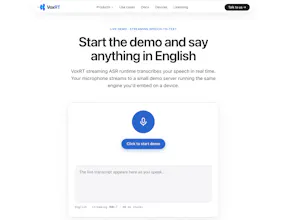
Streaming ASR (NeMo FastConformer): partial results as user speaks, real-time on mobile
Next up:
Voice-cloning TTS: in development, coming soon
No audio leaves the device. No API keys. Runs on iOS, Android, browser (WASM), and Raspberry Pi. Coverage varies per SDK.
Every RTF and model-size cited above is from real benchmarks we have published on dev.to. We are not claiming SOTA. We are claiming honest numbers for the smallest cross-platform footprint we could ship.
Would love your feedback on:
Which platform or hardware combo matters most to you
Anything you would want to see benchmarked next
Happy to answer questions about the runtime, the models, or the trade-offs we made getting things this small.