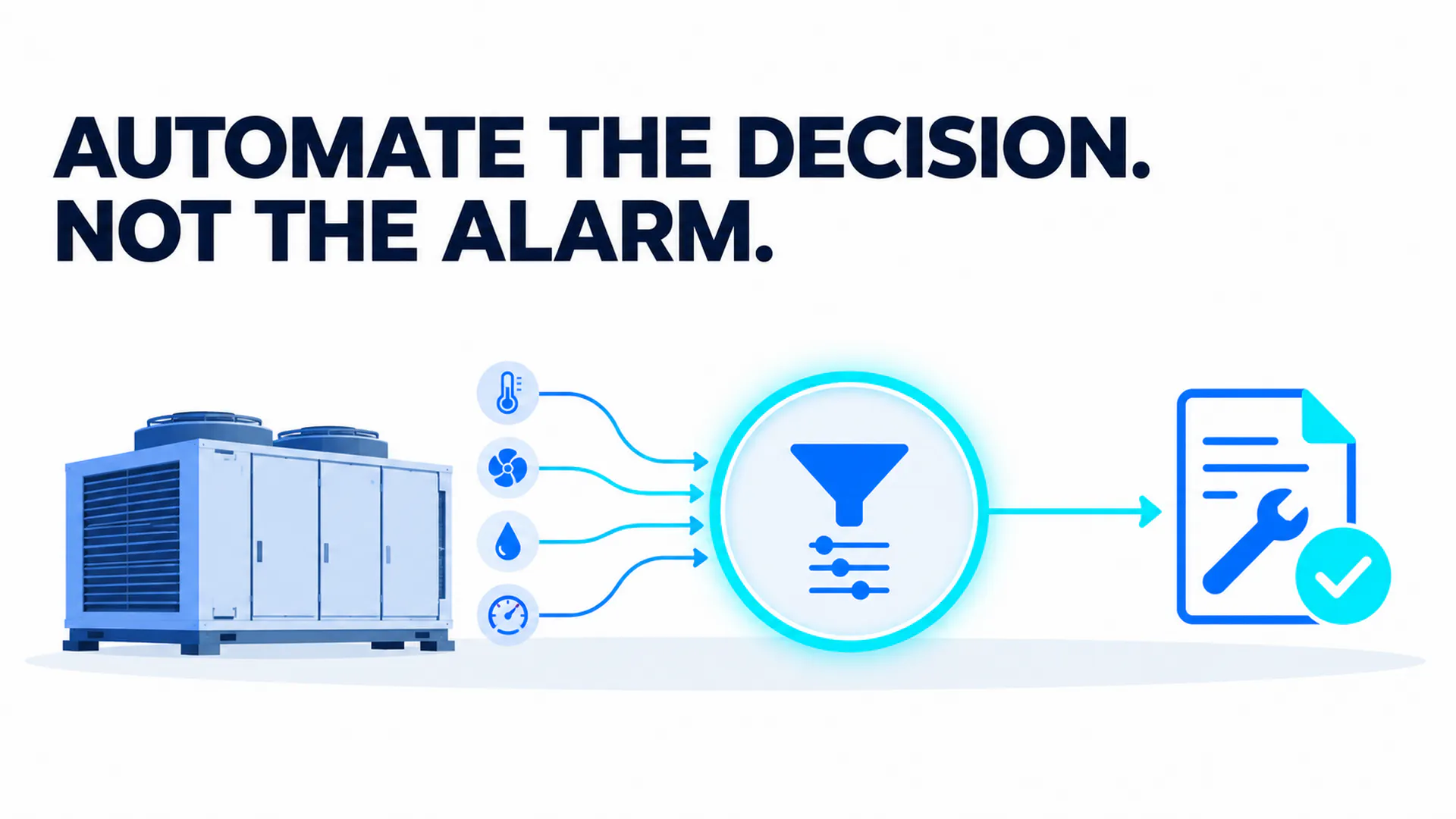
The strongest objection to BMS-to-CMMS automation is that it can worsen maintenance. If every alarm creates a ticket, nuisance events become work, faults produce duplicate tasks, and technicians close symptoms instead of repairing causes.
The integration may be technically successful while the operating model fails. Data moves faster, yet the maintenance backlog becomes less trustworthy across the portfolio and between maintenance teams.
Alarms and work orders serve different purposes. An alarm asks for attention. A work order commits labor, parts, and accountability. A governed admission layer must decide when an operating signal deserves that commitment.
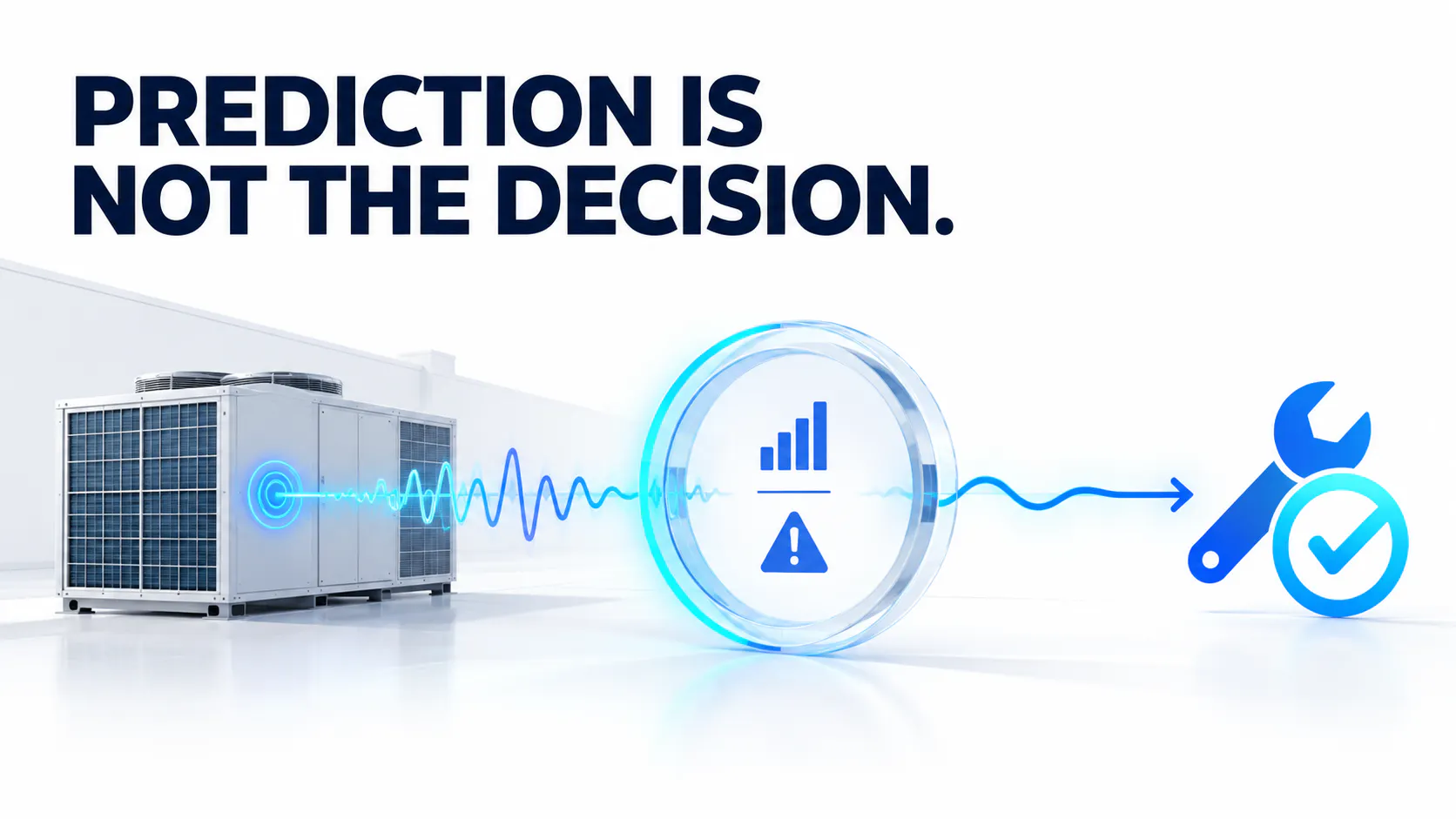
The strongest case against predictive maintenance is that earlier warnings can create more cost. Every investigation consumes engineering time. Premature intervention can replace usable parts, interrupt stable equipment, and fill maintenance queues with uncertain work.
Prediction is only one input to an asset decision. The outcome depends on an intervention policy combining technical evidence with consequence, confidence, redundancy, service windows, and the cost of error.
For enterprise leaders, the goal should not be maximum anomaly detection. It should be fewer unplanned failures without creating uncontrolled maintenance demand.
Building management systems are good at reporting abnormal conditions. That does not mean they are good at explaining what happened or helping a technician decide what to do next.
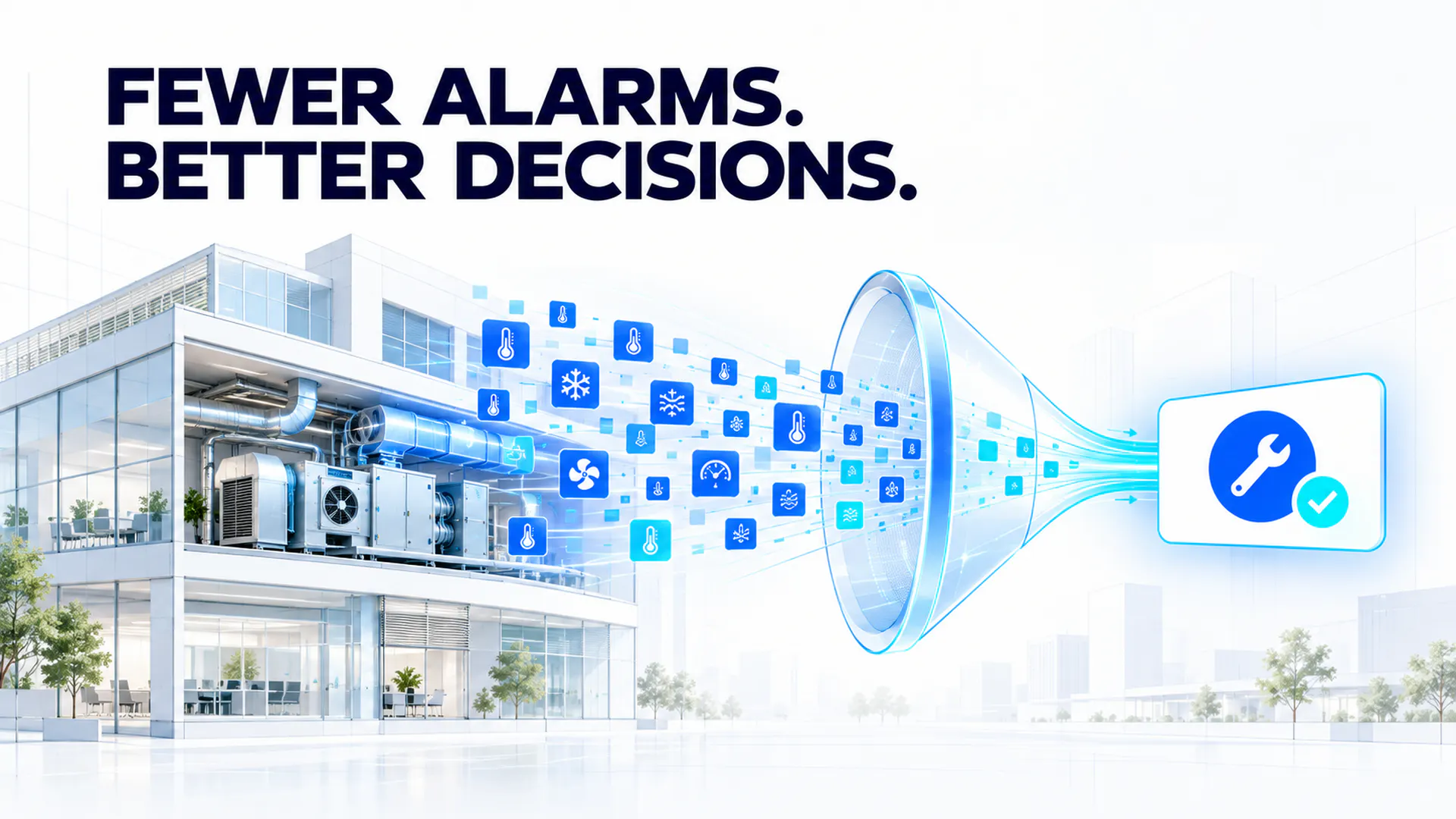
This is an executive issue. As portfolios add sensors, analytics, and AI, machine-generated findings can outgrow facility teams. Dashboards surface events while leaving diagnosis, priority, ownership, and verification unresolved, and forcing operators to reconstruct causes manually under time pressure across an entire portfolio.
The better objective is decision quality. Enterprises should design a governed path from signal to diagnosis to action, using deterministic alarms for known conditions, fault detection and diagnostics for causal reasoning, and AI for context-rich assistance.