
 •
•2mo ago
Why are AI vision tokens so much cheaper than text tokens for long context windows? 💸
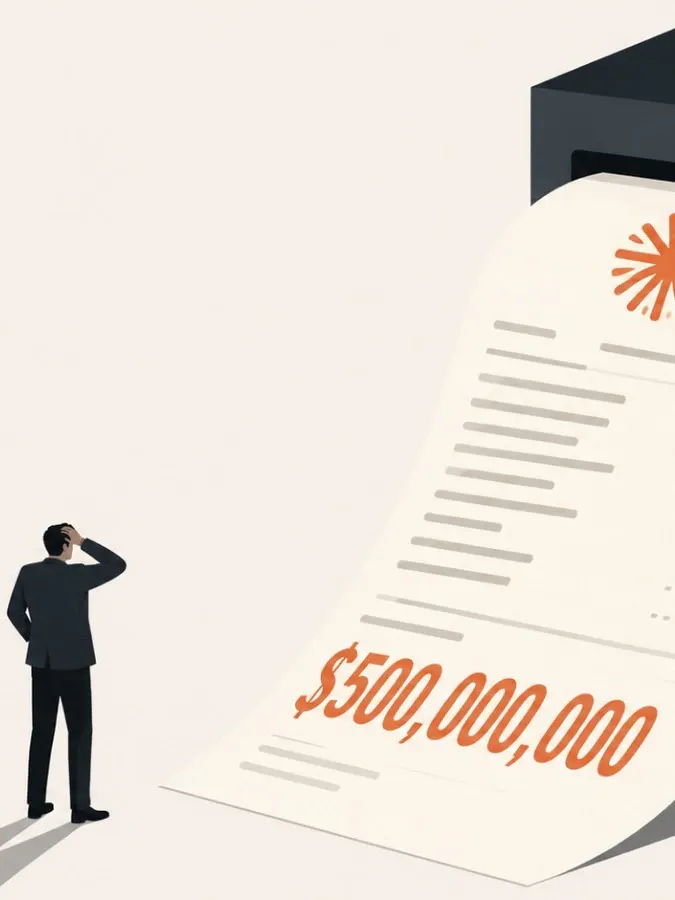
Anthropic and Google charge heavy text token rates when you feed them huge context windows, logs, or codebases. But if you render that exact same text into a dense PNG, vision OCR pricing kicks in cutting overall token costs by ~60%.
 •
•2mo ago
What's the one product/niche you don't want AI to touch?
We talk a lot here about AI unlocking new products and speeding everything up, but I'm curious where the community sees it going the other way... where "AI-powered" is actually a turn-off for users, or where a human touch is the actual selling point.
One example I keep thinking about: curated recommendations. Best movies, books, restaurants, coffee shops. There's so much AI-generated recommendation content out there now that a human-picked list (with a name and a point of view behind it) has become the signal in the noise. People trust "here are my 10 favourite films" from a person way more than an algorithm's guess at what they'll like.
 •
•2mo ago
The most trust-building thing an AI feature can do is say "no" change my mind
Last week I tested an AI feature I'd built with a deliberately tight-finances scenario and asked: "Can we afford a $4,000 trip this fall?" Instead of the encouraging answer I half-expected, it came back with: you'd be ~$3,500 short using non-emergency funds, your monthly cash flow is negative so the gap widens over time, and the emergency fund stays off-limits. Verdict: "Not without a plan."
It refused to be nice. And it was the first output that made me believe someone would pay for the feature because anyone can ship an AI that says "sure, go for it." The value turned out to live entirely in the moments it pushes back with receipts.
 •
•2mo ago
Every roadmap bet needs a kill condition
Before we build a feature, I want one observable result that would make us stop, simplify, or change direction. Without that, every weak result becomes an argument to add another feature.
A kill condition is not pessimism. It protects the team from negotiating with the evidence after time and ego are already invested. The hard part is writing it before the build begins, when changing your mind is still cheap.
What condition would make you stop your current roadmap bet?
 •
•2mo ago
Do you charge less because you're not based in the US?
I'm a European founder and I catch myself pricing lower just because I'm not in San Francisco. Same product, same value, but somehow it feels "wrong" to charge US prices.
Anyone else deal with this?
 •
•2mo ago
My AI model broke down 2 times in 8 days and it made me think differently about choosing one
Picking the AI model is a crucial decision for my product, and I really underestimated how hard it would be to pick one.
Before launch, I was considering things like:
Will users trust something that processes their messages with a model they have never heard of?
What is the real uptime record, versus the claimed one?
Do I go cheap/free, or pay more for something that will last longer?
-
Self-hosted? Or just ride on someone else s frontier model and take their roadmap?
I took a solution and moved on, as you do when there are fifty other decisions to be made. And then on July 9th everything just stopped. There were no warnings I could see I spent hours debugging my own code before realizing the model itself was the problem. It turns out it was being decommissioned that October, and apparently a silent outage is how that gets communicated.
I re-engineered the architecture to always have a backup model running in parallel, which quietly nibbled into margins I had already modeled carefully. Then again, same thing happened July 16. I don't think I've really worked this out so much as I've gotten better at taking it in when it happens again.
For other founders building on someone else's AI model -- do you build in redundancy from day one or did it take getting burned once before you took it seriously?
 •
•2mo ago
From [Previous Industry] to Tech Founder: What’s the hardest part of your pivot?
Many of us enter tech with years of experience in another field, bringing valuable skills to the pivot. But that transition is rarely smooth or easy. Speaking to other founders who have made a tech pivot has been tremendously valuable.
I come from the entertainment and dating space, mostly working B2C as a service provider. The shift to a B2B SaaS start-up meant changing my approach to business development and adapting my marketing know-how to a very different audience and new clientele (brands/employers). The hardest part is realizing that some of my skills aren t transferable 1:1, so I have to adapt my B2C go-to strategies for B2B. It s a different animal.
For example, in B2C, articulating the problem and helping your customer see themselves in your solution requires a different skill. It s about meeting your customer emotionally and connecting with their desired outcome, which is very different from B2B. With B2B, you re building longer-term relationships and discussing ROI. It s less emotional and more about efficiency. The pain points are different, but in many respects the conversation is the same. I can help you, and here s how.
What learnings, challenges, or obstacles have you had to overcome to succeed in tech? What advice do you have for newcomers launching a product or service in this space?
 •
•2mo ago
Realistically, how many businesses can one person run well at once?
I've got a few running at once and I'm genuinely unsure where the ceiling is. Past a certain point it feels less like a capacity problem and more like an attention-routing problem. Where's the limit been for you?
•2mo ago
A user correction should outrank a personalization model
Personalization gets dangerous when the system treats its inference as more authoritative than the person using it.
If a user says this is too easy, changes a goal, removes a topic, or asks the system to forget a preference, that correction should take effect immediately. It should not become one more weak signal waiting to be averaged against weeks of behavior.
I think the hierarchy should be explicit:
1. direct user correction
•2mo ago
A launch postmortem needs one falsified belief
Launch retrospectives often become traffic summaries: rank, views, signups, comments. Useful, but none of those says what the team learned.
I think every postmortem should name one belief the launch disproved. Maybe the audience misunderstood the promise, setup friction mattered more than price, or the users who converted were not the segment you expected.
If nothing could have changed your mind, the launch was distribution, not an experiment.
What belief did your last launch force you to update?