


Will Perplexity "overshadow" OpenAI?

I read in TechCrunch today that Perplexity is trying to dominate the Indian market, which could potentially increase the number of users (and thus compete with OpenAI).
Perplexity is trying to attract more users by offering a free 12-month Perplexity Pro subscription – normally worth $200 – to all 360 million Airtel subscribers. (That is the cost for them.)
Do you think @Perplexity is doing it right?
Because the catch is monetisation – the purchasing power of India is simply not the purchasing power of the American market.
What strategy do you think would help them increase not only the number of users but also their profit?
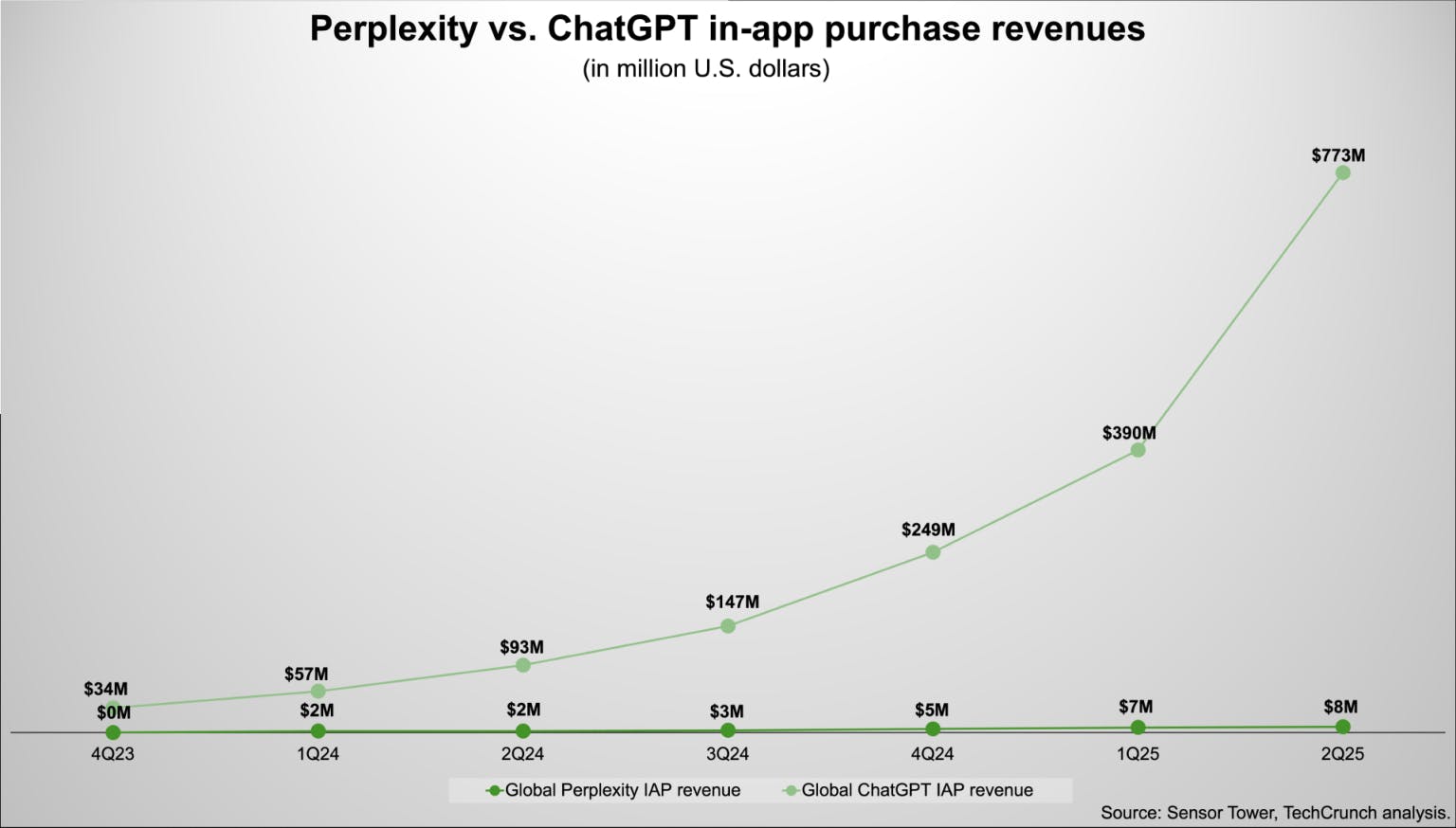
I am attaching the current revenues for both (OpenAI vs Pplxty). 🙈
655 views
Replies
Bold move by Perplexity, India’s scale is unmatched, but monetization is a different beast.
Free Pro access via Airtel is brilliant for distribution, but turning that into revenue will need more than subscriptions. Maybe the real play is embedding into everyday workflows: student research, apps, even voice assistants. If they can become the default layer for discovery, monetization could follow through partnerships, enterprise tools, or even contextual commerce.
minimalist phone: creating folders
@vivek_sharma_25 More people mentioned this so it comes to my mind... 🤔 Is this an AI answer? 😂
TinyCommand
That Airtel deal is bold 360 million users is serious distribution. But distribution without clear monetization is a leaky bucket.
Perplexity’s value prop right now is ""search, but better."" But Indian users already trust Google deeply, and most aren’t yet paying for search-like tools especially when contextual search isn't a felt need at the mass level.
To convert free into profit in India, I think they’d need one of two things:
A wedge in enterprise or education (where trust + budgets exist)
Or a deep local use case (vernacular support, student search, exam prep, even medical research)
Right now, Perplexity looks like a top-of-funnel play but India doesn't always reward top-of-funnel unless you're solving a clear pain.
Curious what others think: does the product need to evolve for the Indian market, or just wait for user behavior to catch up?
minimalist phone: creating folders
@priyanka_gosai1 IMO Perplexity should first with a clear monetisation model first, not acquiring the amount of users (tho it is still important), at the end of the day, you need money to pay people and bills. 🤷♀️
They should make these graph colors even more similar to create even more confusion!!!
minimalist phone: creating folders
@a_t33 yep, the graphic design is a little bit confusing (aka they f*cked the graphic up) :D
Perplexity’s strategy is bold — flooding the market with value to gain distribution fast. And India is the right battleground for that: massive, mobile-first, and increasingly AI-curious. But you're right — user growth ≠ revenue, especially when monetization depends on converting free users in a price-sensitive market.
To really compete with OpenAI, I think Perplexity needs to shift from being just a search alternative to building sticky, ecosystem-level use cases — workflows, integrations, agents. That’s where sustained value (and revenue) lives. At Growstack, we’ve seen this firsthand: users stick around not because of the AI itself, but because it’s embedded into their daily business operations.
Distribution wins the war early. But real utility and monetizable depth? That’s what creates a moat.
Ask ChatGPT