
 •
1mo ago
Let your AI assistant actually work in your docs: meet DotMD
Most AI tools hand you text to copy-paste somewhere else. DotMD exposes your whole workspace over MCP, so an assistant like Claude can write the doc, build the deck, fill the sheet, and leave comments right where your team collaborates.
What's inside:
Markdown docs with comments and versions
Slide decks and spreadsheets with charts
Interactive HTML "Arts"
Sharing, folders, namespaces, and GitHub sync
 •
1mo ago
I'm going to try and make Frenzii an extension for instagram
I have gotten a lot of the same suggestions that Frenzii would be a great extension for Instagram. Well, I'm going to try and make that happen, even though it is going to be very difficult, I'm going to try my very best. Wish me luck!
 •
7mo ago
I built a voice-only expense tracker that logs spending in 3 seconds
I kept giving up on expense tracking apps. Too many taps, too many screens just to log a coffee. So I built VoiceOnlyLedger - you long-press the mic, say something like "coffee 5 dollars", release, and it's done. Auto-categorized into Food, Transport, Shopping, etc. What makes it different: - All processing happens on-device. No cloud, no accounts, zero data collection - Optional iCloud sync across your Apple devices - $0.99 one-time purchase. No subscriptions, no ads - Tiny 1.2 MB app size It's on the App Store for iPhone, iPad, and Mac. Would love to hear what you think - especially what features would make you actually stick with expense tracking long-term.
 •
5mo ago
I built Lumeria Skyn in 6 months with no coding experience.
I'm Darya, the solo founder of Lumeria Skyn which is live on the homepage today.
Six months ago I had never written a line of code. I work full time in finance. I have two small kids at home. I built Lumeria because I was exhausted by skincare advice that wasn't built for my skin. Dermatologists pushed retinoids. Influencers pushed whatever they were paid to push. Every app I tried wanted my data more than it wanted to help me.
So I built something different.
Lumeria asks six questions and builds a complete personalized morning and evening skincare routine for your exact skin type, conditions, and sensitivities. Gentle mode activates automatically for eczema, rosacea, and prescription skincare users. There's a barcode scanner that checks any product against your profile instantly. No account. No data collection. Everything stays on your phone.
 •
1mo ago
What kind of workspace would you switch to instantly?
Hi everyone, I'm Seiya.
I started building Snapset because I kept running into the same frustration with my Mac.
At home, I use an ultrawide display. At my office, a Studio Display. At caf s, just my MacBook.
 •
1mo ago
Hi Product Hunt community!
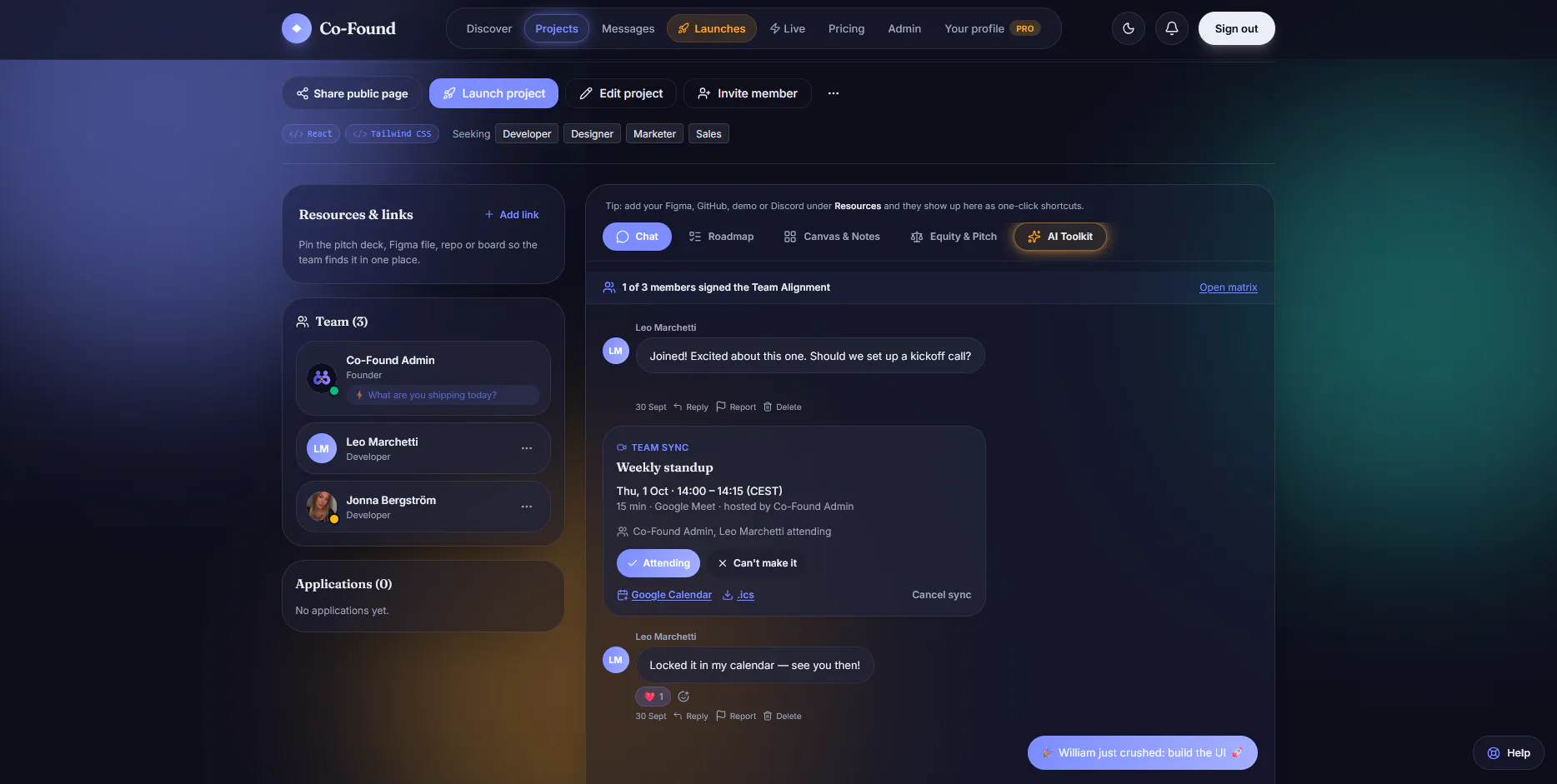
I just launched Co-Found on Product Hunt today. I built it because I was completely tired of cold LinkedIn spam and ghosting when trying to find serious people to build tech projects with.
Co-Found is a free hybrid workspace where developers, designers, and creators can match on skills and move straight into a private team dashboard with built-in chat, kanban roadmaps, and an automated AI Startup Prenup to split equity easily. And you can launch your product, app or website inside co-found for everyone to see for good startup.
 •
5mo ago
Interactive Digital Magazines for Sports Content: What Makes the Format Worth Considering
If you publish sports content regularly - match recaps, weekly digests, tournament coverage - the format you distribute it in may be worth a closer look.
Static PDFs have been the default for a long time. They are familiar and easy to produce. But there are a few practical limitations that tend to surface when you are publishing on a fast turnaround schedule and trying to reach an audience that reads mostly on mobile.
What an Interactive Digital Magazine Could Offer
 •
7mo ago
I learned Xcode to build a sleep tracker with AI psychological coaches.
I want to share a project I ve been pouring my heart into for the past few months: Circa Accord.
The Backstory
Living in a hyper-fast-paced urban environment, my daily routine was completely broken. I was constantly trapped in "revenge bedtime procrastination." I tried almost every sleep and habit tracker on the App Store, but I kept running into the same issue: raw data wasn't enough to change my behavior. Seeing a beautiful chart showing I only slept 4 hours didn't stop me from doom-scrolling the next night at 2 AM. I realized I needed psychological leverage, not just analytics.
So, I spent my evenings teaching myself iOS development to build the exact tool I needed.
 •
5mo ago
Does modern software testing need a new category between exploratory testing and test automation?
For years I've seen teams perform the same activity: A feature is implemented. Before anyone creates a maintainable automation suite, developers and testers spend time exploring the system. Sometimes manually. Sometimes using fuzzers, mutation tools, schema generators, protocol analyzers, API scanners, AI-assisted tools, or other forms of generated testing. The goal is not regression protection. The goal is discovery.
Hundreds of tests may be generated and executed. Many are never maintained. Some reveal defects. A few become future regression tests. Yet we usually classify this activity as either exploratory testing or test automation, even though it doesn't fully fit either category.
 •
1mo ago
🚨 Stop Overpaying for AI Prompts
If you re using ChatGPT, Claude, Gemini, Perplexity, or Grok daily do you actually know what each prompt costs you?
Most of us don t.
That s why we built Token Wise a lightweight Chrome extension that shows you the live token and cost estimate* as you type.