@yozzozo Hi Matt, that’s a great question. In short, not all telemedicine platforms are created equal. At Remedy, we allow our patients to build a trusted relationship with elite doctors supported by a suite of cutting-edge tools.
Elite doctors
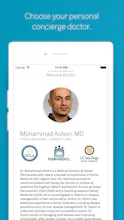
We only accept exceptional doctors who have a proven track-record of delivering amazing service. At Remedy, we believe that a great healthcare system begins and ends with great physicians. We have a rigorous five stage interview process to ensure that our doctors not only have impeccable clinical aptitude but also first class “phone-side” manner. Less than 5% of applicants are accepted. Our doctors include:
- Dr. Mohammad Ashori, a Medical Director at Kaiser Permanente with nearly a decade of experience in Family Medicine and Urgent Care
- Dr. Shilpi Agarwal, an accomplished primary care physician with a weekly segment on Fox News and recurring column at SheKnows and Everyday Health
- Dr. Moshe Lewis, the Chief of Physical Medicine at California Pacific Medical Center and a trusted concierge doctor to a number of professional athletes
Continuity of care
We are laser focused on matching our patients with the specific doctor that is right for them and building a trusted relationship over time. We do not view patient visits as individual cases, but rather, one episode in the overall story of that person’s health. We believe that healthcare is a team sport and building a strong patient-provider relationship is instrumental in affecting long-term health outcomes. In contrast, most other platforms do not allow you to select your doctor, let alone match with the same doctor upon your next visit.
Doctor + AI
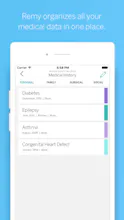
Remedy couples our doctors with a suite of advanced tools to automate various workflows from initial patient in-take through to note-taking, EMR entry, and follow-up. Most other telemedicine solutions are, at it’s core, still just a phone call or Skype interview with a randomly matched doctor. While this has place-shifted the location of the appointment from in-person to virtual, it fundamentally has not increased the efficiency of physicians – they still need to go through all of the same admin and burn a lot of time on rudimentary tasks such as typing up notes in the EMR (not exactly a great use of physician time). By alleviating the admin burden on our doctors, we allow them to focus on what they do best: providing excellent patient care.
Report
@michael_n Sounds good... is there a way to rate the doctor / factor in ratings when selecting one? I appreciate your only letting "elite" doctors onto the platform, but elite can be subjective. I'd want to rely on the wisdom of crowds to validate them according to their own, real experience.
@yozzozo Thanks for the suggestion – we are currently building a bi-directional rating system to help capture that data on our platform.
While our doctors have historically scored well on customer satisfaction (one of our doctors received an award for Highest Patient Satisfaction Scores at Kaiser Permanente), we appreciate the research around the limitations on customer satisfaction scores – it’s just one part of the overall picture and high customer satisfaction scores alone do not equate to good medicine.
As a part of our recruiting process, all of our doctors have to successfully solve a series of test vignettes (simulated cases) carefully curated by our Medical Advisory Board. You will be surprised by how many candidates fail. Importantly, the test is performed directly on the Remedy platform and we include a separate scoring matrix to capture user experience.
Part of the problem with the existing healthcare system is that doctor performances are generally opaque. It’s hard to shift through the noise to find reliable signal on quality. That’s why we’ve done the work for you. We’d love for you to try it out first hand!
Report
Ever get frustrated when you hear the following?
"If symptoms continue for more than 10 days, schedule a follow-up appointment with your healthcare professional for re-evaluation."
What happens if I am traveling or can't book an appointment time that works with my schedule? Texting a doctor on my time sounds much more friendly.
Thank you Remedy for making healthcare more efficient and accessible!
This is a great approach to changing the space! One thing that comes to mind when combining AI and healthcare is a story (I might get some facts wrong, but I think the point still stands):
As I remember, getting pneumonia as an asthma patient is an immediate triage into urgent care, since so many complications can arise. Some researchers decided to build an AI that would help emergency room doctors save time triaging their patients based on their symptoms. When they looked at the results though, they saw that the AI actually discharged patients with asthma and pneumonia (which is not what you want). Looking into it, they realized that because the combination was such a red flag, doctors would route patients right past the triage station and straight into urgent care, depriving the AI of training data on that specific scenario, allowing it to make an incorrect conclusion of discharging the patient.
Since you guys are combining AI and healthcare, what kinds of precautions are you taking with regards to the AI training data to make sure there aren't gaps like these? In which ways are you applying AI towards treating health issues?
@hansenq This is a great question, and one of the major reasons why health professionals don't trust machine learning. Part of the problem is that you want to build models that are "interpretable." A model that is interpretable can not only propose a recommendation but also explain the rationale for the recommendation.
In our scenario, interpretability comes from the synthesized doctor's note. The physician has access to all of the critical information about what's present and what's absent in addition to all of the nuances of presentation. Recommendations are made using this source material as "evidence" that the physician can sanity check and flag if the provided rational is nonsensical. This is similar to how a doctor might override the suggestions of a human medical resident when they draw an incorrect conclusion (it's possible here because the resident can communicate their decisions using English!).
The key here is that we empower the physician to understand why the algorithm makes the suggestions it makes and appropriately point out when the algorithm has overgeneralized or is attempting to make a suggestion where it lacks confidence.
How do you balance HIPAA requirements while "collecting highly granular data" - especially when non-sensitive data in aggregate can become PHI (Protected Health Information)?
(Nerds that want to read more can find some of the relevant requirements from NIH on using PHI for research - https://privacyruleandresearch.n...)
Quote from previous answer:
"Clinical decision support. In the process of collecting highly granular data about each consult, we're developing a dataset that will allow us to match reported symptoms and QA data to the immediate diagnosis by a physician and results of the 48 hour follow up. We can use this dataset to generate models for predicting the patient's diagnosis (and the rationale for the diagnosis), most likely warning signs that would indicate something more serious is going on, and automatic templates so the doctor can send across all the critical information with a couple taps."
@aten That's a great question! I think you'll get a great sense of what I mean by testing out the app and taking Remy for a spin. Generally speaking, we do all of the must-haves in anonymizing PHI. These include eliminating age, names, locations (beyond the granularity of the state-level), and any absolute timestamps (we turn these into relative timestamps, e.g. "patient was coughing 3 days after initial appointment" instead of "patient came in on 12/7 and then started coughing on 12/10"). We haven't gotten to this point yet, but we also will be wary of situations where a condition may be so rare that it might risk revealing the identity of a patient (e.g. certain orphan diseases) and remove those patients from any data set that we use. Generally our approach will be to hypothesize which components of the medical graph will be critical to making an accurate diagnosis/recommendation and only pull thee components (instead of pulling everything haphazardly and then trying to prune). We work very closely with our legal team before we start any research project to ensure that our research complies with HIPAA. Additional thoughts are welcomed! :)
Congrats on the launch, team! Judging by how polished and well thought out the product looks alone, I'm sure a lot of effort went into it.
I mostly imagine using this to get preventative questions asked more easily - it's so difficult to justify all the time and effort that goes into visiting my physician for minor issues, but by the time an ailment has developed enough that it's worth the effort it's far more difficult to deal with. I'm so glad you guys are making it more convenient to get help before things get out of hand.
I can't wait to try it, and in the meantime I just have a few questions: Can my insurance pay for Remedy? How exactly does the experience in the app combine with seeing a real doctor in the case that the situation requires it? Will I consistently see the same doctor? If I want to see a specific doctor, rather than the one Remedy connects to, is the information Remedy collects for me shared with them?
@zan2434 Thanks for your kind words and support!
With or without insurance, the cost of a Remedy appointment is the same affordable price of $30 – less than the out-of-pocket cost of most urgent care visits (and that’s before the cost of your time). Moreover, you can easily pay for the appointment using the funds accrued in your health spending account (HSA, HRA, or FSA).
Research shows that c. 70% of all doctor’s visits could be taken care of via telemedicine. However, in the case where we are unable to treat virtually, we can get you direct access to laboratory diagnostics and/or act as your trusted point guard to make sure you are referred to top quality doctors in each specialty. You will be able to bring the notes on the Remedy app with you. In the off chance that we are unable to help you, we would promptly provide a full refund.
Lastly, our philosophy is to take the time and match our patients with the specific doctor that is right for them. While our recommendation algorithm provides a suggestion based on the patient’s incoming profile, he or she is able to browse through the other providers and read up on their particular expertise and practice style before making a selection. Once the patient establishes the right fit, he or she will be matched with the same doctor upon subsequent visits.
Remedy lets anyone, insured or not, get medical advice and prescriptions from the best doctors in the world, all for an incredibly affordable price. They use AI to make this experience possible, and they are paving the way for better healthcare for everyone. I believe in companies that create a better experience for consumers, and do so at a cheaper price. Remedy is doing exactly this - excited to start using it.
Thanks for your support @sarahtavel
After struggling to find good treatment for my epilepsy, I began to realize just how terrible the healthcare system was. It took months to talk to my doctors, and few of them were up to date with relevant standards of care. It seemed that the system didn’t work for patients, doctors, or the researchers and innovators trying to change things for the better. It was literally brain damage for me! After talking to my close friends, Nikhil, Mike, and Jessica, I realized that I was not alone.
Research showed that about 70% of all doctor’s visits could be taken care of via telemedicine, the practice of using technology to provide care remotely.
We saw telemedicine as the natural hub to build a new healthcare system around. It gives patients unparalleled access to their physicians, and makes seamless data collection and deployment of game-changing software possible at the point of care.
For example, most physicians spend about 66% of their time on paperwork.
Remedy uses AI to automate tedious tasks and administrative paperwork for our doctors.
Because of this, our doctors save tons of time, which we pass onto our patients by making appointments affordable.
More importantly, this efficiency lets us bring some of the world’s best physicians onto the Remedy platform, and empower them to spend more time focusing on caring for patients.
Remedy’s the only place where patients, even those without insurance, can get the undivided attention of an elite doctor for the price of a copay at most clinics.
Of course, this doesn’t fix everything about healthcare. We’re only in California right now, and obviously Remedy can’t treat all health concerns (it’s tough to do surgery over an app). We’re eager to expand Remedy in the future, offering speciality care, mental health, surgeries and all other components of modern healthcare.
We dream of a healthcare system built around a strong software backbone that ties data together to enable researchers to uncover better ways of delivering medicine, automates bloat, provides a seamless channel for deploying life-saving diagnostics at scale, and above all, helps doctors focus on what they do best: giving care.
Really excited to share this with you all, and we’re all eager to hear your thoughts!
Democrotizing healthcare for all peoples by empowering the best physicians in the world through AI. This will change healthcare and the world as we know it.
@jose_morey_md Thanks for the support, Jose! Our doctors and patients already love working with Remy. In the long term, we see Remy as an incredible mechanism by which we can deliver important automation and diagnostic technologies directly to the front lines of care.
Report
@jose_morey_md You probably should mention that you're on the team.



Remedy
Remedy
Remedy
Affinity
Remedy
Shazam
Remedy
Relephant
Remedy
The Twenty Minute VC
Remedy
Remedy