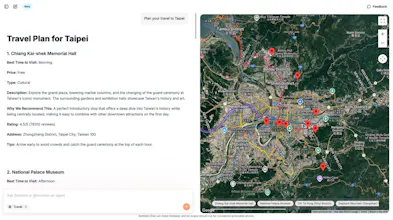
Reviewers mostly describe Sentient Chat as a fast, useful multi-agent assistant that gives clearer, more structured answers than typical chatbots, especially for crypto research, travel planning, brainstorming, and longer conversations. Repeated strengths include specialist routing, context retention, source visibility, and a clean interface. The open, community-driven approach also stands out to many users. Criticism is lighter but consistent: some users report freezes or dropped responses during long queries, slight lag on mobile, cramped panels, weak math formatting, uneven multilingual phrasing, and travel or location data that can be outdated.



GRID is an AI that belongs to people, not companies!
100+ partners stitched into one fabric of knowledge? That’s not a platform, that’s a new ecosystem
This is an impressive step forward, especially with the scale of GRID and the decision to open-source the code soon. One question I have is about quality control and alignment: with 100+ partners integrated into Sentient Chat, how do you plan to ensure consistency, reliability, and safety across such a wide network of intelligence sources?
Bullish on SentientAGI The best open-source AI of 2025.
Bullish on Sentient Chat The best open-source AI of 2025.
After using Sentient Chat, I found Spaces' process to be really helpful. I no longer need to open numerous tabs in order to access all of the data and AI analysis. It's a seamless, transparent experience that could eventually become the AI tool I use on a daily basis.
@SentientAGI's greatest strength lies in its emphasis on democratizing AI and community-led development through open-source AGI. This prevents monopolies from large corporations and allows developers and users to directly contribute and share in the profits. The AI is designed to be "loyal" and aligned with human values. What I like most about SentientAGI is that it minimizes social impact through ethical AGI.