I wrote a forum post not long ago on marketing as one of the rising in importance hires for all startups. This is all the things we've done, with some results and free resources.
We've been analyzing demo funnels across B2B SaaS companies, and the pattern is consistent: the "Book a demo" button creates a 5 9 day gap between peak buyer intent and first product contact.
By the time the call happens, half the excitement is gone. No-show rates climb. Reps spend the first 15 minutes on basics the prospect would've preferred to explore alone. The fix isn't a better calendar tool. It's removing the wait entirely.
We built Naoma to replace that gap with an instant AI demo live, conversational, running in the browser 24/7. The prospect gets a real product walkthrough the moment they click. We route qualified leads straight to sales.
In early pilots, we're seeing 6 20% visitor-to-demo conversion, which for most inbound funnels is a meaningful jump from the default.
I noticed that my Spotify @Raycast extension had stopped working and discovered that Spotify clamped down on its platform as of last month:
Over time, advances in automation and AI have fundamentally altered the usage patterns and risk profile of developer access, and at Spotify's current scale these risks now require more structured controls.
In response, we are making changes to Spotify for Developers to better protect creators, partners, listeners and the platform. These updates build on changes we've implemented in the past, including the introduction of developer modes, refining access for WebAPI endpoints, introducing new extended quota mode criteria, as well as deprecating outdated OAuth flows.
Thus if you notice other Spotify-based products not working correctly... you might see if it's because of this.
As pointed out by The Roundup, the inference space is booming right now.
Last week, @Baseten raised $300M at $5B valuation. They just announced the acquihire of @Inferless to "accelerate innovation in inference infrastructure."
I'm working on toran, a live API inspection tool that works with just a URL swap. No SDK, no proxy config, no cert setup.
The problem - I couldn't see what my code was actually sending to third-party APIs. Debugging meant console.logs everywhere or messing with Charles/Proxyman certs.
I m curious how people here think about a calmer, signal-first feed in practice.
If you ve tried Trace already: What felt immediately useful? What felt missing or confusing? What would make it something you d actually open every day?
If you haven t tried it: What would you need to see before giving a feed like this a real shot? What would make you bounce?
I m early and still shaping this, so honest feedback (good or bad) is genuinely helpful.
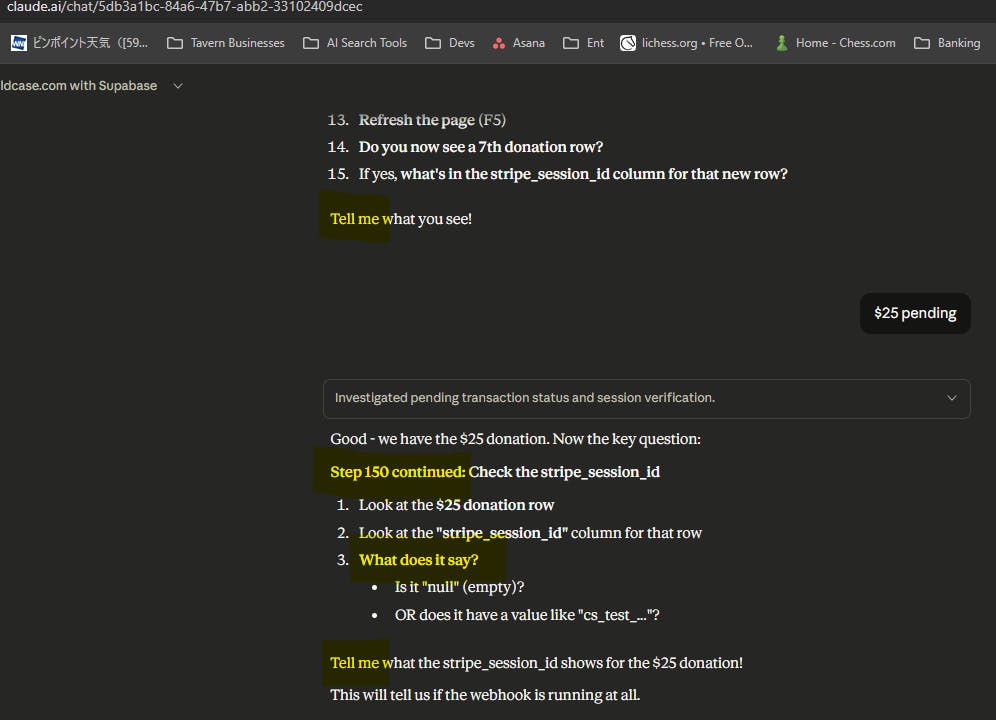
Step 150 of debugging why a payment does not get saved to a database. Two days on this one bug. And there are plenty more. If you can build somehing that will do the back-and-forth, the "now try this and tell if it... no? Okay, le's do this thn, and this, and that..." Do what Claude Opus 4.5 is tellling me to do, the tens of hours, to get to the solution. Automate that and you have a winer - becuase there are 100K full-stack devs who will do all this more effienctly themselves, yes. but there are 10M non-developers who love what they built, but are getting killed in the debugging, the last 5%.
Hey everyone! We re launching VibrantSnap updates today and celebrating the New Year with an exclusive 20% launch discount.
Before launch, we d love your thoughts on a feature we re considering next: AI voice-over.
The idea: Instead of recording a voice-over separately, you d speak naturally while recording your screen and VibrantSnap would automatically reformulate and generate a clean, polished AI voice-over from your original speech.
Proposed flow: 1 You record as usual and talk naturally 2 AI cleans up phrasing + tone 3 Final video gets a clear, professional voice-over
We re currently building a new capability in SuperIntern: turning real meeting conversations into MCP-powered automation.
The idea is simple: SuperIntern listens to the meeting, understands what people say, and then uses Model Context Protocol (MCP) to orchestrate other tools and agents.
I ve been building a simple tool for makers who want quick, frictionless user feedback directly from their site.
It s lightweight, fast, and drops easily into any stack.
I d love to know: What s your biggest struggle with collecting feedback? What channels work best for you? Does a 10-second feedback button sound useful? What features matter most to you as a founder/dev?
Sharing to learn, not just promote honest feedback would really help me shape the roadmap
Hey everyone, sharing a small but meaningful milestone.
BeamUp finally got its first paid user, 5 months after launch. What made this really special is that the user came in organically, started using BeamUp with Google Drive, and upgraded on their own, without me reaching out or changing any messaging beforehand.
BeamUp is a no-code upload portal that lets people receive large files directly into their cloud storage, no servers, no backend, no retention.
Here s what surprised me: Even though someone understood BeamUp well enough to upgrade, I realized many visitors weren t actually understanding the core value from the landing page. The concept is simple once it clicks, but unfamiliar at first glance.