After our first launch on Product Hunt, our team spent a little over a month upgrading the product. There were major changes to the UI and several new features added, so the process took time from discussions and redesigning the interface to testing, fixing bugs, and updating AI prompts.
We re also a very small team, so everyone had to push themselves to give 200%. Time and resources are limited, and at the same time, we also had to work on securing funding for the next six months to keep the team running and continue developing the app.
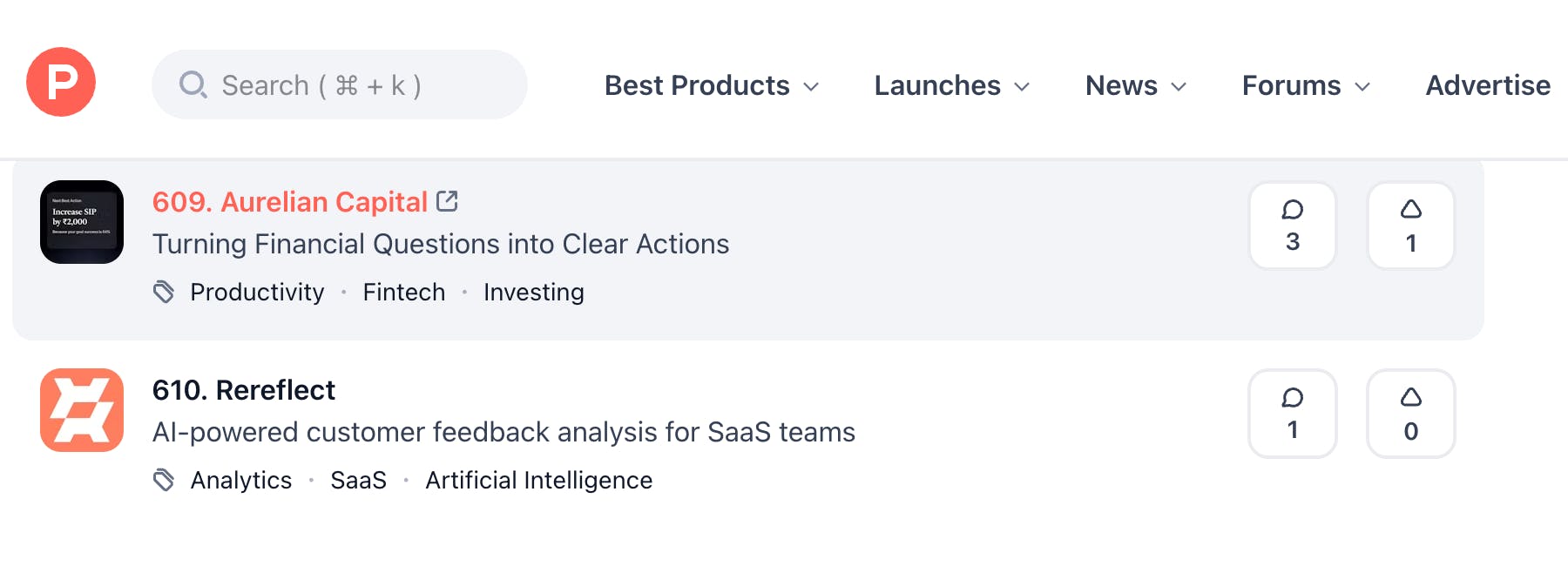
As a measure of the impact of vibe coding and the need to focus on positioning, narrative, and marketing and distribution, I noticed that that 610 products were submitted to the Product Hunt leaderboard today, but only 16 were featured which is less than 3%.
The previous high was just over 500 products in December.
Two years ago, Lovon was made for couples who were already in a relationship.
We offered packs of psychology-based questions, quizzes, and mini-games. They helped partners talk about hard topics like trust, jealousy, and intimacy.
We spent a year building Lovon with a PhD psychologist with 40+ years of clinical experience. What makes it different:
Therapeutic, not agreeable (like gpt). Evidence-based frameworks (CBT, Emotion-Focused Therapy) designed to gently challenge unhealthy thinking - not reinforce it.
Our team is planning to launch a new version of our product on Product Hunt next week, after a period of optimization and improvements. As we get closer to launch day, I realize there s a lot to prepare, and I m curious about how other teams usually approach this process.
So far, here s what we ve been focusing on:
Most importantly, making sure the product works well and delivers real value
Continuous testing to ensure performance and stability
Designing clean and clear product screenshots
Preparing a summary of what s been updated, fixed, or optimized
Writing launch content (tagline, description, first comment, etc.)
Maintaining good health and a stable mindset for the launch
Expanding our network and connecting with other makers
After four long years of grinding, building, fundraising, and hiring, we decided to pivot. I wanted to write down my thought process and timeline because I wish I d seen more honest pivot stories when we were stuck. Not just we pivoted and everything was instantly great but the real version where we kept trying to make the original idea work for way too long because we already put so much into it.
I went through YC S20 (the first COVID batch) as a solo founder working on @Basedash. After YC, I did what you re supposed to do. I talked to users. I built product. I did founder-led sales. I hired a great team. It felt like progress because I was constantly busy and the product kept getting better.
Today, the productivity domain in tech is very well developed - there are tools for almost any need!
But at the same time, there s always a feeling that there might be something else, something better. All the time.
What I like about this space is that once people start using tools like Miro, Notion, Trello, ClickUp, etc., they tend to keep testing new things and experimenting with different tools.
New AI models pop up every week. Some developer tools like @Cursor, @Zed, and @Kilo Code let you choose between different models, while more opinionated products like @Amp and @Tonkotsu default to 1 model.
Curious what the community recommends for coding tasks? Any preferences?