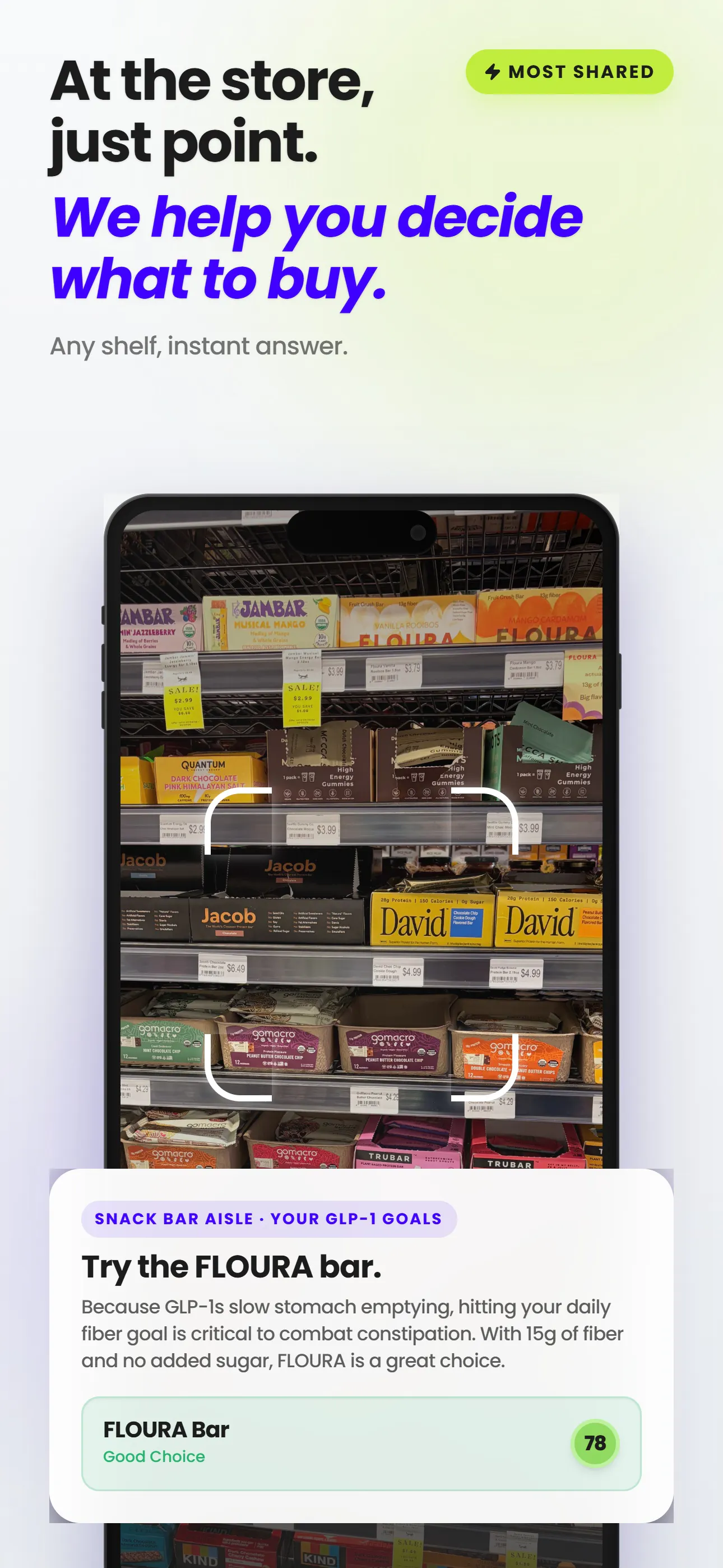
If you're on a GLP-1 (Ozempic, Wegovy, Zepbound, etc) and figuring out what food to buy/eat is absolutely confusing, we'd love to have you as a beta user on our new app. If you're not on a GLP-1, but you have a health goal (ie: eat more protein, more fiber, less sugar, etc) we'd love you as beta users, too! Drop a comment if you want to be added to the Testflight beta group. Beta testers who submit feedback get free access to the app for an entire year :)
Hey folks, We're cooking up our next major product release and pretty excited about it. As a GLP-1 user myself, I know I struggle with finding the right things to eat. Do you or someone you know feel the same? I'd love to chat how we might help. https://calendly.com/kent-at-foo... Can't wait to learn from you!
FoodHealth Score is a free Chrome extension that scores every grocery product 1–100 as you shop at Target, Walmart, Amazon, Whole Foods and more.
See if something's actually healthy. Get a smarter swap that fits your budget and dietary needs. Then watch your whole cart improve before you check out.
Powered by a 200 billion purchase dataset and a proprietary nutrition algorithm that's being used by Kroger, Hy-Vee, NielsenIQ and others across the food industry to build a healthier food supply.
We've been running the FoodHealth Score Chrome extension for a few weeks across Target, Walmart, Amazon Fresh, and Whole Foods. We thought we knew what people wanted. We were wrong.
What we assumed: Show people a FoodHealth Score, suggest a better product, done.
What actually happened: People didn't just want a swap. They wanted to know why. A number wasn't enough - shoppers want to understand what makes the alternative better before they trust it. More fiber. Less added sugar. A cleaner ingredient list. Once we added those insights alongside the swap suggestion, we saw a lot more swaps clicked on.
It makes complete sense in hindsight. You wouldn't take a stranger's recommendation at face value. Why would you take an algorithm's?