


Which jobs do you think will disappear and which will be created? (in the online space)

I keep hearing and reading about how programmers are at risk; basically, everything that can be replaced by AI is at risk.
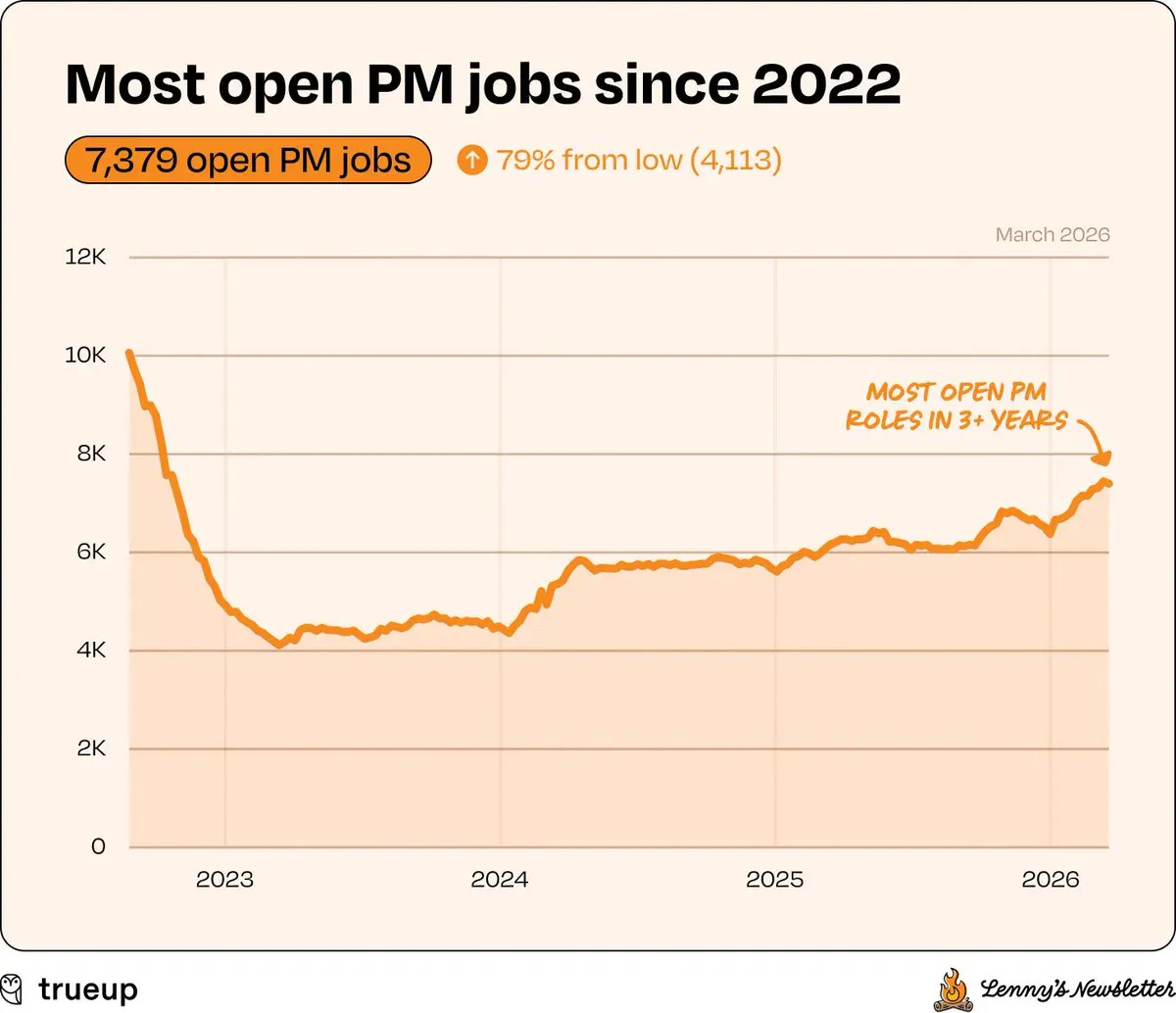
Yesterday, Lenny Rachitsky shared a post that PM openings are at the highest levels since 2022.
At the same time, I read how big giants (Meta, Amazon, etc.) are laying off engineers because of AI, and then I read about how they had to hire back again because something managed by AI went wrong.
So which positions are really disappearing online, and which are emerging?
I assume that security-related positions will emerge more.
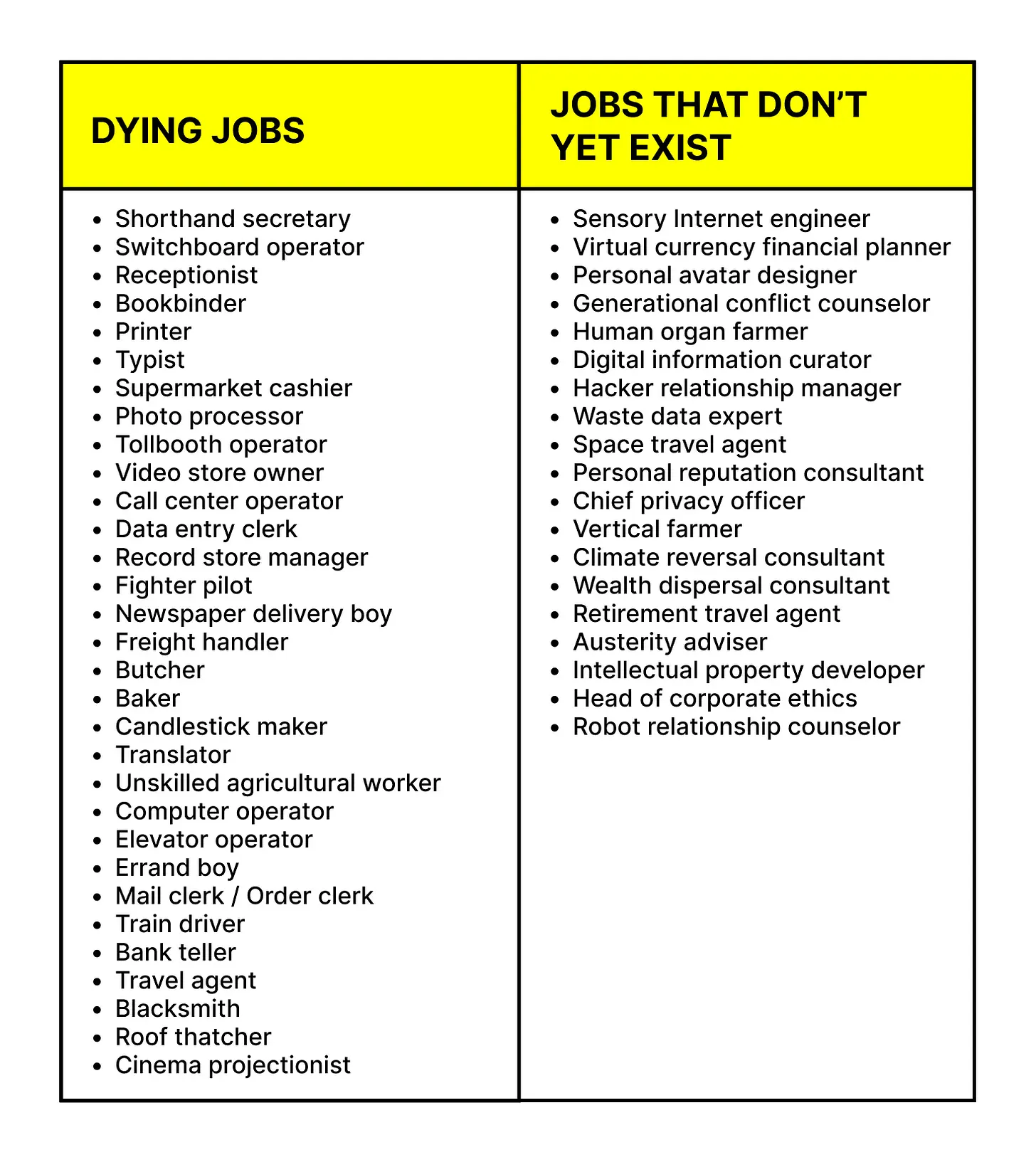
BTW... adding also an assumption made in 2012 by one author who predicted dying vs emerging jobs. – image from the book The Future: 50 Ideas You Really Need To Know
246 views
Replies
minimalist phone: creating folders
@karlykingsley IMO, it will just increase the gap size between those "comfortable and conform" people and those who are able to manage more things. One-skilled vs. multi-skilled people.
The jobs disappearing are the ones doing the repeatable execution. Junior analysts, entry-level coders, basic content writers, aka the work that follows a predictable pattern every time.
What's emerging is anything that sits at the boundary between AI output and human judgment. People who can evaluate, direct, and correct AI rather than just produce. Prompt engineers are the obvious example, but it goes deeper than that.
We see this directly as we work on building CoreSight. The ex-McKinsey consultants on the team aren't being replaced by the agents, they're the ones who encoded the frameworks that make the agents useful in the first place. The expertise didn't disappear, it just moved upstream.
minimalist phone: creating folders
@andreitudor14 It will be kinda difficult for young people to get experience when juniors are not needed. Only people who will have ambitions will be able to learn faster (and probably their motivation will not be emloyed, but run a business).
PickleMatch
i for one, would like to be the first space travel agent. DM me if you want an itinerary 😜
minimalist phone: creating folders
@anneliese You should email to Elon Musk, Jeff Bezos or Richard Branson to make your dreams come true :D
Something nobody's mentioned yet: this shift looks completely different from the recruiting side. When roles merge every six months and job titles stop meaning what they used to, the entire way we evaluate candidates breaks down. Traditional hiring pipelines were built for stable roles with clear skill sets, and now the best hires I see are people with messy, non-linear backgrounds who connect dots across domains. The real emerging job might not just be 'AI output auditor'; it might be the people who figure out what the new roles should even look like.
minimalist phone: creating folders
@ceciliatran but with each update in AI and the way of adjusting, we should change job description and duties almost every week.
@busmark_w_nika yeah, that's why i think the way we've recruited historically will change since roles change all the time. This is what is interesting in start-ups where your role changes every week, and you'll do things outside of your 'job description' as well. I think companies in general needs to start to set these expectations
minimalist phone: creating folders
@ceciliatran BTW, what will be the real role of HR people in the future when people use AI for sending CV and recruiters use AI for interviews? :D
I see this from the recruiting side every day. The roles disappearing aren't the ones most people expect. It's not that "programmer" goes away; it's that the junior generalist role shrinks while the senior who can steer AI and catch its mistakes becomes even more valuable. I'm already seeing new roles emerge around AI ops, prompt design for internal workflows, and cross-functional "translator" positions between technical and non-technical teams.
minimalist phone: creating folders
@ceciliatran Can you give any example of the most unusual positions you have seen because of AI rise?