365 days is more than enough time to get burned, mess things up, and (most importantly) learn some hard lessons.
My biggest wake-up call this year was neglecting my health until it completely derailed my business I had to turn down collabs, miss conferences, meetups, and a ton of opportunities.
I see a lot of tech products on Product Hunt that are meant to improve someone else's business situation, and as many makers as possible are ideally targeting the B2B market.
However, this past week I've also seen a lot of "fun" products that not only made it into the featured category but also earned one of the product of the day titles.
I have tried several ways to promote my product, but distribution has been much hareder than building it.
product hunt is the only channel where I've found meaningful visibility so far. Reddit has been difficult because self promotional posts are often removed, and I don't want to spam communities where the product isn't genuinely relevant.
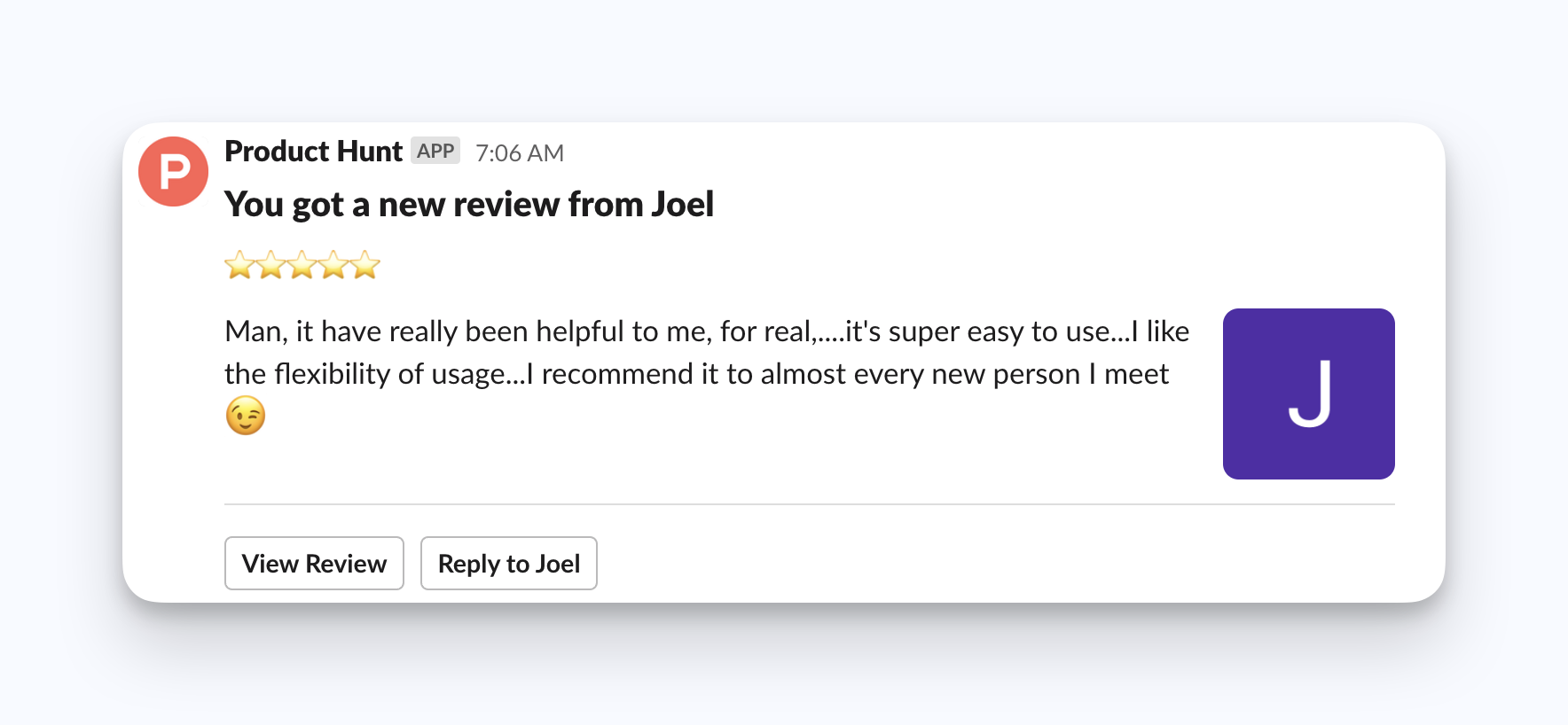
Whether it s praise or constructive feedback, all reviews provide helpful insight into how your customers are experiencing your product. For convenience, we ve created a Slack integration so each new review sends you a message that you can keep track of in your dedicated workspace channel.
Whenever I search for a skill.MD file for a relevant skill there are tons of Github repositories that I find and none of them actually become useful to me because most of them have AI slop and actual hardcoded instruction which is necessary is somewhere buried in line 12 or 13 and the plug-in comes with a bunch of more files which I can swear I have never read. What is the best way to share a skill that can be plugged to agentic workflows? And is anybody monetising this already? With most of the skills that I find online, there is no true sense of ownership and most of them lack authenticity!!
Lately I ve been noticing something in my workflow:
Sometimes I jump into prompting AI before I fully understand the problem itself. Or I use AI to reduce friction instead of slowing down and thinking more deeply. And because the output often sounds convincing, verification can become weaker too without noticing.