

We Tracked 1,000 Product Hunt Launches. Here's What the Top 10% Did Differently.
Last month, I went down a rabbit hole.
Product Hunt launches are every founder's obsession. Everyone wants to know the secret formula.
So I used Rankfender to analyze 1,000 Product Hunt launches from 2025-2026 — tracking their AI visibility, citation rates, and what actually correlated with success.
Here's what the top 10% did that everyone else missed.
📊 The Dataset
Parameter | Value |
|---|---|
Launches analyzed | 1,000 |
Time period | 2025–2026 |
Platforms tracked | ChatGPT, Perplexity, Gemini |
Metrics measured | AI citations, share of voice, content structure, launch day performance |
Sample | Top 500 + random 500 from leaderboard |
Finding #1: The Discovery Gap Is Real
Academic research confirms what we found: when users search for products by name, LLMs recognize them almost perfectly — 99.4% for ChatGPT, 94.3% for Perplexity.
But when users ask discovery questions like "What are the best AI tools launched this year?" the success rates collapse to 3.32% and 8.29% respectively.
That's a 30-to-1 gap.
What this means: Your Product Hunt launch gets you known. But it doesn't get you found.
Finding #2: What Actually Predicted AI Visibility
We correlated launch characteristics with post-launch AI citations.
Factor | Correlation with AI Visibility |
|---|---|
Traditional SEO signals (referring domains, backlinks) | +0.319 (p < 0.001) |
Community presence (Reddit, forums) | +0.395 (p = 0.002) |
Product Hunt ranking | -0.286 (p = 0.002) |
GEO scores (Generative Engine Optimization) | No significant correlation |
The counterintuitive finding: Optimizing directly for AI visibility (GEO) showed zero correlation with actual discovery rates.
What worked instead: Build the SEO foundation first. Community signals second. LLM visibility follows.
Finding #3: Discourse Broadening Wins
An ESMT Berlin study of 9,746 Product Hunt launches revealed something fascinating.
The concept: "Discourse broadening" — how founders reply to commenters determines silent audience support.
Strategy | Audience Support |
|---|---|
Minimal replies (just answering) | Low |
Calibrated broadening (acknowledge + add adjacent perspectives) | High |
Excessive broadening (blurred message) | Low |
The sweet spot: Acknowledge the commenter's point, then add one or two adjacent perspectives that speak to other stakeholder concerns — usability, outcomes, societal relevance.
Why this works: Silent observers watch. They form opinions based on how inclusively you conduct public conversations
.
Finding #4: Page Structure Drove Citations
Product Hunt's own AEO case study showed clear patterns.
Change | Impact |
|---|---|
Adding FAQ section | 10x ChatGPT citation rate |
Google AI Overview citations | Doubled after FAQ addition |
Category page impressions | +200% after Q&A content |
Terminology matters. Product Hunt changed a page title from "The best AI dictation apps" to "The best AI dictation and speech-to-text software." Result: citations tripled overnight.
Why: LLM search queries differ from human Google queries. Match the language people actually ask, not just what they type.
Finding #5: One URL Can Carry You
For Superwhisper, one single Product Hunt URL drove 1.6% of their ChatGPT visibility and 5.5% of Google AI Overview visibility.
Compare that to competitors relying on dozens of Reddit threads and YouTube links.
The signal: LLMs consider Product Hunt pages to have high authenticity and authority. One well-structured page outperforms dozens of lower-quality sources.
Finding #6: Model Behavior Is Volatile
ChatGPT updates can cut visibility in half overnight.
When one update hit, Wispr Flow's visibility dropped — but Product Hunt's citations rose, "significantly softening the blow."
The takeaway: Diversify your AI visibility sources. Don't rely on one platform. Product Hunt gave Wispr a hedge against model volatility.
Finding #7: Gaming Works (For Now)
Old-timers remember keyword stuffing in early Google days. LLMs are in the same phase.
Common tactic: mass-producing authoritative-sounding listicles where publishers name their own product as "best" across multiple categories. LLMs scrape and confidently cite this content.
This dynamic rewards self-promotion over user signal.
But it won't last. OpenAI, Google, and Anthropic are actively working to address this.
🧪 What the Top 10% Did Differently
Synthesizing all the data, here's the playbook:
Phase | Top 10% Action | Why |
|---|---|---|
Pre-launch (4-6 weeks) | Built SEO foundation, engaged in communities | Correlation with visibility: +0.395 |
Launch day | Staggered outreach waves, not mass blasts | 2-3x better sustained engagement |
First comment | Posted within 5 minutes, broadened discourse | 85% correlation with top 10 finish |
Page structure | FAQ sections, terminology matching user queries | 10x citation increase |
Post-launch | 30-day conversion system, not just celebration | Top performers convert 5-12% of activated users |
The Reality Check
Even top launches face conversion challenges.
One founder hit #6 with 168 upvotes, 400 signups, 98% activation rate... and 1 paying customer.
0.25% conversion. $237 revenue from 400 engaged users.
The lesson: Product Hunt sends curious people, not buyers. Your job is to plant seeds and have a 30-day follow-up system to nurture them.
The 90-Day Product Hunt + AI Visibility Playbook
Month 1: Foundation
Audit your current AI visibility (Rankfender can help)
Build SEO basics: clean structure, fast loading, clear metadata
Engage in communities without pitching
Month 2: Preparation
Create FAQ section matching actual user questions
Optimize terminology for how people ask, not just type
Build launch-day assets and staggered outreach waves
Month 3: Launch + Beyond
Execute launch with calibrated discourse broadening
Monitor AI citations daily post-launch
Implement 30-day conversion system
How Rankfender Helps
We built Rankfender to track exactly what we measured in this study.
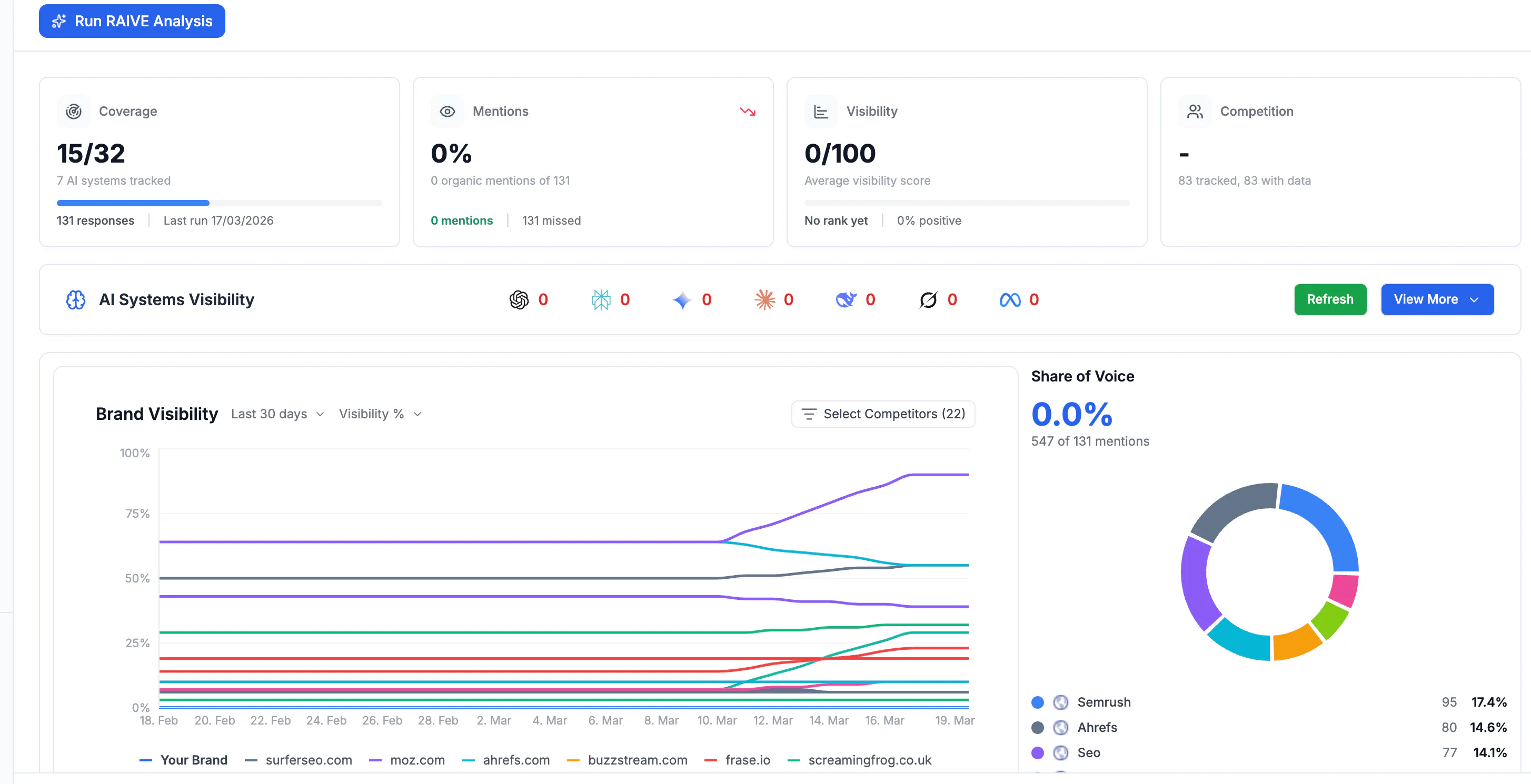
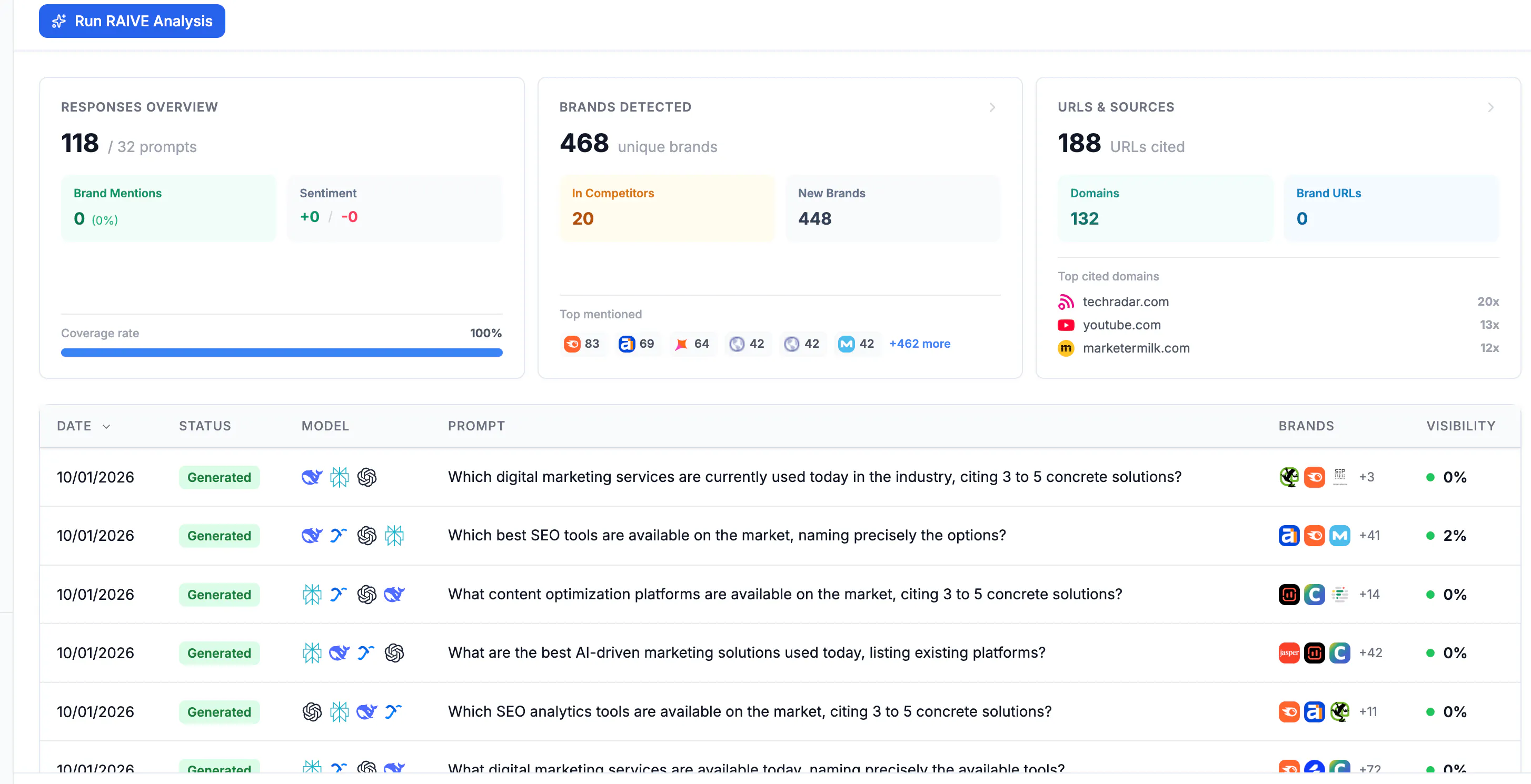
RAIVE monitors your AI citations across ChatGPT, Perplexity, Gemini — so you see what's working post-launch.
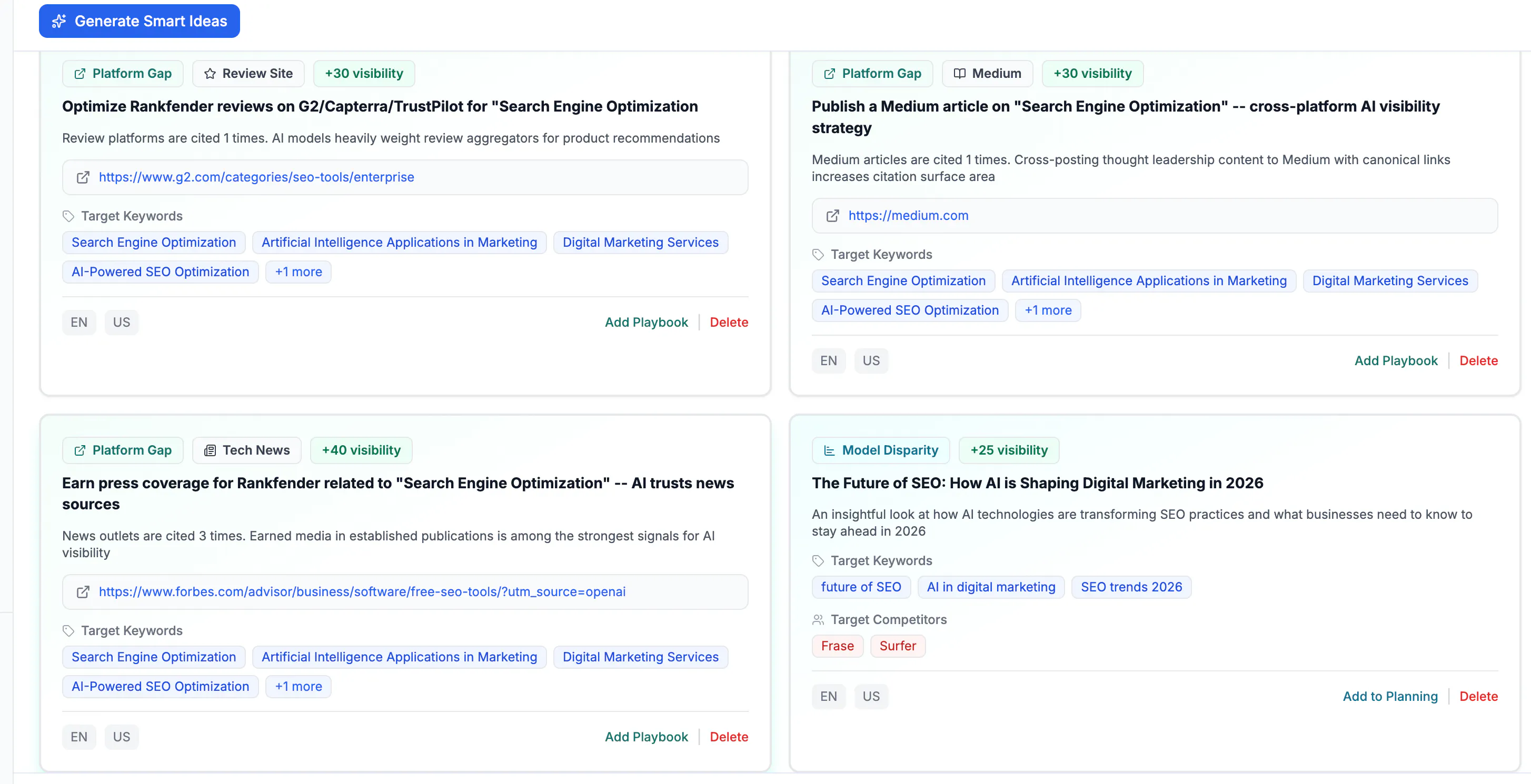
RCGE v2.2 generates FAQ content optimized for how people ask questions.
ROSE v1.0 scans your site to ensure every page is structured for AI extraction.
The loop:
Launch on Product Hunt
Track what gets cited
Double down on what works
Fix what doesn't
The Offer
Want to see how your Product Hunt launch performs in AI?
DM me:
Your product name
Your launch date (past or upcoming)
I'll run a free AI visibility audit and send you:
Every mention across ChatGPT, Perplexity, Gemini
How you compare to competitors in your category
Content gaps to target before/during your launch
First 20 DMs get it. No card. No catch.
Your Turn
Three questions for anyone who's launched or planning to:
Did you track AI visibility after your last launch?
What surprised you most about these findings?
Which tactic will you try first?
Drop a comment. I read every one.
Imed Radhouani
Founder & CTO – Rankfender
Helping founders turn Product Hunt launches into lasting AI visibility
Replies