
 •
•11mo ago
The Power of Purpose-Built Virtual Cards 💳
Hey again, Product Hunt!
Thanks for all your feedback on the Virtual Card feature! Here's a quick follow-up on how our virtual cards solve the pain points businesses face:
No more mystery purchases: Each card is tied to a specific vendor or expense, so you'll always know what was bought, where, and by whom.
Instant card generation: Need a new card for a vendor? No problem. You can create it instantly, with real-time sync to your accounting software.
Business continuity: If one card is compromised, it doesn't lock everyone else out. The other cards keep working as usual.
 •
•9mo ago
I built RewritelyApp to humanize AI writing
I m Oussama, a student founder, and I built RewritelyApp, a SaaS focused on humanizing AI-assisted writing.
The idea came from a simple problem: AI helps draft faster, but the output often feels artificial or disconnected from your own voice. RewritelyApp helps refine AI drafts into natural, readable writing, with tone control and visibility on how the text may be perceived.
The product is fully live and already used by early users. I m mainly here to:
Learn from the PH community
Collect honest feedback
Exchange notes with other builders
 •
•16d ago
Is "Metadata-Driven" the only way to build true AI-Native apps? 🤔
Hey PH community, Jianguo here.
Over the past few months, my team and I have been building ObjectStack, and we hit a major realization about AI and software architecture.
80% of enterprise SaaS (like vertical CRMs or PSA tools) is just forms, tables, workflows, and permissions. When we try to let AI agents write raw code for these, they eventually break the logic or create a mess of unmaintainable legacy code.
We took a different approach: Everything is Metadata. By abstracting the entire application layer into structured metadata, the entire context stays extremely lightweight (well under 150k tokens). Now, our AI engine (ObjectOS) doesn't write code; it manipulates the metadata. The result? Instant application generation with strict data isolation and zero runtime syntax errors.
 •
•16d ago
Why people rage quit my app 😡
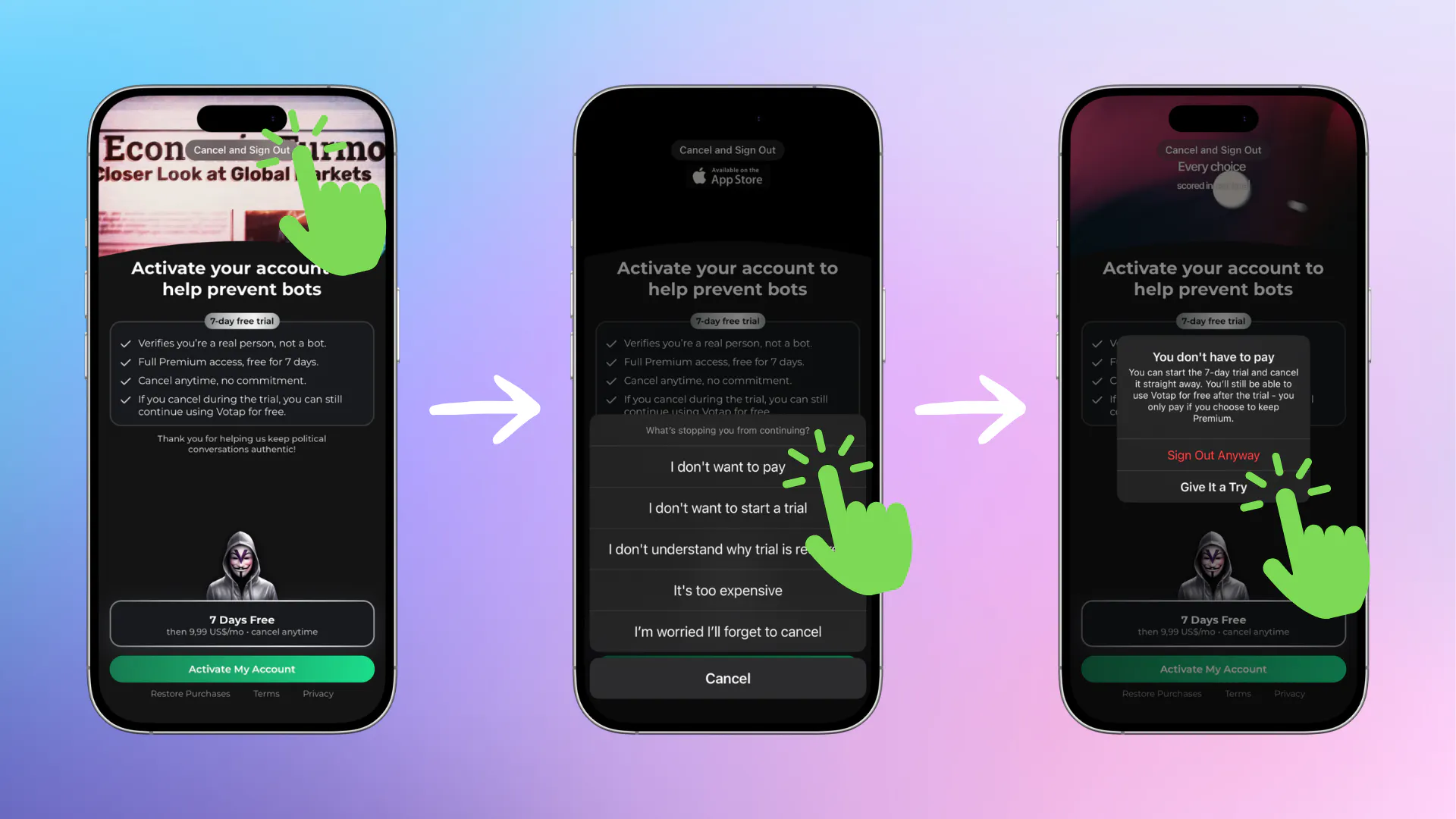
Road to 1,000,000 Votap users - Day 81 | Current: 1469
We currently use a mandatory 7-day trial during onboarding. You have to start it to enter, but you can cancel immediately and continue using the app for free. It gives us another bot-prevention layer and lets people experience the full app first.
What REALLY surprised me: of the people who didn t start the trial, around 80% tapped Cancel and Sign Out. They didn t just close the app.
So I turned that button into a tiny win-back + analytics flow. When someone wants to leave, I ask why: maybe they don t want to pay, don t want a trial, think it s too expensive, or don t understand why it s required.
Based on the answer, Votap shows a short explanation specific to that concern and gives them one more choice: give it a try or sign out anyway.
And every reason gets logged in analytics, so instead of guessing why people drop, I can see the actual pattern. Even if the win-back converts nobody, knowing why people leave is extremely valuable. What do you think about this approach? Let me know!
Download Votap in the App Store!
More tomorrow.
 •
•2mo ago
Hundreds of applications, zero replies — so I built JobTune. What would you add?
A few months ago I was applying to a lot of jobs and just not hearing back.
I was tailoring my resume, putting in the effort, doing what you re supposed to do. Still mostly silence.
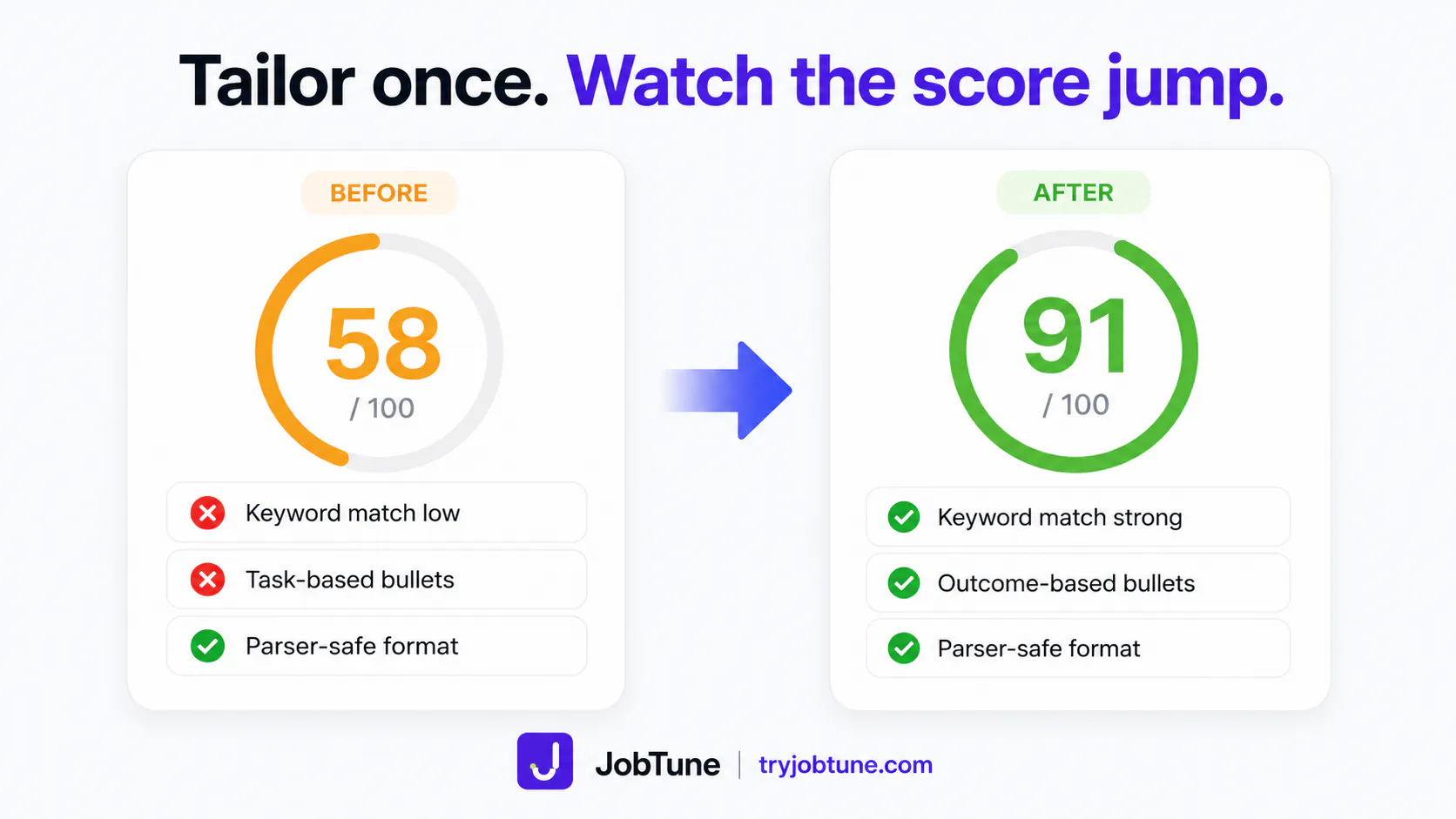
I eventually realized my resume might not even be reaching a human. ATS systems were probably filtering it out and I had no way to see what was wrong.
So I built a simple tool for it.
 •
•16d ago
I built an AI that finds your best money opportunity in 60 seconds — free to try
Hey Product Hunt
I am 18yrs old and i built GrindUp because I kept seeing the same problem everywhere, people who want to make money online but have no idea which opportunity actually fits their situation.
Every resource out there is either a $997 course or completely generic advice like "start dropshipping" or "freelance" with zero guidance on what that actually means for YOU specifically.
So I built something different.
 •
•16d ago
🤔 Is local AI ready to become the default?
We re spent the last few months building MindBridge around a question:
What if your AI assistant didn t need to send your personal data to the cloud?
Local AI has come a long way.
Models are getting smaller and more capable. Tools like Ollama and ComfyUI make it possible to run increasingly powerful AI directly on a personal computer.
 •
•16d ago
If you stop a 50-minute focus session at 32 minutes, what should count?
I ve been thinking about this while building OneLess Pomodoro.
Say you set a 50-minute focus session, but stop after 32 minutes.
Would you rather see:
an incomplete session
32 minutes of actual focus
both
I ended up building OneLess around the second idea: the time you actually focused still counts, even if the planned session wasn t completed.
That decision also shaped the reports and goals they re based on real focus and break time rather than completed-session counts.
I launched it on Product Hunt this week:
https://www.producthunt.com/prod...I m curious how other people think about this.
When you look back at your productivity, do completed sessions matter to you, or is total focused time the more useful number?
 •
•16d ago
I turned a simple Snake game into a weird way to promote your website
I started with a basic Snake game, but I wanted to see if a game could also become a small distribution tool for makers.
The idea evolved into this:
your snake can use your domain as its name
higher scores move you up the leaderboard
you can customize the snake with accessories
after a good run, you can check in and share the result
the snake trail gradually draws the logo pulled from your website
I m still experimenting with it.
 •
•2mo ago
Why does every "small feature" turn into a much bigger project?
I've started to notice something about mature products.
The size of a feature rarely determines how much work it takes.
Instead, the effort depends on how many past decisions that feature touches.
A simple "Add Google Login" suddenly affects authentication, onboarding, permissions, analytics, documentation, QA, and maybe even your pricing model. What looked like a two-hour task turns into a week of discussions because you're no longer building a feature; you're negotiating with decisions your product has accumulated over months or years.