

AI is no longer the edge. Expertise is.

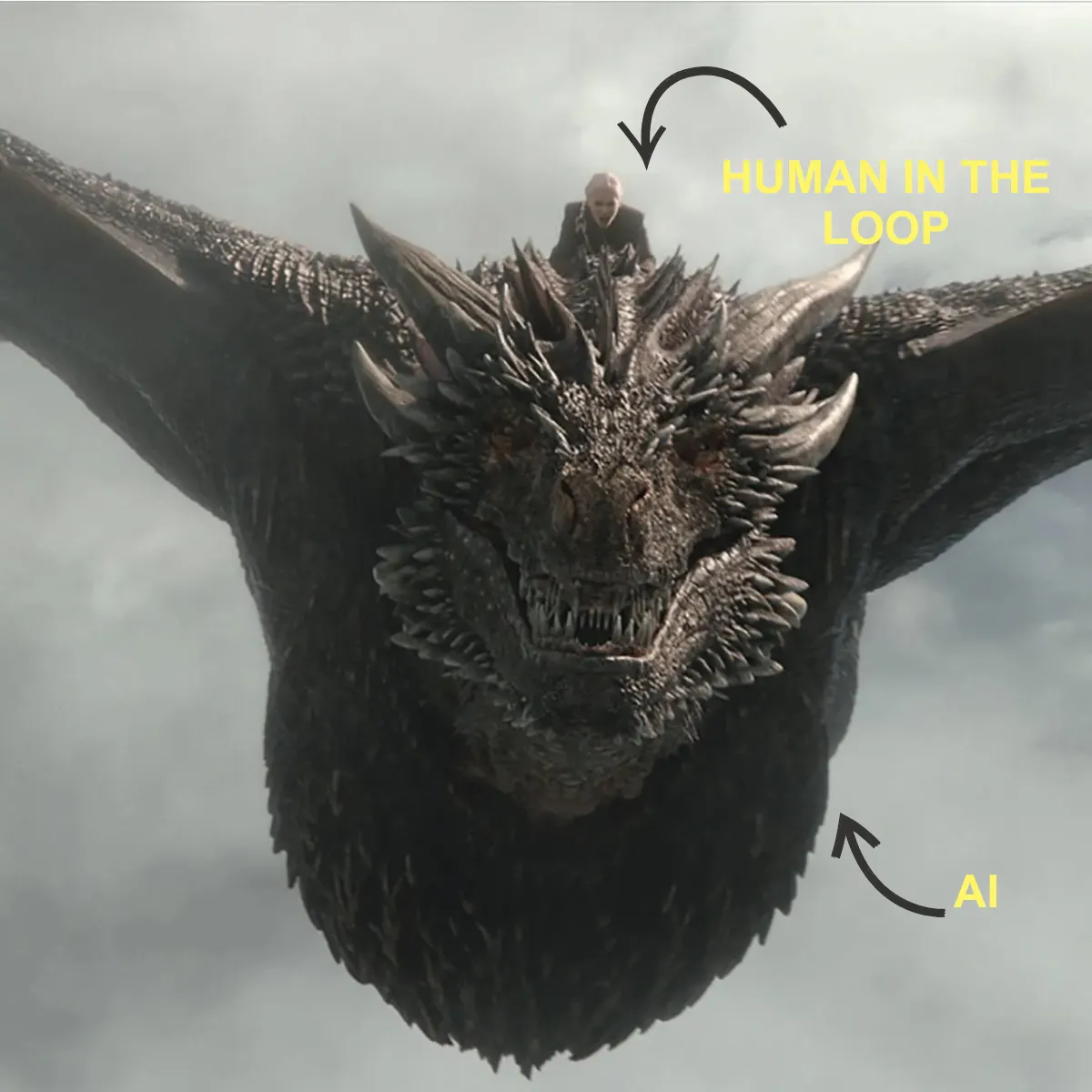
This meme made me laugh because it is painfully real.
A lot of people are not struggling because there are not enough tools.
They are struggling because every new tool comes with its own learning curve, setup, workflow, dashboard, logic, and best practices.
And now AI has made that even more visible.
On paper, it feels like the problem is solved.
You can access incredible models.
You can automate tasks.
You can generate content.
You can run workflows.
You can move faster than ever.
But in practice, a new problem shows up:
now you need to know how to use all of it well.
That means knowing what to ask.
What to ignore.
What to automate.
What still needs human judgment.
What “good” even looks like.
That is where human expertise still matters a lot.
AI can do an incredible amount of the heavy lifting.
But without the right person guiding it, it often becomes one more system to learn, one more dashboard to manage, and one more thing sitting in the stack without reaching its full value.
We felt this very clearly with Starnus.
When we added our managed service, we honestly did not expect it to become the more popular option so quickly.
At first, we thought more people would prefer to use everything fully self-serve.
But what we saw was different.
A lot of people did not just want access to the system.
They wanted help from people who already knew how to sell properly.
They wanted the benefit of AI, without having to become experts in sales.
That is why the managed service started getting so much attention.
Not because people do not want software.
But because many teams want software plus expertise.
They want the speed and leverage of AI, with human judgment on top.
I think that combination is becoming much more important:
AI does the repetitive heavy lifting.
Experts make the important decisions.
The result is better than either one alone.
Replies
This hits on something I've been thinking about lately after watching our team struggle with prompt engineering for months :)
We have all these amazing models but half our sprints get eaten up by figuring out the right way to structure requests, handle edge cases, and decide when the AI output is actually production-ready.
The technical implementation is honestly the easy part compared to developing that intuition about when to trust the model and when to add human oversight.
Hello Aria
100% this. Everyone has access to the same foundation models now — the real moat is the judgment you bring to using them. What to automate, what to leave to humans, when good enough actually is good enough.
We've been feeling this acutely building Hello Aria, an AI assistant that lives in your WhatsApp and iOS. The model isn't the hard part — it's having the domain expertise to know what a busy person actually needs vs. what "sounds useful in a demo." Launching on Product Hunt April 10th, and this tension between AI capability and human judgment has been at the center of every product decision we've made.
Expertise + AI > raw AI every time.