
Launched this week

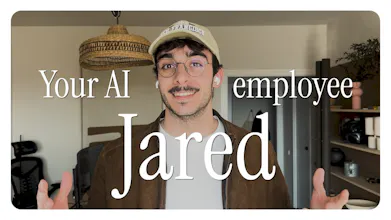
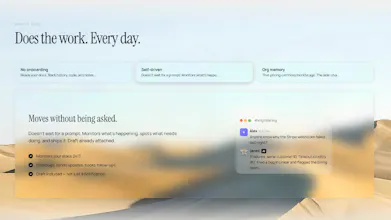
Jared is an AI employee that lives in Slack, connects to 10,000+ tools, and gets work done without being asked. Unlike every other AI tool, it reads the room, follows conversations, knows your team and speaks up when it matters. Your social AI employee.



which llm models are being used under the hood and are they configurable?
jared.so
@pedro_pizarro2 Not configurable rn. Routed to best model to balance speed and accuracy. For hard problems we route to top models :))
jared.so
I'm writing this from a hackerhouse in Barcelona ☀️
Last week we launched OpenViktor (an open-source AI employee built in 48h). We were #3 PH of the day, 300+ GitHub stars in 24h. We took it down and rebuilt the entire thing from scratch.
Meet Jared. The first AI employee that's actually social.
He lives in Slack, connects to 10,000+ tools and does the work: reports, dashboards, code, follow-ups, research.
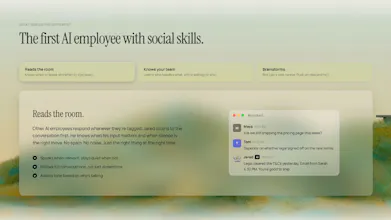
But here's what's different: he reads the room. Jumps into conversations when it matters. Knows who to talk to and when to shut up. Brainstorms with your team. Remembers everything and gets sharper every day.
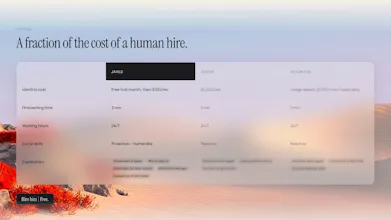
Paying $2000/month for an AI employee is crazy.
Humalike is backed by the first investor in ElevenLabs. Built by a small team (🇪🇸 X 🇵🇱) that hasn't slept much.
Martí, co-founder.
P.S. We ship fast. Request a feature or report a bug, we'll build or fix it the same day :))
@mcarmonas Finally, a tool that solves real problem. but how does Jared decide when to 'read the room' vs. engage?
jared.so
@yisak_mebrate love to hear that Yisak :))) We are building humalike.ai, humanlike social agents for group environments with natural timing, interruptions, and voice/text cues. We basically plugged in Humalike to Jared and made it social!
@mcarmonas For our company, we came up with Kevin. He's our internal bot. He's not in Slack, though, he's in Telegram. And yeah, we had to spend about three weeks training him. We're still training him, actually. But it's a cool idea. And of course, at first, he was super annoying. So, we're definitely doing this, it's definitely the future. And an amazing tool that helps you train them would be perfect.
@mcarmonas @slavaakulov Interesting! How is Kevin doing right now? Our goal with Jared is to provide very good default that fits 80% from day 0 and then learns the details of specifc organization.
Product Hunt
jared.so
@curiouskitty Jared reads the room. Jumps into conversations when it matters. Knows who to talk to and when to shut up. Brainstorms with your team.
The rest? We are as good as the rest.
This is interesting—especially the “reads the room” part.
How does Jared decide when to speak up without becoming noise? Is there some kind of confidence threshold or context awareness model behind it?
@mgufrone Hi! There are two main parts to this:
1. very good base -> we spent a lot of time testing and tweaking it to make it work. It's based on personality, context, recent tasks, goals, relationships between users
2. He learns -> when he does a mistake he takes conclusions, and learns to not repeat it again, getting better and more aligned to your team as time passes
Thanks for trying it out!
Banyan AI Lite
this looks really cool. the part about Jared following conversations and speaking up without being asked is what got my attention. how does it decide when to jump in vs stay quiet? and does it work across private Slack channels too, or only public ones?
@konstantinalikhanov Hi Konstantin! He jumps in only if we can provide value without being annoying. The decision is made based on his personality, context, memory of past interactions and how much he can actually help. He can think in the background and join conversation when he already has something to show.
It works on all channels that you invite him, so private channels work. He also works in DMs.
Hope that helps:))
The "reads the room" part is what I find most interesting. Proactive agents are way harder to get right than reactive ones - getting the timing wrong and it becomes more annoying than helpful. How do you decide when Jared should chime in vs stay silent? Is it rule-based or does the model decide?
@mykola_kondratiuk It's a combination of LLM judgement, context, memory (he learns over time) and our know-how. The main point is he only joins if he can provide value.
The memory piece is what makes it actually work over time. A lot of agents are stateless and every interaction starts from zero - having context that builds up changes the whole dynamic.
I like the idea of an AI that doesn’t just execute tasks but understands context inside conversations.
Does it naturally adapt to how a team works?
jared.so
@amraniyasser Hey Amrani! It does adapt to how the team works, talks, behaves and we are improving it (atm) to understand lore of teams :))