Are you fine connecting separate tools for auth, payments, billing, taxes, and analytics? Or do you prefer one system handling most of it? Not just because setup takes time, but because every extra service means another dashboard, integration, and possible failure. Asking this cause I think builders should spend more time shipping the product, as long as the backend stays flexible and reliable. But this brings us to another question, when does convenience become lock-in?




@byalexai - this looks a really interesting offering as an alternative to Stripe, Paddle Superbase etc. Best of luck with the launch
tiun.
@byalexai @codeandsea Thank you Brent!
Aceternity UI Pro
Amazing!
Congrats on the launch💯
tiun.
@manuarora Thanks a lot Manu! Appreciate your support
Databox
Amazing, congrats on the launch!
tiun.
@spela_juric Thank you Spela for your kind words
Congrats on the launch.
Genuine question from someone shopping for exactly this, because I got burned last week.
I run AI SaaS on a whop provider. In two bursts, a card-testing crew ran ~15 stolen cards through my checkout in about an hour each. 3D Secure was "on" but in frictionless mode, so 3 of them still went through. Hiding the product didn't hide the plan's public checkout URL, so some buys had no account on my side at all - just a payment and an email. I found out by noticing subscriptions with no users, then refunded and banned everything by hand.
What I'd want to know before switching:
Velocity rules - would 10 attempts from one actor in an hour, with mismatched cardholder names and emails, get blocked automatically, or is it on me to notice?
3DS control - can I force a bank challenge per plan, and can I turn it back off later without a support ticket?
Is checkout bound to an authenticated user in my app, or is there a public plan URL that anyone can hit once they've seen it?
Who is merchant of record, and who eats the chargeback + fee when fraud gets through?
When a burst happens, what does the cleanup look like - one bulk refund + ban, or 15 manual clicks?
tiun.
@nazar_kovalchuk Sorry to hear that — sounds painful. And totally fair questions after an experience like that. You can never eliminate fraud 100%, but we’ve put quite a bit of thought into this.
1. Velocity / fraud detection: We actively monitor transactions for suspicious behaviour and can decline transactions, trigger additional verification or will intervene when we see unusual patterns. I don't want to claim that exactly “10 attempts in an hour” will always trigger an automatic block as fraud detection is more dynamic than a single rule.
2. 3DS: Yes, we support 3DS and can require additional verification where needed. Today you can’t configure a “force 3DS challenge” rule yourself per individual plan. That’s a good feature request though :)
3. Auth + checkout: This is probably the biggest difference to the setup you described. Because we combine Auth and Payments in one system, it’s much harder to end up with completely disconnected payments. By default we combine this with 2FA through a mobile number. So the person buying isn’t just a payment + email — there’s a user behind it, connecting their email, payment information and phone verification. This also gives us more signals to detect suspicious behaviour in the first place.
4. Chargebacks: tiun is always the Merchant of Record, so legally we are the seller and the chargeback is filed against us. We handle the dispute with the payment provider/card scheme. The financial impact of a lost chargeback + dispute fee is ultimately passed on to the supplier. If we win the dispute, the recovered amount is credited back (minus the dispute fee).
5. Cleanup: If we detect fraud, we can intervene ourselves — including declining/reversing transactions, requiring additional verification or proactively refunding where necessary. So you’re not alone cleaning everything up after the fact. We don’t have a one-click “refund + ban these 15 transactions” flow in the dashboard today, but something to consider.
We’ve become pretty good at detecting fraudulent behaviour, but no payment system can prevent 100% of fraud. One advantage of us being the MoR is that we have skin in the game too — fraud and disputes are our problem as well, not something we just hand over to you.
There’s more detail on how we handle this in our legal center: https://legal.tiun.io/master-services-agreement
Build Check
I’m an indie hacker and I lose way too much time wiring auth, payments, webhooks, and subscription logic together.
How close does tiun get me to shipping a monetized SaaS? And realistically, how long does setup take?
tiun.
@german_merlo1 This is pretty much exactly why we built tiun :)
Installing the tiun skills and connecting to our MCP takes about 3 minutes.
From there, you can tell your AI agent to create your products and integrate tiun directly into your app.
Realistically, the full setup from there until you can start selling takes another 5–10 minutes.
So if your product is ready, you can go from no commercial backend to auth, payments, subscriptions and customer management in around 15 minutes.
Softorino 💻📲
We've been using Stripe and Clerk together for our last product, and it's a pain keeping them in sync. Having auth, billing, and customer data all in one place sounds really useful. The tax and invoice stuff being handled for you is probably the biggest time-saver here.
For people already on Stripe with paying customers, how easy will it be to move over once the migration tool is ready? Will old customer data come with us?
tiun.
@yelyzaveta_kibets Thanks Lisa! With the new migration flows, you can bring existing users over and give your current paying customers access if your product is running on tiun.
Clerk is the easier part — we can migrate the user/account side and map existing users into tiun.
Stripe is a little more dependent on what Stripe allows us to move. Customer data itself is straightforward, but stored payment methods have to go through Stripe’s migration process and only certain payment method types are transferable. Existing subscriptions also can’t simply be “moved” as-is, so we recreate the right state on the tiun side and migrate as much as Stripe allows.
So yes, your old customer data comes with you. The goal of the migration tooling is basically to make the messy part invisible to you and get as close as possible to a seamless switch — within the limitations Stripe gives us. :)
tiun.
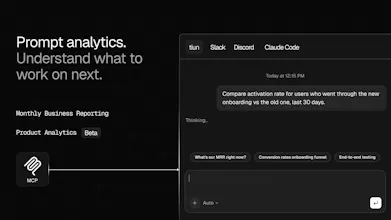
@avinashvagh1 Thanks for the question Avinash! You can already ask tiun today which products drive your MRR and how it has changed over time. In terms of expansion you can ask what plan drives most sales in various countries. In the future you can even correlate product updates with conversion numbers, and attribute revenue. All of this you can ask tiun without exporting anything. AI Analytics is currently in Beta, and you can directly request access in tiun.